

Maintenance Checklist

Florian Bartholomäus, osapiens Expert | 1. January 2026 | Lesezeit 9 min.
Many shops organize milling machine maintenance by calendar intervals—but machines that run 24 hours daily experience different stress than those operating 8 hours. Usage-based maintenance triggered by operating hours often prevents failures more effectively than fixed schedules alone.
Create your checklist for free











TRUSTED BY LEADING COMPANIES




ENTERPRISE-READY
 SAP Certification
 ISO 27001
 EU Hosting
 Entra ID & Okta
 Multi-Entity
Table of Contents
- Milling Machine Maintenance: Key Facts
- Why You Need a Milling Machine Maintenance Checklist
- What to Include in Your Milling Machine Maintenance Checklist
- Common Milling Machine Problems Your Maintenance Checklist Prevents
- From Paper Checklist to Digital: How the osapiens HUB Automates Your Milling Machine Maintenance Checklist
- FAQ
Milling machines remove material with precision, operating under continuous mechanical and thermal stress that demands systematic maintenance. Without structured inspection and servicing routines, spindle runout, coolant contamination, and bearing wear accumulate silently—until sudden failure stops production and triggers emergency repairs that cost significantly more than planned maintenance.
Milling Machine Maintenance: Key Facts
- Structured checklists prevent failures: Organizing maintenance by component (spindle, coolant system, guideways) rather than frequency alone ensures critical systems receive appropriate attention based on actual wear patterns.
- Coolant quality impacts tool life: Contaminated or improperly concentrated coolant accelerates tool wear, damages machine components, and creates safety hazards through bacterial growth and oil mist exposure.
- Digital execution eliminates gaps: Mobile work order management with photo documentation and real-time sync ensures maintenance tasks are completed consistently and audit trails remain complete.
- SAP PM integration bridges planning and execution: The osapiens HUB for Maintenance connects enterprise planning systems with mobile field execution, ensuring maintenance data flows bidirectionally without manual transfers.
Why You Need a Milling Machine Maintenance Checklist
Ad-hoc maintenance based on operator intuition or reactive firefighting creates unpredictable downtime and safety risks. A structured checklist transforms maintenance from guesswork into systematic prevention.
- Consistency across shifts and sites: Checklists ensure every technician performs the same critical inspections regardless of experience level, preventing knowledge gaps when senior staff are unavailable.
- Risk reduction through early detection: Systematic inspection catches developing problems—spindle bearing noise, hydraulic pressure drift, coolant contamination—before they cascade into catastrophic failures that halt production.
- Documentation for audit readiness: Complete maintenance records demonstrate due diligence during regulatory audits, support warranty claims, and provide historical data for remaining useful life analysis.
- Technician guidance and training: Detailed checklists with quantitative thresholds (e.g., “spindle pressure 1800-2200 PSI”) guide less experienced technicians through complex procedures and reduce first-time fix errors.
- Standardization for repeatability: Repeatable procedures enable trending analysis—tracking spindle temperature over weeks reveals gradual bearing degradation that single inspections miss.
- Compliance support: Checklists help organizations meet safety regulations (OSHA metalworking fluid exposure limits) and quality management requirements (ISO 9001 documentation standards) by creating verifiable evidence of systematic maintenance.
What to Include in Your Milling Machine Maintenance Checklist
Effective milling machine checklists organize tasks by component or system rather than purely by frequency. This structure reflects how different subsystems degrade—spindles require precision monitoring, coolant systems need contamination control, and guideways demand lubrication consistency.
The table below organizes maintenance tasks by the physical component or subsystem of the milling machine. Actual inspection intervals depend on usage intensity, operating environment, and manufacturer specifications—but the component-based structure remains consistent.
| Component / System | Inspection & Maintenance Tasks | Purpose |
|---|---|---|
| Spindle & Tool Holder | Check spindle runout with dial indicator; inspect taper for debris and damage; verify tool holder seating; monitor spindle temperature and bearing noise; test drawbar force | Precision, tool seating, thermal stability, bearing health |
| Coolant System | Check fluid level and concentration with refractometer; inspect filters and clean/replace as needed; remove tramp oil from surface; verify flow rate and pressure; inspect lines for leaks; test for bacterial growth | Cooling efficiency, tool life, chip removal, operator safety |
| Guideways & Linear Motion | Verify lubrication distribution across all ways; inspect way covers and wipers for tears; check for debris accumulation; clean and lubricate ball screws; verify axis movement smoothness; measure backlash | Axis accuracy, positioning repeatability, protection from contamination |
| Hydraulic System | Check hydraulic pressure and fluid level; inspect hoses and fittings for leaks; test accumulator performance; verify chuck clamping force; replace filters per schedule | Clamping force, system reliability, safety |
| Electrical & Control Cabinet | Inspect control cabinet filters and clean/replace; check connections for looseness or corrosion; verify cooling fan operation; monitor cabinet temperature; inspect cable routing for wear | Control reliability, thermal management, electrical safety |
| Safety Systems | Test emergency stop buttons for instant response; verify interlock function (doors, guards); inspect guards and covers for damage; check indicator lights and alarms | Operator safety, regulatory compliance |
| Chip Management | Clear chips from work area, tool changer, and coolant trays; inspect chip conveyor operation; verify chip collection system function; clean way covers | Prevent debris-related damage, maintain coolant return flow |
This component-based structure adapts to your specific milling machine configuration. A 5-axis machining center requires additional checks (4th and 5th axis calibration, rotary table lubrication), while a basic 3-axis mill focuses on core systems.
Critical: Checklists must include quantitative thresholds wherever possible. “Check coolant concentration” becomes actionable when specified as “verify 5-10% concentration using refractometer per manufacturer spec.” Visual aids—photos showing normal vs. abnormal conditions—further improve execution consistency.
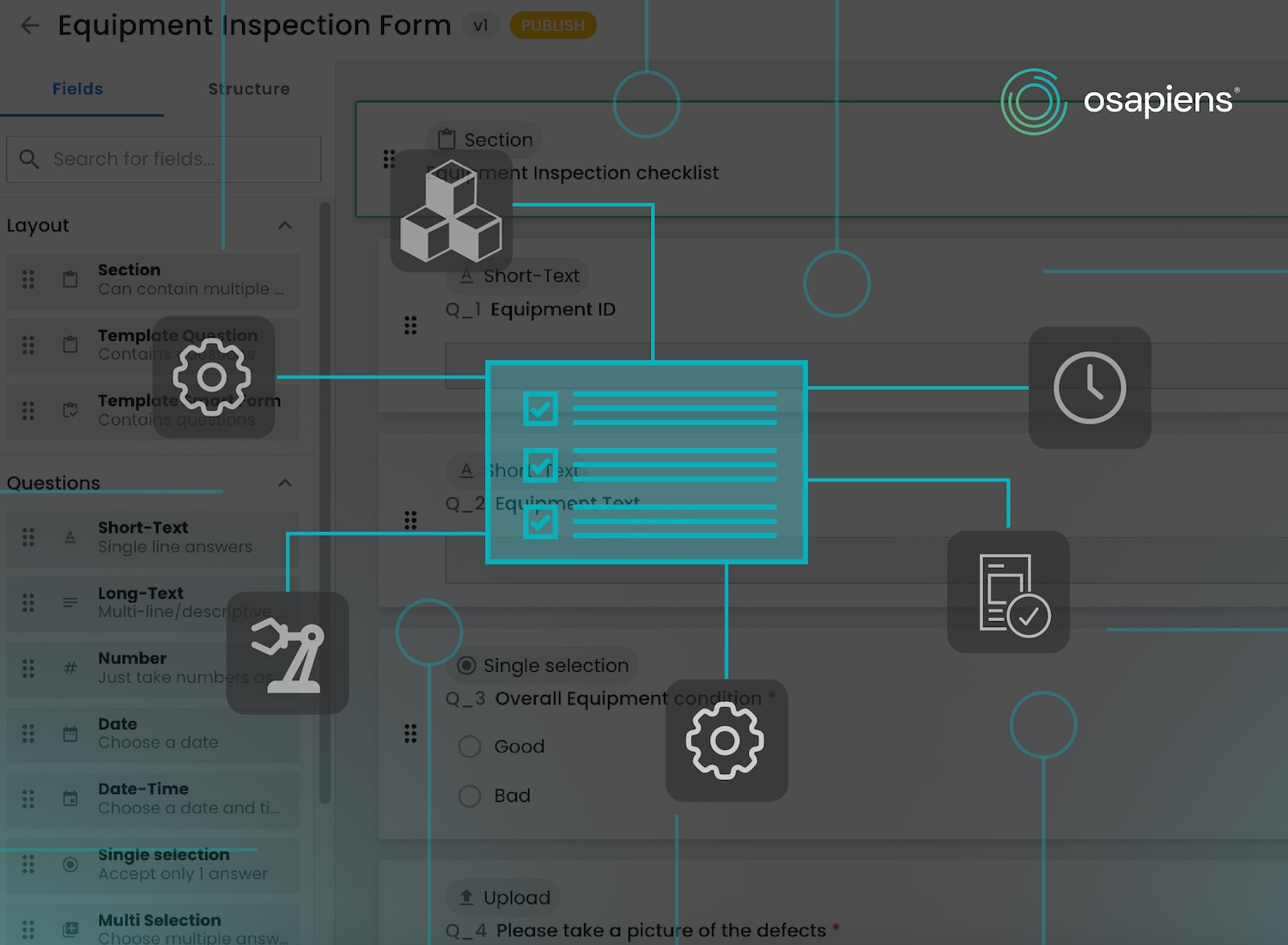
Turn Your Milling Machine Maintenance Checklist into Mobile Work Orders
Create structured checklists for every component—from spindle to coolant system. Execute them on mobile devices, capture photos and measurements in the field, sync with SAP PM automatically, and build complete audit trails without paperwork.Start with Your Milling Machine Maintenance Checklist
Common Milling Machine Problems Your Maintenance Checklist Prevents
Structured maintenance checklists directly address the failure modes that cause unplanned downtime and safety incidents in milling operations.
- Spindle bearing failure from inadequate lubrication: Regular lubrication checks and temperature monitoring catch bearing degradation early, preventing catastrophic spindle failure that requires expensive rebuilds and extended downtime.
- Coolant contamination causing tool wear and poor surface finish: Systematic coolant testing and filtration maintenance prevent bacterial growth, remove tramp oil, and maintain proper concentration—extending tool life and improving part quality.
- Hydraulic pressure loss causing inconsistent clamping: Daily hydraulic system checks identify seal leaks and pressure drift before they cause workpiece movement during machining, which creates scrap parts and potential safety hazards.
- Way cover damage allowing chip intrusion: Regular inspection of way covers and wipers prevents chips and coolant from contaminating precision guideways, which causes accelerated wear and positioning errors.
- Electrical cabinet overheating from clogged filters: Weekly filter cleaning ensures proper airflow through control cabinets, preventing thermal-related control failures that halt production unexpectedly.
- Documentation gaps during audits: Digital checklists with timestamps, photos, and technician signatures create complete audit trails that satisfy regulatory requirements and support quality certifications like ISO 9001.
From Paper Checklist to Digital: How the osapiens HUB Automates Your Milling Machine Maintenance Checklist
Paper checklists and Excel spreadsheets create friction that undermines maintenance execution. Handwritten notes become illegible, photos can’t be attached, and completed checklists sit in binders rather than feeding into continuous improvement.
Limitations of paper-based maintenance: Technicians can’t capture photos of developing problems, measurements aren’t timestamped, and supervisors have no real-time visibility into work completion. When auditors request maintenance history, teams spend hours compiling scattered records.
The osapiens HUB for Maintenance transforms milling machine maintenance through mobile-first execution and enterprise integration:
- Mobile checklist execution: Technicians receive structured checklists on smartphones or tablets, complete tasks with guided workflows, and capture photos, measurements, and voice notes directly in the field.
- Offline capability: Work continues in areas with poor connectivity—data syncs automatically when connection returns, ensuring no maintenance activity goes undocumented.
- SAP PM integration: Maintenance planners create work orders in SAP PM; the osapiens HUB pushes them to technician devices with full job details. Upon completion, data syncs back to SAP PM automatically, eliminating manual data entry and ensuring both systems reflect the same truth.
- Audit-ready documentation: Every work order includes timestamps, technician identification, measurements, photos, and digital signatures—creating complete audit trails that satisfy regulatory and quality management requirements.
- Meter-based triggering: Maintenance schedules based on actual operating hours rather than calendar dates alone, ensuring machines receive servicing when needed regardless of production variability.
| Aspect | Paper or Excel Checklist | Digital Checklist with osapiens HUB |
|---|---|---|
| Data Capture | Handwritten notes, no photos, illegible entries | Photos, voice notes, measurements with timestamps |
| Real-Time Visibility | No visibility until logbooks compiled manually | Supervisors see work status in real-time dashboards |
| Audit Trails | Paper records easily lost, damaged, or incomplete | Complete digital records with technician signatures |
| Integration | Manual data entry into SAP PM or other systems | Bidirectional sync with SAP PM, no manual transfers |
| Trending Analysis | Requires manual compilation of historical data | Automated KPI tracking (MTTR, MTBF, PM compliance) |
| Offline Work | Paper works offline but creates data silos | Full offline capability with automatic sync |
Organizations using the osapiens HUB report 17 minutes saved per work order through automated workflows, 8% reduction in downtime through better preventive maintenance execution, and 14% productivity improvement by eliminating media breaks between field work and documentation.
The platform scales from small maintenance teams managing a few hundred assets to enterprise customers like Coca-Cola North America operating across 35 plants with 1,500 users—providing asset maintenance software that grows with your organization.
Stop Losing Uptime to Missed Milling Machine Inspections
Digitize your maintenance checklists, automate work order creation based on operating hours, and give every technician a mobile tool that works offline. Full SAP PM integration and audit-ready documentation included.Try osapiens HUB for Free
FAQ
What should be included in a milling machine maintenance checklist?
A comprehensive checklist covers spindle and tool holder inspection (runout, taper cleanliness, bearing condition), coolant system maintenance (concentration, filtration, tramp oil removal), guideway and linear motion care (lubrication, way cover inspection, backlash measurement), hydraulic system checks (pressure, leaks, clamping force), electrical cabinet maintenance (filter cleaning, connection inspection), and safety system verification (e-stops, interlocks, guards). Organize tasks by component rather than frequency alone, and include quantitative thresholds (e.g., “coolant concentration 5-10% per refractometer”) to guide technicians.
How often should I complete my milling machine maintenance checklist?
Maintenance frequency depends on usage intensity, operating environment, and manufacturer recommendations rather than fixed universal intervals. Machines operating continuously experience different stress than those running intermittently. Common practice includes daily checks (fluid levels, chip clearing, safety systems), weekly tasks (filter cleaning, detailed lubrication inspection), monthly procedures (accuracy verification, electrical system checks), and quarterly or semi-annual deep maintenance (coolant tank cleaning, hydraulic fluid replacement, spindle assessment). Usage-based scheduling triggered by operating hours often prevents failures more effectively than calendar-based intervals alone.
Can I customize this milling machine maintenance checklist template?
Customization is essential—every milling machine operates in unique conditions with specific manufacturer requirements. Adapt the component-based structure to your equipment configuration (3-axis vs. 5-axis, horizontal vs. vertical, specific spindle types), adjust inspection intervals based on usage patterns and operating environment, add manufacturer-specific procedures from your equipment manuals, and incorporate lessons learned from historical failure data. Digital CMMS platforms like osapiens HUB enable template customization while maintaining standardization across similar equipment.
How does a digital CMMS improve maintenance checklist management?
Digital CMMS platforms transform checklist execution through mobile access (technicians complete tasks on smartphones/tablets in the field), photo and measurement capture (visual documentation attached directly to work orders), real-time visibility (supervisors monitor completion status without waiting for manual reporting), automated scheduling (work orders generated based on time or meter readings), and bidirectional SAP PM integration (maintenance data flows between planning and execution systems without manual transfers). The osapiens HUB provides audit-ready documentation with timestamps, technician signatures, and complete maintenance history—supporting regulatory compliance and continuous improvement through KPI tracking (MTTR, MTBF, PM completion rates).
Start using osapiens for free
Improve your uptime, extend the life of your equipment, and simplify work order management.
Book a demo
ENTERPRISE CAPABILITIES
- SAP ECC & S/4HANA Certified
- Infor & MS Dynamics
- Microsoft Entra ID / Okta
- ISO 27001 & 9001
- EU Cloud · Data Sovereignty
- Development, Test, and Production Environments
- Multi-Entity & Multi-Site
- Power BI Integration
- Audit Trail & Compliance
Related content
January 1, 2026
Fire Suppression System Maintenance Checklist – Tasks, Compliance & Digital Execution
January 1, 2026
CFR 21 Part 11 Compliance Maintenance Checklist – Tasks, Validation & Audit Readiness
January 1, 2026
Bulldozer Maintenance Checklist – Tasks, Intervals & Digital Execution

September 19, 2025
Meet the osapiens maintenance experts at Pharma Maintenance Reloaded 2025
January 1, 2026
Pharmaceutical HVAC Cleanroom Maintenance Checklist – Tasks, Standards & Digital Execution
January 1, 2026
Ventilation System Maintenance Checklist – Tasks, Tips & Template
January 1, 2026
Milling Machine Maintenance Checklist – Tasks, Best Practices & Digital Execution
January 1, 2026
Industrial Oven Maintenance Checklist – Tasks, Tips & Template
January 1, 2026
Automated Guided Vehicle Maintenance Checklist – Tasks, Safety & Digital Execution

March 11, 2026
The Best Maintenance Reporting Software in 2026: A Practical Comparison
January 1, 2026
Biomass Boiler Maintenance Checklist – Tasks, Safety & Digital Execution
January 1, 2026