
osapiens HUB for Maintenance
Maintenance for CPOs
simple. automated. scalable.
More charging points. More complexity. More potential sources of errors. Growth requires maintenance. Maintenance requires simplicity. osapiens brings order to your system and scales with every charging point.

Highest User Adoption
osapiens Hub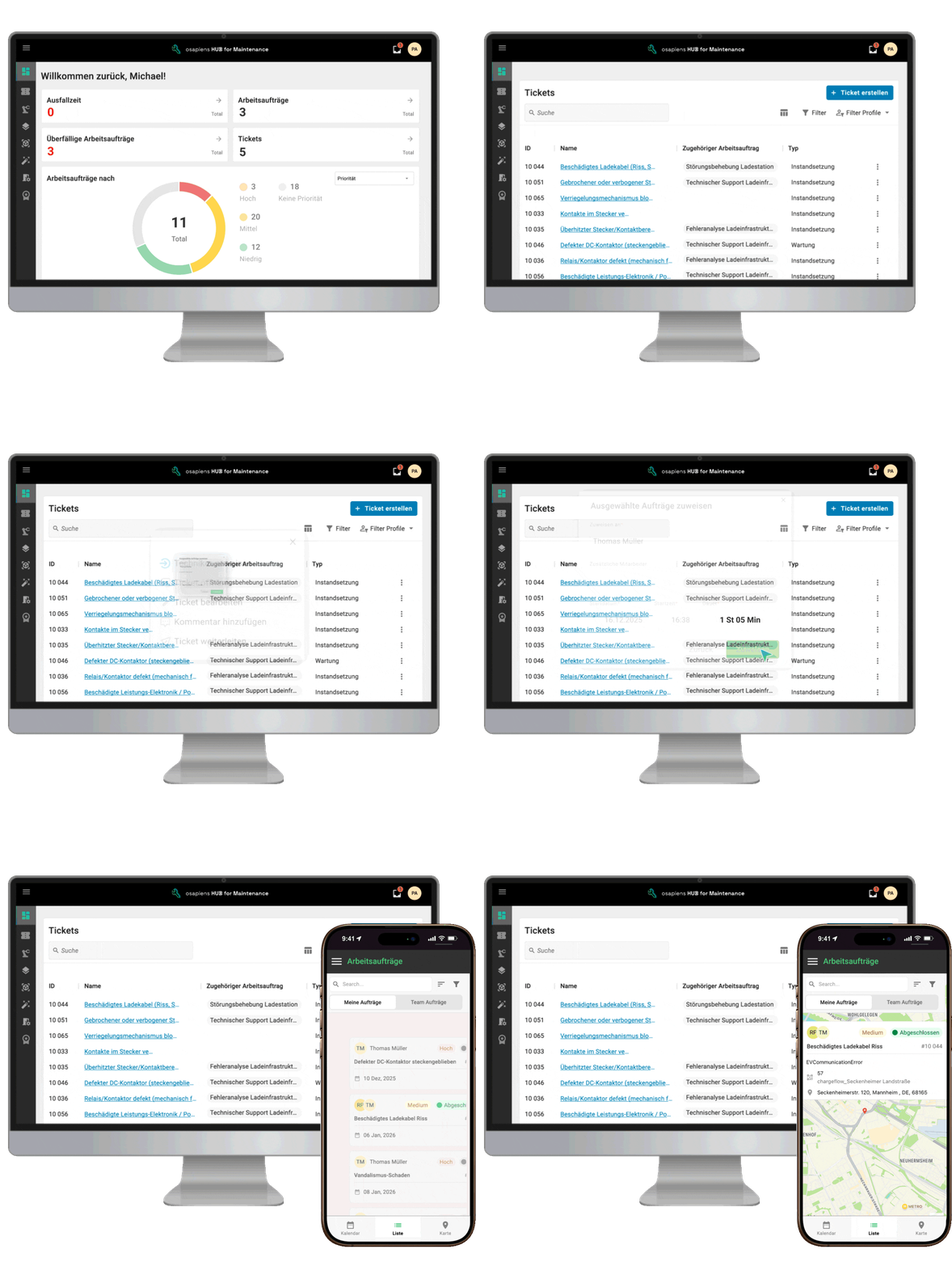
More than 2.500 companies in 65 countries trust osapiens




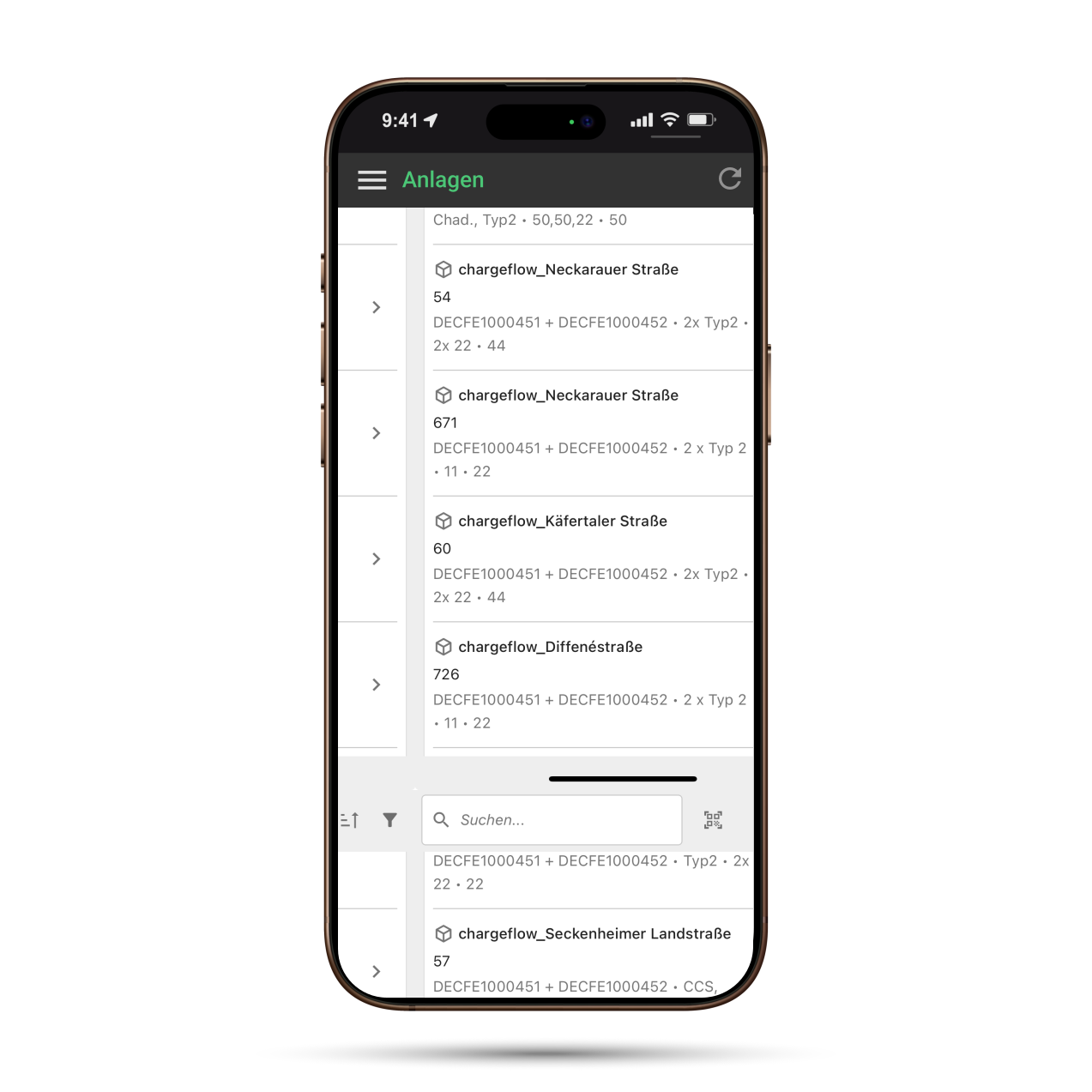
Everything in one place.
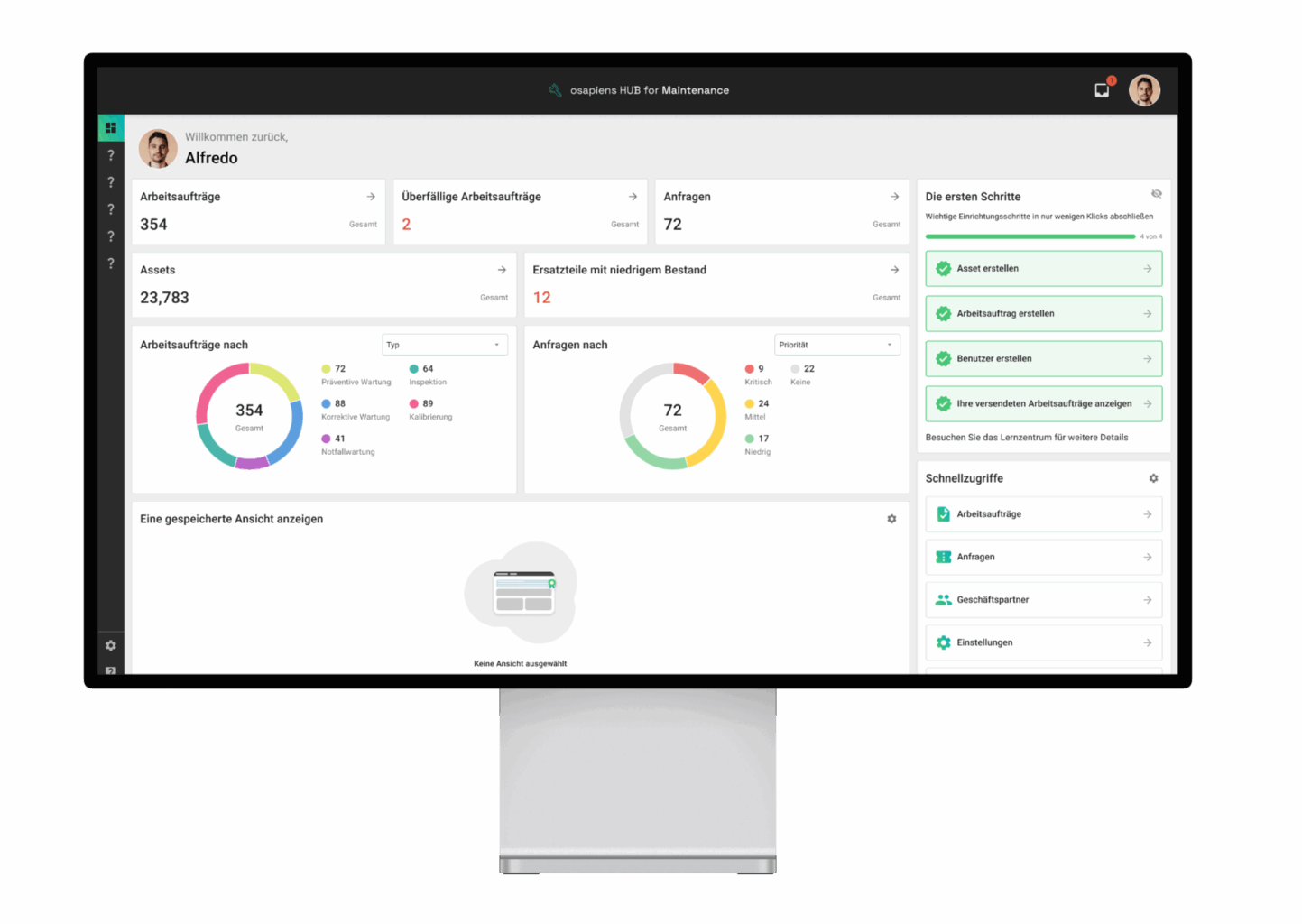
Today, maintenance information is often spread across many systems and workarounds. With osapiens, systems, maintenance plans, spare parts, and technician scheduling are bundled into one central solution. All work is cleanly documented and securely stored for audit purposes. Everything in one place - in one app that meaningfully complements the backend.

Map App for Technicians.
Issues with charging infrastructure nowadays come in via email, backend, or hotline. This often creates chaos - and documentation only happens later on a laptop. The osapiens map app guides technicians directly to the charging station, with route planning, clear job overviews, and mobile on-site data capture. This automatically creates a clean service report while the job is still in progress.

Backends display issues, charging points, and billing data - but they do not manage maintenance. For maintenance at the technician level, scheduling, planning, and documentation are missing. osapiens integrates existing backend data such as charging points and incidents and extends it with exactly these functions.
All Charging Stations. One System. Automated from Master Data.
Automatic Import from Backend Systems
We integrate master data on charging points, locations, connector types, charging capacity, and live incident reports from OCPP backends, SAP PM, ERP systems, and CPMS platforms. REST API integration with bidirectional real-time synchronization - without IT effort.
Quick Start via Excel Upload
Charging points can also be imported once via a structured Excel template - directly into the platform, without IT resources. Perfect for CPOs with decentralized charging infrastructure in Germany, Austria, and Switzerland.
Real-Time Synchronization via API
Through the REST API, charging points and incident data are continuously synchronized from your backend and kept up to date. Automatic ticket creation for failures, live status updates, and alerts - ensuring maximum availability of your charging stations.
One Central Master Data Database for All Processes
A system for maintenance planning, technician dispatching, mobile documentation, and audit-proof records - built on consistent, automatically updated master data. Scalable from 100 to 100,000+ charging points, without changing systems.
All Backend Incidents Captured Automatically. All Tickets Live-Synchronized. Full Visibility for Technicians.
Standalone Processing of Backend Incidents
Incidents are reviewed in the backend and selectively transferred into osapiens. This creates maintenance and service requests that are assigned to qualified technicians based on availability, location, qualifications, and current spare parts inventory.
Seamless Ticket Integration via API
Backend tickets are automatically synchronized in real time with osapiens. Incident information flows directly into the dispatch and maintenance system. Technicians receive all relevant data (error codes, charging point history, last maintenance) on their smartphones - available even offline.
Rule-Based Ticket Processing
Define rules for which incidents are automatically imported, filtered, or prioritized. From backend reports, matching technician tasks are automatically generated - including predefined checklists, required qualifications, and material planning.
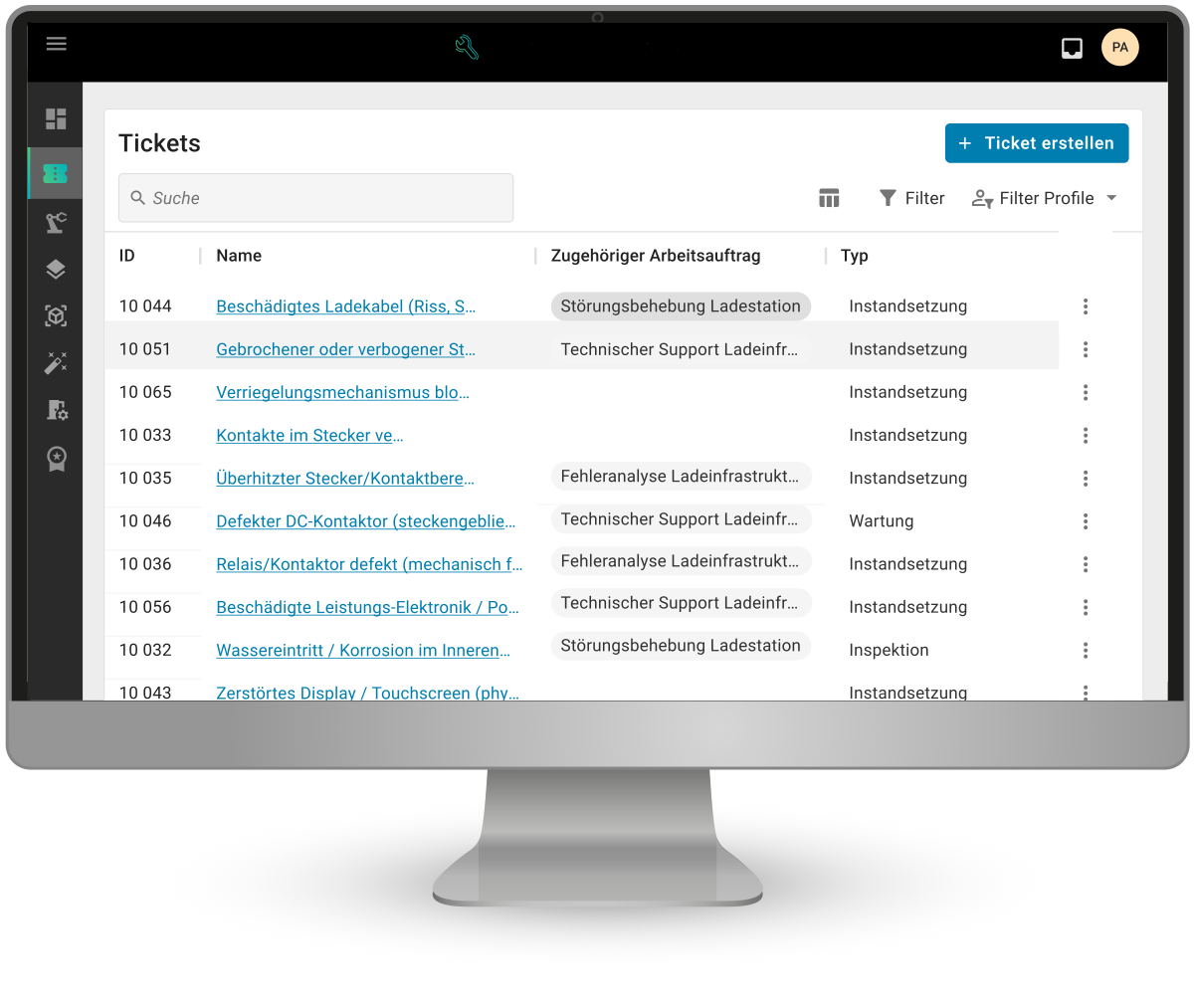
All Technicians. All Incidents. Real-Time Visibility for Perfect Dispatching.
Direct Assignment or Central Planning with Drag & Drop
Assign jobs directly with a few clicks or plan multiple technicians via a clear planning board. Intuitive drag-and-drop functionality, filtering options by qualification, location, and availability, as well as real-time resource visibility - enabling fast dispatching even during high volumes of incidents.
Intelligent Availability Planning
Vacation, training, shift models, and sick leave are automatically considered - enabling realistic deployment plans without scheduling errors. AI-supported workload optimization ensures balanced task distribution, reduces waiting times, and increases first-time fix rates at charging stations.
Clear Communication Within the Task
All instructions, spare parts, tasks, and site-specific information are stored directly within the work order and clearly assigned to the charging station. Technicians receive complete job information on mobile devices - including customer history, last maintenance data, error codes, and route descriptions. No emails, no follow-up questions.
One System - No Information Loss
No emails, calls, or messages across multiple channels. All information remains centrally stored in the system and is available in real time. Live status updates from the field to the back office, digital signatures, photo documentation, and audit-proof archiving - everything synchronized and fully traceable.
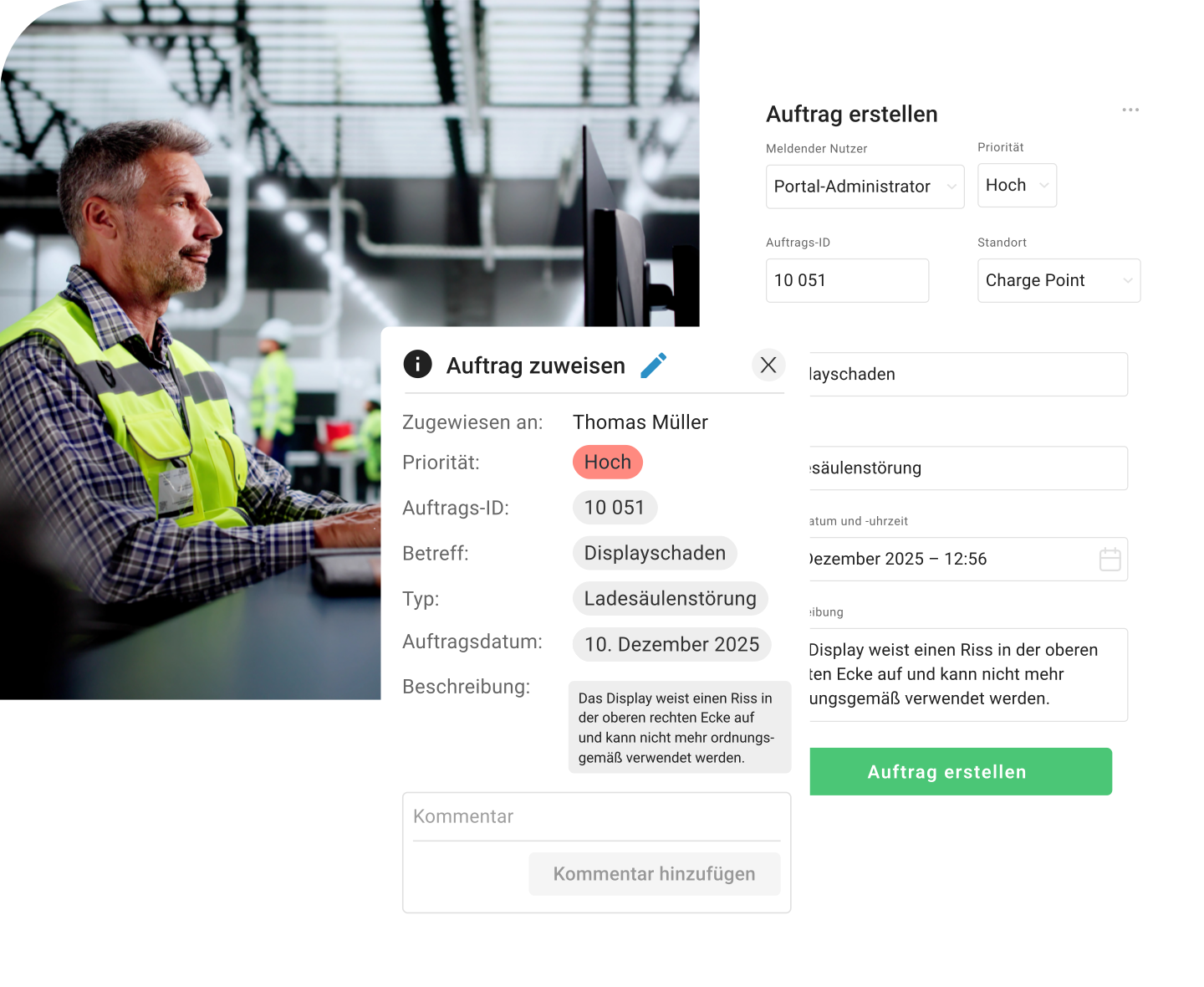
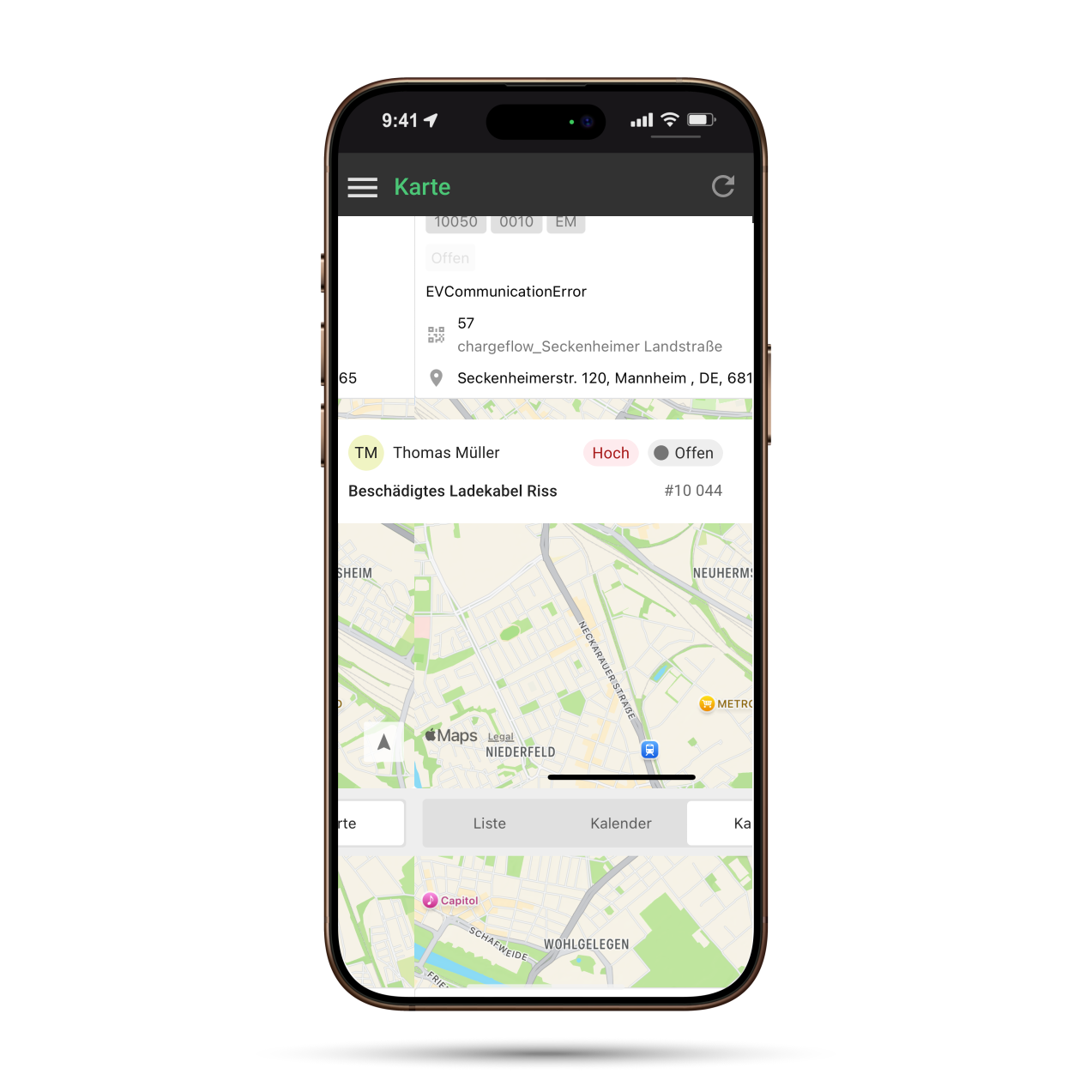
One App for Technicians. Map with Incidents. Job. Photo. Done.
Direct Navigation to the Charging Station via Integrated Map App
Incidents and tasks are visualized within the map view. The route to the charging station is planned directly in the app - no external tools required. Route planning is based on all integrated charging stations, works offline, and includes prioritization based on urgency and proximity.
One App for Every Device - Cross-Platform
Work with smartphones, tablets, laptops, iOS, Android, or web. All tasks and information are accessible at any time. Mobile app with offline access: 85% faster documentation. Technicians work fully mobile and automatically synchronize data as soon as network connectivity is available again.
Documentation Directly at the Site
With photos, signatures, status updates, videos, and material consumption, technicians document work directly on site. All documents include timestamps and an audit trail. Reports are created live - enabling immediate invoicing. 42% faster billing processes. Work order templates with predefined checklists and real-time status updates.
All Information Available On-Site - Even Offline Task history, customer comments, documents, manuals, and equipment master data are available directly within the task. Technicians receive all information offline (customer history, device data, manuals). 99% data accuracy through structured input fields. No follow-up questions, no delays.
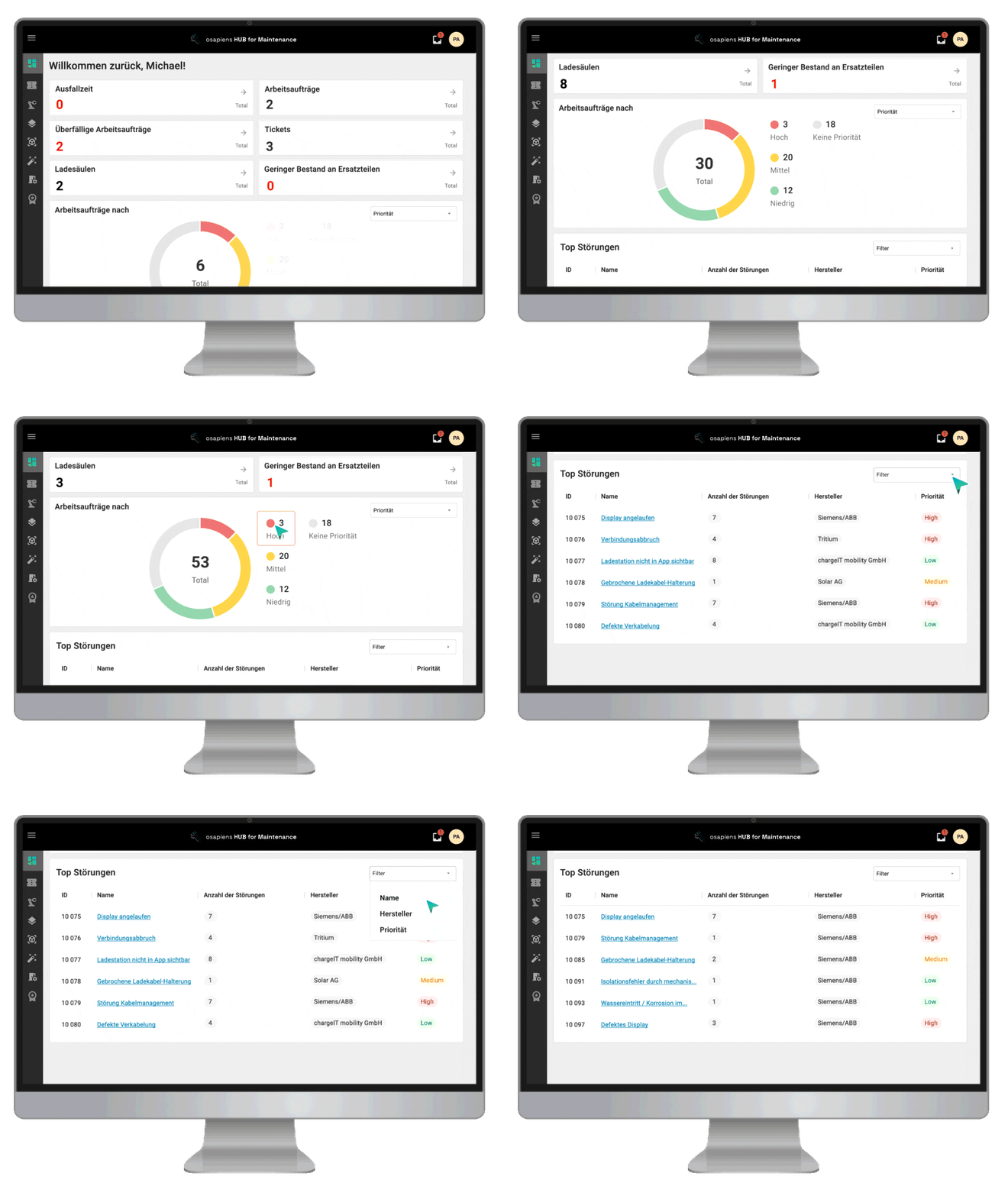
All Assets. All Manufacturers. Frequent Incidents. One Dashboard.
Real-Time Dashboard for All Assets and Incidents
Visualize the status of all charging stations on an interactive map or asset list. Color coding shows instantly which stations are online, offline, under maintenance, reporting errors, manufacturers, charging capacity, or incident type. Live status updates every 30 seconds - for maximum response speed in critical situations.
Incident Analysis by Asset & Manufacturer for Data-Driven Decisions
Identify which charging points or manufacturers experience failures most frequently and where action is needed. Top incidents, MTBF (Mean Time Between Failures), MTTR (Mean Time To Repair), and availability rates per charging station, location, or manufacturer. Optimize maintenance contracts and spare parts planning based on real data.
Predictive Maintenance: Identify Bottlenecks Early
Analyze service workloads, backlogs, and material consumption to adjust maintenance plans and spare parts proactively. Which charging stations have unusually high incident rates? Which spare parts are used most frequently? AI-powered forecasts indicate which charging stations are likely to fail within the next 30 days - enabling proactive maintenance.
More than 2.500 companies in 65 countries trust osapiens

FAQ
How often must charging stations be maintained?
Maintenance intervals depend on the manufacturer, usage intensity, location, and risk assessment. In practice, publicly accessible charging stations are generally recommended to undergo recurring annual inspections — including visual inspections, functionality tests, and safety measurements. High-frequency DC fast chargers may require shorter intervals.
How often must a charging station be inspected?
At least annually, an electrical safety inspection must be carried out by a qualified electrician. Legal metrology inspections of measuring devices are also required annually. For commercial use, additional inspections by certified experts may be necessary. Exact intervals are defined by DGUV V3 and charging station regulations.
How often must charging stations be calibrated?
Initial calibration of measuring devices in charging stations is required during installation. After that, measuring devices generally do not need to be recalibrated unless structural changes are made. However, annual inspections of legal metrology compliance by accredited bodies are mandatory. Recalibration may become necessary when components are replaced or software updates affect measurement accuracy.
What maintenance tasks are required for the charging system?
The most important maintenance tasks include:
- Visual inspection for damage
- Checking residual current protection switches (RCD)
- Functional testing of all charging points
- Cleaning connectors and displays
- Software updates and verification of communication interfaces
Hardware components such as charging cables, connectors, and housings must be inspected for wear. Regular inspections according to standards and legal requirements are mandatory. Complete documentation of all work ensures compliance.
Who is allowed to maintain charging stations?
Only qualified electricians with additional training in e-mobility are authorized. Required qualifications include knowledge of high-voltage technology, DIN VDE 0105-100, and manufacturer-specific training. Legal metrology inspections may only be carried out by accredited bodies or authorities. Depending on the manufacturer, software updates must be performed by certified service partners or trained personnel.