

Maintenance Checklist

Florian Bartholomäus, osapiens Expert | 1. January 2026 | Lesezeit 12 min.
Most baghouse failures trace back to false differential pressure readings caused by dust-clogged sensing lines. Monthly cleaning of these lines with compressed air prevents operators from running blind and making poor maintenance decisions based on inaccurate data.
Create your checklist for free











TRUSTED BY LEADING COMPANIES




ENTERPRISE-READY
 SAP Certification
 ISO 27001
 EU Hosting
 Entra ID & Okta
 Multi-Entity
Table of Contents
Without structured maintenance, unplanned downtime for baghouse systems becomes harder to predict — and neglected inspections often escalate into costly filter failures, environmental violations, and production shutdowns. A systematic baghouse maintenance checklist helps industrial facilities maintain consistent air quality control, extend filter life, and ensure regulatory compliance through documented, repeatable procedures.
This guide provides a practical framework for baghouse maintenance: what to inspect, how often, and how preventive maintenance planning shifts operations from reactive firefighting to proactive asset management. Whether you operate pulse-jet, reverse-air, or shaker baghouse systems, the checklist below is designed to be actionable, scalable, and suitable for both paper-based workflows and digital execution through modern asset maintenance software.
Baghouse Maintenance: Key Facts
- Structured checklists reduce failures: Regular inspections at daily, weekly, monthly, quarterly, and annual intervals help identify wear patterns, filter degradation, and cleaning system malfunctions before they cause emissions violations or system shutdowns.
- Differential pressure monitoring is critical: Tracking pressure drop across filters provides the most important indicator of system health — but only if sensing lines remain clean and gauges are calibrated correctly.
- Documentation supports compliance: EPA and OSHA regulations mandate specific inspection frequencies and audit-ready records for baghouse systems handling combustible or hazardous dust.
- Digital execution improves consistency: Modern CMMS platforms like osapiens HUB for Maintenance automate scheduling, enable mobile checklist execution, and eliminate gaps in documentation that paper-based systems create.
Why You Need a Baghouse Maintenance Checklist
Baghouse systems capture dust and particulate matter before it enters the atmosphere or contaminates work areas, making them essential environmental control and worker safety equipment. Yet many facilities operate these systems reactively, addressing problems only after visible emissions, abnormal pressure readings, or equipment failures force intervention.
A structured maintenance checklist addresses this gap by ensuring critical tasks occur at appropriate intervals, regardless of personnel changes, budget pressures, or competing operational priorities. Here’s why systematic baghouse maintenance matters:
- Consistency across shifts and sites: Checklists standardize maintenance execution, ensuring that every technician performs the same inspections with the same thoroughness — eliminating reliance on individual experience or institutional memory.
- Risk reduction through early detection: Regular inspections identify filter abrasion, moisture infiltration, cleaning system wear, and structural corrosion before they escalate into catastrophic failures that trigger mandatory shutdowns.
- Documentation for regulatory compliance: EPA regulations require daily visual inspections, weekly hopper discharge verification, and monthly cleaning system checks for many industrial applications — documented checklists provide audit-ready evidence of compliance.
- Technician guidance and training: Detailed checklists serve as on-the-job training tools for less experienced maintenance personnel, ensuring they understand what to inspect, what constitutes normal versus abnormal conditions, and when to escalate issues.
- Standardization for continuous improvement: When maintenance activities are systematized and documented, patterns emerge that reveal which components fail prematurely, which environmental conditions accelerate degradation, and which process modifications reduce maintenance demands.
- Handover quality during shift transitions: Structured documentation improves communication between shifts, ensuring that emerging issues identified during one shift receive appropriate follow-up during the next.
What to Include in Your Baghouse Maintenance Checklist
A comprehensive baghouse maintenance checklist encompasses the entire system: filter media, cleaning mechanisms, hopper discharge, structural integrity, monitoring equipment, and auxiliary components. The checklist below organizes tasks by component or system rather than by frequency, reflecting how technicians actually think about equipment.
Actual inspection intervals depend on usage intensity, dust characteristics, environmental conditions, and manufacturer specifications. High-dust-volume applications or abrasive materials may require more frequent filter inspection and replacement, while clean applications might achieve longer service intervals.
| Component / System | Inspection & Maintenance Tasks | Purpose |
|---|---|---|
| Filter Bags / Media | Visual inspection for tears, holes, abrasion marks, hardening, discoloration; spot-check bag seating in tube sheet; dye leak testing annually; replace bags when differential pressure consistently exceeds manufacturer limits | Maintain filtration efficiency, prevent unfiltered emissions, detect degradation before catastrophic failure |
| Cleaning System (Pulse-Jet) | Listen to solenoid valve firing sounds; inspect diaphragm condition; verify compressed air pressure (typically 70 psi); check pulse pipe alignment; clean compressed air filters and moisture separators; verify controller settings | Ensure adequate filter cleaning, prevent excessive compressed air waste, optimize cleaning cycle timing |
| Cleaning System (Reverse-Air / Shaker) | Inspect damper valve seating and operation; check poppet valve leakage; verify shaker mechanism amplitude and frequency; lubricate bearings and drive linkages; inspect motor condition | Deliver adequate cleaning energy, prevent filter blinding, extend filter life through proper dust cake removal |
| Hopper & Discharge System | Verify dust removal through discharge mechanism; inspect rotary airlock valve seals and bearing lubrication; check screw conveyor wear and drive chain tension; ensure hopper does not overfill | Prevent dust re-entrainment into filter section, maintain vacuum integrity, avoid structural stress from accumulated material |
| Differential Pressure Monitoring | Record pressure drop readings after cleaning cycles; blow out sensing lines monthly with compressed air; verify gauge accuracy; compare readings against baseline trends | Provide accurate system health indicators, enable data-driven maintenance decisions, detect filter blinding or leakage early |
| Structural Integrity | Inspect for holes, corrosion, or rust in baghouse walls and hopper; check welds for cracks; verify all bolted connections remain tight; inspect door gaskets for softness and sealing effectiveness | Maintain airtight operation, prevent external air infiltration, avoid moisture-related filter damage, ensure structural safety |
| Fan & Motor Assembly | Inspect fan blades for corrosion and material buildup; check drive belt tension and alignment; verify motor bearing condition through vibration and sound; lubricate moving parts per manufacturer schedule | Ensure continuous airflow, prevent motor overheating, detect bearing degradation before catastrophic failure |
| Ductwork & Inlet | Inspect for dust accumulation that restricts airflow; verify minimum airstream velocity (3,500–4,500 fpm depending on dust type); check inlet for abrasion or wear spots; ensure proper slope for material drop-out | Maintain adequate transport velocity, prevent dust settling in ducts, reduce abrasive impact on filter bags |
| Temperature Monitoring | Verify temperature sensors display accurate readings; confirm inlet temperature remains within filter media specifications; calibrate sensors annually | Prevent thermal degradation of filter media, detect process upsets before they damage filters |
| Safety & Explosion Protection | Verify spark detection systems remain functional; test fire suppression system charge or supply; inspect explosion isolation devices; check that safety equipment is free of dust deposits | Prevent combustible dust explosions, ensure emergency systems activate properly, protect personnel and facility |
Turn Your Baghouse Maintenance Checklist into Mobile Work Orders
Create structured checklists for every component — from filter bags to cleaning systems. Execute them on mobile, sync with SAP PM, and keep full audit trails automatically.Start with Your Baghouse Maintenance Checklist
Common Baghouse Problems Your Maintenance Checklist Prevents
Systematic maintenance prevents predictable failure modes that cause unplanned downtime, environmental violations, and safety incidents. Understanding these failure patterns helps maintenance teams prioritize inspection activities and recognize early warning signs.
- Filter bag failure from abrasion or chemical attack: Regular visual inspections identify wear patterns before small holes expand into breaches that allow unfiltered air to bypass the filtration media. Dye leak testing detects microscopic holes invisible to casual inspection, enabling proactive filter replacement before emissions violations occur.
- Differential pressure excursions from clogged or damaged filters: Monitoring pressure drop trends reveals when filters become blinded (excessive pressure) or when bags fail (abnormally low pressure). Without regular monitoring, operators may unknowingly run systems well outside manufacturer specifications, accelerating equipment degradation.
- Cleaning system degradation causing inadequate dust removal: Worn diaphragm valves leak compressed air while delivering insufficient cleaning power, increasing operational costs while degrading filter cleaning effectiveness. Listening to valve firing sounds during monthly inspections enables early detection before performance deteriorates significantly.
- Moisture infiltration causing filter blinding and hydrolysis: Structural leaks allow external air to enter the baghouse, potentially causing condensation that triggers chemical breakdown of filter media. Semi-annual structural inspections identify corrosion and holes before moisture-related damage occurs.
- Hopper overfill causing dust re-entrainment: When discharge systems fail or operate inadequately, accumulated dust rises toward filter bag level where cleaning cycles re-entrain material into the airstream. Weekly verification of dust removal prevents this destructive cycle.
- False differential pressure readings from clogged sensing lines: Dust accumulation in pressure monitoring lines provides misleading data that causes operators to make poor maintenance decisions. Monthly cleaning of sensing lines with compressed air ensures accurate readings that support effective maintenance planning.
- Combustible dust accumulation creating explosion hazards: Inadequate hopper discharge and ductwork cleaning allow dust to accumulate in quantities that pose explosion risk if ignition sources enter the system. Regular cleaning and functional testing of safety systems reduce this catastrophic risk.
From Paper Checklist to Digital: How the osapiens HUB Automates Your Baghouse Maintenance Checklist
While paper checklists and Excel spreadsheets define necessary maintenance tasks, they create friction in execution: technicians must carry printed documents into the field, manually record observations, and transcribe information into formal systems later. This process introduces gaps where tasks are deferred, documentation is incomplete, or critical observations are lost during transcription.
Digital maintenance management through osapiens HUB for Maintenance addresses these execution challenges by bringing checklists directly to technicians’ mobile devices, enabling real-time documentation, and automatically generating audit trails without additional administrative burden.
The platform supports baghouse maintenance through:
- Mobile checklist execution: Technicians access structured checklists on smartphones or tablets, documenting observations, capturing photos of filter condition, and recording differential pressure readings directly in the field — even in areas without network connectivity through offline functionality.
- Automated scheduling based on intervals or conditions: The system generates work orders for preventive maintenance tasks automatically based on time intervals (daily, weekly, monthly) or condition-based triggers (operating hours, meter readings), ensuring no inspection falls through scheduling gaps.
- SAP PM integration for enterprise consistency: For organizations using SAP Plant Maintenance, osapiens HUB provides SAP-certified integration that synchronizes maintenance data bidirectionally, eliminating duplicate data entry while maintaining SAP PM as the system of record for financial and compliance reporting.
- Audit-ready documentation automatically: Every completed checklist creates timestamped records showing who performed the inspection, what observations were made, what corrective actions were taken, and when follow-up is required — providing the documentation EPA and OSHA auditors require without manual record compilation.
- Trend analysis for predictive insights: By capturing differential pressure readings, filter replacement timing, and failure patterns systematically, the platform reveals trends that enable optimization of maintenance intervals based on actual performance data rather than generic manufacturer recommendations.
| Aspect | Paper or Excel Checklist | Digital Checklist with osapiens HUB |
|---|---|---|
| Field Execution | Technicians carry printed checklists, manually record observations, risk losing or damaging paper in industrial environments | Mobile app provides checklists on smartphones/tablets, captures photos and timestamps automatically, works offline in areas without connectivity |
| Documentation Quality | Handwritten notes may be illegible, observations are lost during transcription, gaps occur when technicians forget to transfer information | Real-time digital capture ensures complete, legible records; photos provide visual evidence of conditions; no transcription gaps |
| Scheduling Consistency | Manual scheduling requires planners to remember intervals, tasks slip when personnel are absent or priorities shift | Automated work order generation based on time or condition triggers ensures no task is missed regardless of personnel changes |
| Audit Readiness | Compiling records for audits requires searching through file cabinets or spreadsheets, missing documentation creates compliance risk | Complete audit trail available instantly through filtered reports, timestamped records demonstrate compliance without manual compilation |
| Trend Analysis | Identifying patterns requires manual data aggregation from multiple sources, limiting ability to optimize maintenance intervals | Automated analytics reveal differential pressure trends, filter life patterns, and failure modes that enable data-driven optimization |
| Integration with Enterprise Systems | Maintenance data exists in isolation from financial systems, requiring manual reconciliation for cost tracking and budget planning | SAP PM integration synchronizes maintenance activities with procurement, inventory, and financial systems automatically |
Stop Losing Uptime to Missed Baghouse Inspections
Digitize your maintenance checklists, automate work order creation, and give every technician a mobile tool that works — even offline. SAP PM integration included.Try osapiens HUB for Free
FAQ
What should be included in a baghouse maintenance checklist?
A comprehensive baghouse maintenance checklist should cover filter bag inspection for tears and proper seating, cleaning system functionality verification, differential pressure monitoring with sensing line cleaning, hopper discharge system operation, structural integrity checks for corrosion or holes, fan and motor condition assessment, ductwork inspection for dust accumulation, temperature monitoring equipment calibration, and safety system functional testing. The specific tasks and intervals depend on baghouse type (pulse-jet, reverse-air, or shaker), dust characteristics, and operating conditions. Checklists should be customized based on manufacturer recommendations and facility-specific risk assessments rather than following generic templates.
How often should I complete my baghouse maintenance checklist?
Maintenance frequency depends on usage intensity, dust characteristics, and risk assessment rather than fixed regulatory intervals. Common practice includes daily visual inspections of emissions and differential pressure, weekly verification of hopper discharge, monthly cleaning system checks and sensing line cleaning, quarterly detailed filter bag inspections, and annual comprehensive assessments including dye leak testing and structural integrity evaluation. High-dust-volume applications or abrasive materials may require more frequent inspections, while clean applications might achieve longer intervals. Organizations should establish intervals based on actual equipment performance data and manufacturer guidance rather than arbitrary schedules.
Can I customize this baghouse maintenance checklist template?
Yes, customization is essential because baghouse systems vary significantly in design (pulse-jet versus reverse-air versus shaker), dust type (abrasive versus sticky versus combustible), operating environment (temperature extremes, moisture exposure), and regulatory requirements. Effective checklists reflect your specific equipment configuration, incorporate manufacturer recommendations for your filter media and cleaning system, and address facility-specific risk factors. Digital maintenance platforms like osapiens HUB enable easy checklist customization while maintaining standardization across similar equipment, allowing you to adapt inspection procedures to your operational context without losing the benefits of systematic execution.
How does a digital CMMS improve maintenance checklist management?
A digital CMMS improves checklist management by automating work order generation based on time or condition triggers, enabling mobile execution that captures observations in real-time without transcription gaps, providing offline functionality for areas without network connectivity, creating automatic audit trails with timestamps and digital signatures, and revealing performance trends through systematic data capture. For organizations using SAP PM, platforms like osapiens HUB provide certified integration that synchronizes maintenance data with enterprise systems while offering superior mobile usability compared to native SAP interfaces. This combination delivers the execution efficiency of modern CMMS with the enterprise integration benefits of ERP systems, supporting both field technician productivity and maintenance audit readiness.
Start using osapiens for free
Improve your uptime, extend the life of your equipment, and simplify work order management.
Book a demo
ENTERPRISE CAPABILITIES
- SAP ECC & S/4HANA Certified
- Infor & MS Dynamics
- Microsoft Entra ID / Okta
- ISO 27001 & 9001
- EU Cloud · Data Sovereignty
- Development, Test, and Production Environments
- Multi-Entity & Multi-Site
- Power BI Integration
- Audit Trail & Compliance
Related content
January 1, 2026
Industrial Turbines Maintenance Checklist – Tasks, Tips & Digital Execution

April 7, 2026
IFS Ultimo Alternatives: Top 5 Comparison 2026
January 1, 2026
Manufacturing Facility Maintenance Checklist – Essential Tasks & Digital Execution
January 1, 2026
Genset Maintenance Checklist – Tasks, Tips & Best Practices
August 19, 2025
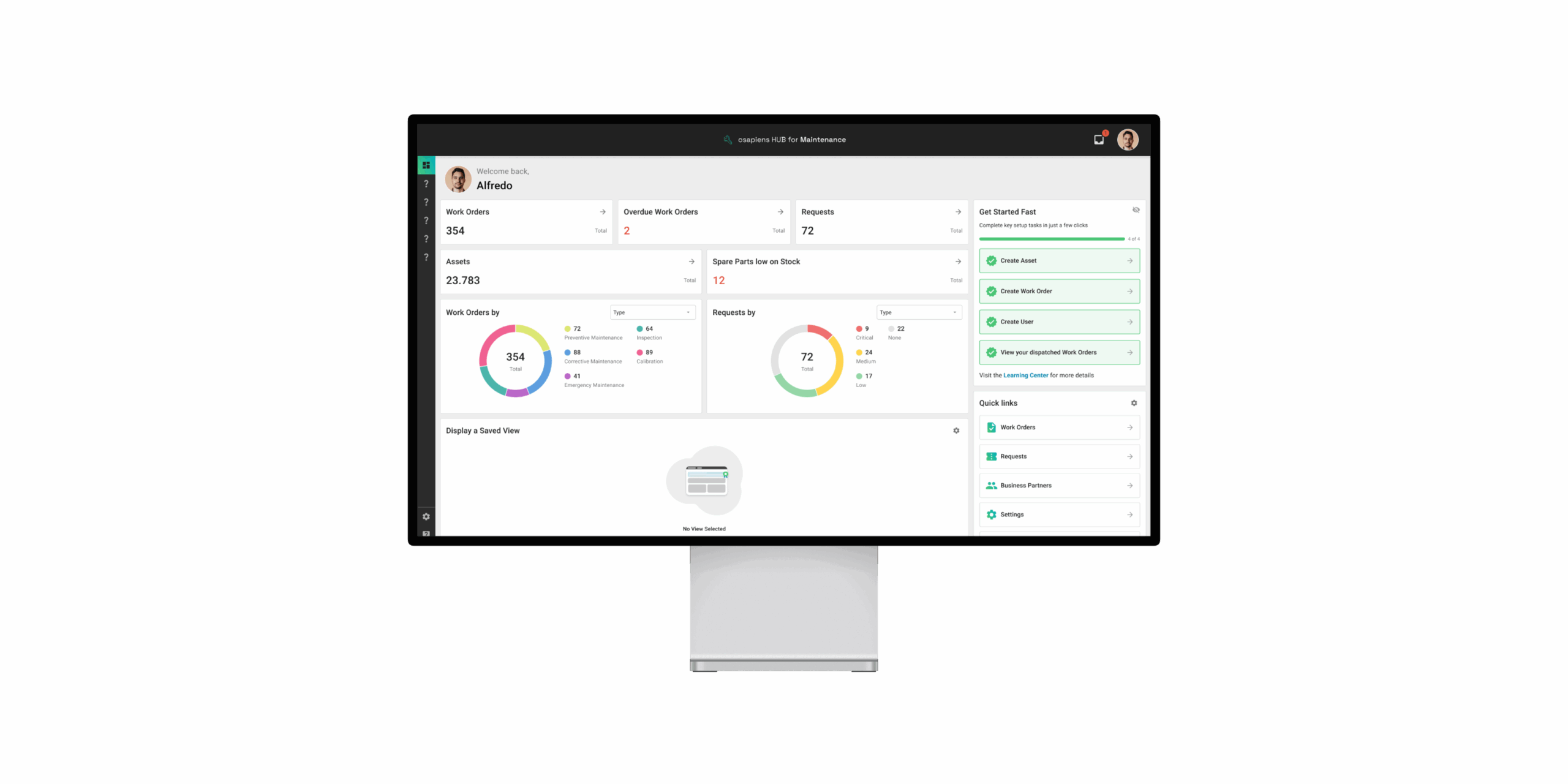
Version 3.17: The Next-Gen Cockpit for Your Maintenance
January 1, 2026
Generator Maintenance Checklist – Tasks, Tips & Best Practices
January 1, 2026
Automatic Screw Machine Maintenance Checklist – Tasks, Components & Digital Execution
January 1, 2026
Pharmaceutical HVAC Cleanroom Maintenance Checklist – Tasks, Standards & Digital Execution
January 1, 2026
Bioreactor Maintenance Checklist – Tasks, Compliance & Digital Execution
January 1, 2026
Batching Plant Maintenance Checklist – Tasks, Tips & Template
January 1, 2026
Milling Machine Maintenance Checklist – Tasks, Best Practices & Digital Execution
January 1, 2026