

Maintenance Checklist

Florian Bartholomäus, osapiens Expert | 1. January 2026 | Lesezeit 7 min.
Many drilling machine failures start with overlooked lubrication points or bearing temperature changes. Instead of relying on fixed monthly intervals, monitor bearing heat and vibration patterns during operation—these early indicators often reveal problems weeks before catastrophic failure, giving your team time to schedule repairs during planned downtime rather than facing emergency shutdowns.
Start using this checklist for free
More than 2200 companies place their trust in osapiens











Table of Contents
- Drilling Machine Maintenance: Key Facts
- Why You Need a Drilling Machine Maintenance Checklist
- What to Include in Your Drilling Machine Maintenance Checklist
- Common Drilling Machine Problems Your Maintenance Checklist Prevents
- From Paper Checklist to Digital: How the osapiens HUB Automates Your Drilling Machine Maintenance Checklist
- FAQ
Without structured maintenance, unplanned downtime for drilling machines becomes harder to predict—and costly. Whether you operate stationary drill presses in manufacturing or mobile drilling rigs in extraction environments, a comprehensive drilling machine maintenance checklist ensures consistency, reduces safety risks, and protects your documentation trail for audits and compliance reviews.
Drilling Machine Maintenance: Key Facts
A structured maintenance approach for drilling machines delivers measurable operational benefits:
- Consistency across shifts: Standardized checklists ensure every technician follows the same procedures, eliminating variability that leads to missed inspections and premature failures.
- Risk reduction: Organizations transitioning from reactive to preventive maintenance experience up to 30–50% reductions in unplanned downtime, according to industry research.
- Audit-ready documentation: Digital checklists with timestamps, photos, and technician signatures create contemporaneous records that meet regulatory requirements and protect against liability claims.
- Mobile execution: The osapiens HUB for Maintenance enables technicians to execute checklists on mobile devices, capture condition data in real time, and sync automatically with SAP PM for enterprise visibility.
Why You Need a Drilling Machine Maintenance Checklist
Ad-hoc maintenance based on experience alone introduces variability and risk. A structured checklist addresses critical operational gaps:
- Consistency: Experience-based maintenance varies by technician and shift, creating gaps where critical inspections are skipped or performed inconsistently. Checklists standardize procedures across all team members.
- Risk reduction: Missing or inconsistent checks on hydraulic systems, bearings, or electrical connections increase the likelihood of catastrophic failures that threaten worker safety and trigger expensive emergency repairs.
- Documentation: Regulatory audits and insurance investigations demand proof that maintenance occurred at appropriate intervals. Checklists with timestamps and technician signatures provide legally defensible records.
- Technician guidance: Less experienced team members benefit from step-by-step instructions that prevent omissions, while seasoned technicians use checklists to ensure nothing is overlooked during time pressure.
- Standardization: Repeatability across shifts, sites, and equipment ensures that maintenance quality remains consistent regardless of who performs the work.
- Handover quality: Structured documentation improves shift transitions by providing clear records of completed tasks, observations, and follow-up actions required.
What to Include in Your Drilling Machine Maintenance Checklist
Effective drilling machine checklists organize tasks by component or system, not by frequency. This structure reflects how technicians actually work—focusing on physical subsystems rather than arbitrary time intervals.
Your checklist should include logical sections covering visual inspection, functional checks, safety verification, cleaning and basic servicing, and documentation steps. Actual maintenance intervals depend on usage intensity, operating environment, and risk assessment—not fixed regulatory mandates.
| Component / System | Inspection & Maintenance Tasks | Purpose |
|---|---|---|
| Spindle & Chuck Assembly | Check spindle runout, inspect chuck for wear or slipping, verify secure bit retention, listen for abnormal bearing noise | Precision, tool seating, bearing health |
| Drive System & Belts | Inspect drive belt for wear or thickness variation, verify consistent belt tension, check pulley alignment and condition | Power transmission, vibration control |
| Quill & Vertical Movement | Check for smooth vertical travel without binding, measure radial and axial play, lubricate quill mechanism per manual | Positioning accuracy, operational safety |
| Bearings & Lubrication Points | Monitor bearing temperature during operation, apply specified lubricants to all moving parts, inspect for overheating or unusual sounds | Component longevity, failure prevention |
| Hydraulic System (Rigs) | Check fluid levels and contamination, inspect hoses for leaks or damage, verify pressure consistency, test cylinder function | Clamping force, operational reliability |
| Electrical & Safety Systems | Inspect power cords for fraying or damage, verify all connections are tight and corrosion-free, test emergency stops and interlocks | Operator safety, electrical reliability |
| Cooling & Chip Removal | Clean accumulated chips and coolant residue, verify coolant flow and concentration, inspect filters and replace as needed | Tool life, thermal management |
| Structural & Mounting | Check table surface for damage or warping, inspect mast and substructure for cracks or corrosion, verify all bolts and welds are secure | Structural integrity, safety |
Turn Your Drilling Machine Maintenance Checklist into Mobile Work Orders
Create structured checklists for every component—from spindle to hydraulic system. Execute them on mobile devices, sync with SAP PM, and keep full audit trails automatically.Start with Your Drilling Machine Maintenance Checklist
Common Drilling Machine Problems Your Maintenance Checklist Prevents
A structured maintenance checklist helps prevent recurring failure patterns that drive unplanned downtime and safety incidents:
- Bearing degradation from inadequate lubrication: Regular lubrication checks and bearing temperature monitoring catch deterioration before catastrophic failure, preventing spindle lockup and shaft warping.
- Drive belt inconsistency causing vibration: Systematic belt inspection and tension verification eliminate precision loss and excessive vibration that propagate through production, reducing dimensional accuracy.
- Spindle drift and tool runout: Routine quill inspection and play measurement maintain positioning accuracy, preventing dimensional errors that force costly scrap and rework.
- Hydraulic system failures: Regular fluid checks, hose inspections, and pressure monitoring prevent leaks, cylinder damage, and pressure fluctuations that create cascading failures across dependent subsystems.
- Electrical connection failures: Systematic inspection of power cords, connections, and insulation prevents loose connections and insulation failures that threaten equipment performance and worker safety.
- Documentation gaps: Digital checklists with photos, timestamps, and technician signatures eliminate missing maintenance records that create audit vulnerabilities and liability exposure during incident investigations.
From Paper Checklist to Digital: How the osapiens HUB Automates Your Drilling Machine Maintenance Checklist
Paper checklists and Excel spreadsheets introduce systematic failures: technicians mark boxes without performing work, handwritten notes become illegible, and media breaks require manual re-transcription that introduces errors. Paper forms are easily lost or damaged, and Excel cells can be modified without audit trails—violating regulatory requirements for contemporaneous data capture.
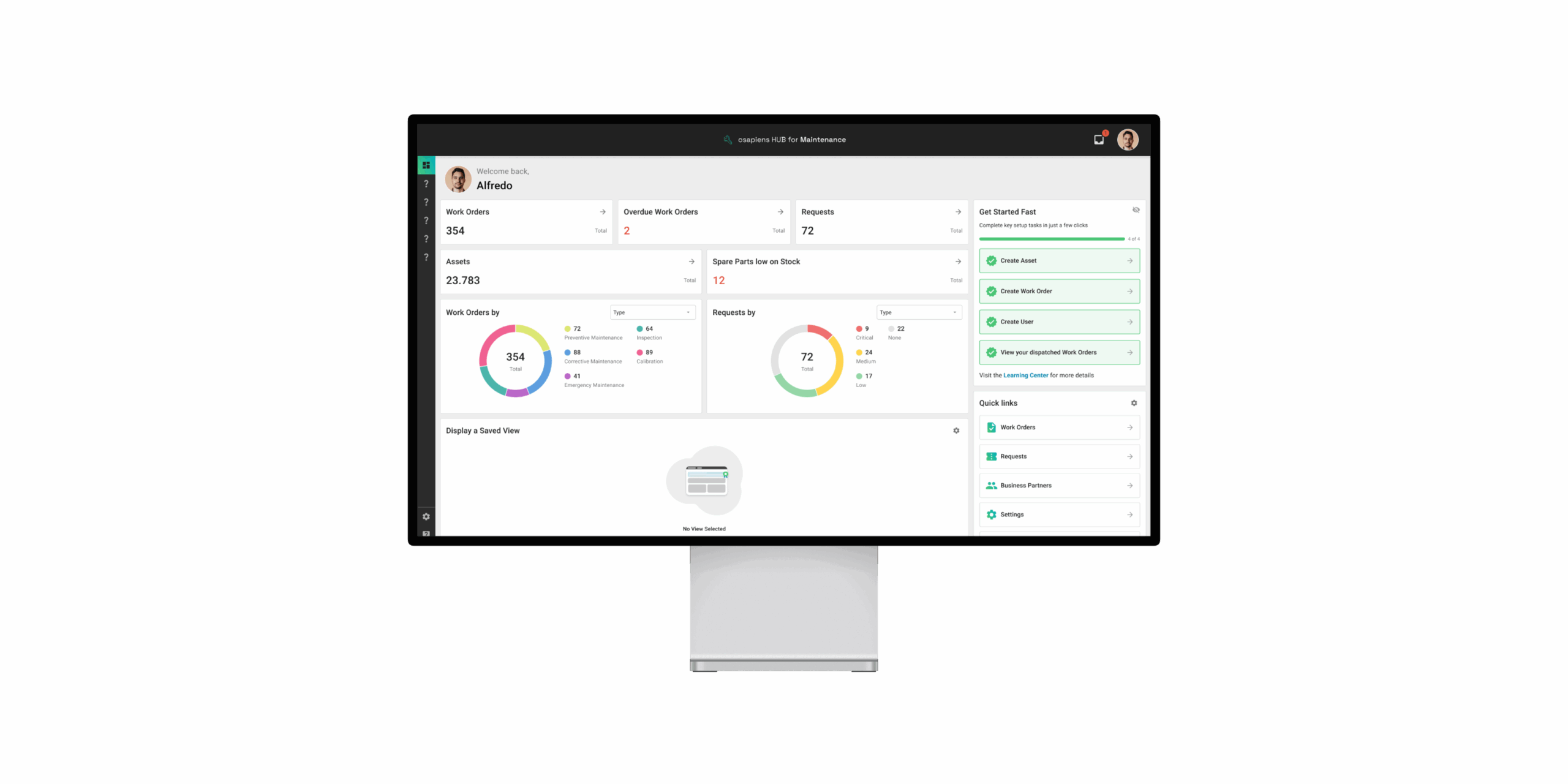
The osapiens HUB for Maintenance eliminates these friction points through mobile checklist execution, enabling technicians to document work at the point of execution with photos, timestamps, and comments. All data syncs automatically with SAP PM, creating unified visibility for planners while maintaining audit-ready documentation that meets regulatory standards.
| Paper or Excel Checklist | Digital Checklist with osapiens HUB |
|---|---|
| Manual transcription introduces errors | Direct mobile data capture eliminates re-entry |
| Lost or damaged forms create documentation gaps | Cloud-based storage ensures records are never lost |
| No audit trail for modifications | Automatic timestamps and edit history for compliance |
| Delayed data entry, often days after work completion | Real-time updates as work is performed |
| Photos stored separately or not captured | Photos attached directly to work orders and assets |
| No integration with enterprise systems | Bidirectional SAP PM sync for unified data |
| Difficult to analyze trends or identify patterns | Built-in analytics reveal failure patterns and optimization opportunities |
The osapiens HUB supports offline operation for drilling sites with poor connectivity, automatically syncing data when connection restores. QR code scanning eliminates equipment identification errors, and automated work order generation based on time, usage, or condition triggers ensures no maintenance cycle is missed.
Stop Losing Uptime to Missed Drilling Machine Inspections
Digitize your maintenance checklists, automate work order creation, and give every technician a mobile tool that works—even offline. SAP PM integration included.Try osapiens HUB for Free
FAQ
What should be included in a drilling machine maintenance checklist?
A comprehensive checklist should cover spindle and chuck inspection, drive system and belt checks, quill and vertical movement verification, bearing lubrication and temperature monitoring, hydraulic system assessment (for rigs), electrical and safety system testing, cooling and chip removal, and structural integrity verification. Organize tasks by component or system rather than arbitrary time intervals, and adapt based on your specific equipment, usage patterns, and operating environment. Digital checklists in the osapiens HUB for Maintenance enable customization while maintaining standardization across sites.
How often should I complete my drilling machine maintenance checklist?
Maintenance frequency depends on usage intensity, operating environment, and risk assessment—not fixed regulatory mandates. Common practice includes daily visual inspections and cleaning, weekly lubrication and belt checks, monthly bearing temperature monitoring and chuck inspection, and quarterly or annual comprehensive component assessments. Usage-based triggers (operating hours, production cycles) often prove more effective than fixed time intervals. The osapiens HUB enables both time-based and usage-based scheduling, adapting maintenance to actual equipment condition rather than arbitrary calendars.
Can I customize this drilling machine maintenance checklist template?
Customization is essential—generic checklists miss equipment-specific requirements and operational contexts. Adapt tasks based on manufacturer specifications, historical failure patterns, environmental conditions (temperature extremes, contamination exposure), and regulatory requirements specific to your industry. The osapiens HUB for Maintenance enables checklist customization while maintaining standardization across your organization, ensuring consistency without sacrificing flexibility. You can create asset-specific templates that reflect unique equipment configurations while leveraging best practices across similar machines.
How does a digital CMMS improve maintenance checklist management?
Digital CMMS platforms like the osapiens HUB eliminate manual transcription errors, provide real-time visibility into checklist completion status, enable photo and video documentation attached directly to work orders, create automatic audit trails with timestamps and technician signatures, and integrate with SAP PM for enterprise-level planning and financial tracking. Mobile execution ensures technicians document work at the point of execution rather than relying on memory for later transcription, dramatically improving data quality and compliance readiness. Analytics capabilities reveal failure patterns and optimization opportunities that paper-based systems cannot provide, enabling continuous improvement in maintenance planning and scheduling.
Start using osapiens for free
Improve your uptime, extend the life of your equipment, and simplify work order management.
Book a demo
Related content
January 1, 2026
Plumbing Maintenance Checklist – Tasks, Components & Digital Execution
January 1, 2026
Laboratory Equipment Maintenance Checklist – Tasks, Best Practices & Digital Solution
January 1, 2026
Dust Collector Maintenance Checklist – Tasks, Safety & Digital Execution
January 1, 2026
Roofing Maintenance Checklist – Tasks, Tips & Best Practices
January 1, 2026
Genset Maintenance Checklist – Tasks, Tips & Best Practices
January 1, 2026
Industrial Oven Maintenance Checklist – Tasks, Tips & Template

December 16, 2025
Top MaintainX Alternatives: Find the Best CMMS for Your Maintenance Teams in 2026

May 23, 2025
Whitepaper: How to Build a Strong Business Case for a CMMS
January 1, 2026
Pump Maintenance Checklist: What to Inspect & When
January 1, 2026
Assembly Line Equipment Maintenance Checklist – Tasks, Tips & Digital Execution
January 1, 2026
Laser Cutting Machine Maintenance Checklist: Prevent Downtime & Extend Equipment Life
August 19, 2025