

Manufacturing

Florian Bartholomäus, osapiens Expert | 27. November 2025 | Lesezeit 13 min.
Don't try to implement CBM across all assets simultaneously – begin with your 3–5 most problematic assets that generate the most unplanned downtime or maintenance costs.
Start with condition based maintenance










TRUSTED BY LEADING COMPANIES




ENTERPRISE-READY
 SAP Certification
 ISO 27001
 EU Hosting
 Entra ID & Okta
 Multi-Entity
Table of Contents
- Key Facts
- What Is Condition Based Maintenance?
- Types of Condition Monitoring Techniques for a Condition Based Maintenance Program
- Benefits of Condition Based Maintenance
- Challenges of Condition Based Maintenance
- Condition Based Maintenance vs. Other Maintenance Strategies?
- Lifecycle: Implementing Condition Based Maintenance
- Expert tip from osapiens
- How osapiens HUB for Maintenance Supports Your Condition Based Maintenance Program
- FAQ
Most maintenance teams face this dilemma daily: follow rigid maintenance schedules and perform unnecessary work, or wait for breakdowns and deal with costly emergency repairs. A condition based maintenance strategy solves this problem by monitoring your assets continuously and triggering maintenance only when real-time data indicates actual need.
Instead of guessing or gambling with fixed schedules, your team receives precise alerts about when intervention is required. This data-driven approach transforms maintenance from a reactive cost center into a strategic advantage that maximizes uptime while minimizing waste.
Key Facts
- Cost reduction and downtime prevention: CBM can eliminate 25, 30 % of maintenance costs (U.S. Department of Energy) by performing work only when condition monitoring data indicates actual need.
- Extended asset lifespan and enhanced safety: Prevent both over-maintenance (unnecessary wear) and under-maintenance (premature failure) while identifying hazardous conditions like overheating motors, excessive vibration, and pressure anomalies before they endanger maintenance personnel.
- Efficiency gains: Maintenance teams achieve significant efficiency improvements by focusing resources on critical equipment that actually needs attention, eliminating waste from arbitrary schedules.
- Seamless implementation with osapiens HUB for Maintenance: Modern CMMS platforms automatically collect sensor data, generate work orders, and provide real-time dashboards, transforming condition data into actionable maintenance workflows for organizations of all sizes. Start with your free plan.
What Is Condition Based Maintenance?
Condition based maintenance is a proactive maintenance strategy that monitors the actual condition of equipment to determine when maintenance activities should be performed. The condition based maintenance definition, in short: maintenance is triggered not by a calendar, but by real data. Unlike preventive maintenance, which follows predetermined schedules, CBM uses real-time performance data from sensors, inspections, and monitoring systems to trigger maintenance only when specific indicators show signs of degradation or impending equipment failure.

How Condition Based Maintenance Works
This data-driven approach represents a fundamental shift from reactive “run-to-failure” maintenance. Instead of waiting for equipment breakdown or following rigid schedules, CBM relies on continuous or periodic monitoring to detect anomalies before they escalate into critical failures.
The process is straightforward: Sensors and monitoring systems track key parameters like vibration, temperature, pressure, and oil condition in your critical equipment. When these indicators deviate from normal baselines, your maintenance team receives alerts with sufficient lead time to plan interventions during scheduled maintenance windows rather than emergency shutdowns.
Modern IoT condition based maintenance takes this further. Connected sensors stream data continuously into a CMMS, where automated rules evaluate every reading against defined thresholds. The result: zero delay between a sensor detecting an anomaly and a work order appearing in your technician’s queue. According to the 2025 State of Industrial Maintenance, only 18 % of maintenance teams currently use condition based maintenance, meaning organizations that implement CBM today gain a measurable competitive advantage over peers still relying on time-based or reactive approaches.
Types of Condition Monitoring Techniques for a Condition Based Maintenance Program
A good condition based maintenance program employs multiple monitoring techniques, each designed to detect specific types of degradation in your critical equipment. The right combination of condition based maintenance technologies depends on your equipment types, operating environment, and the failure modes you are trying to prevent.
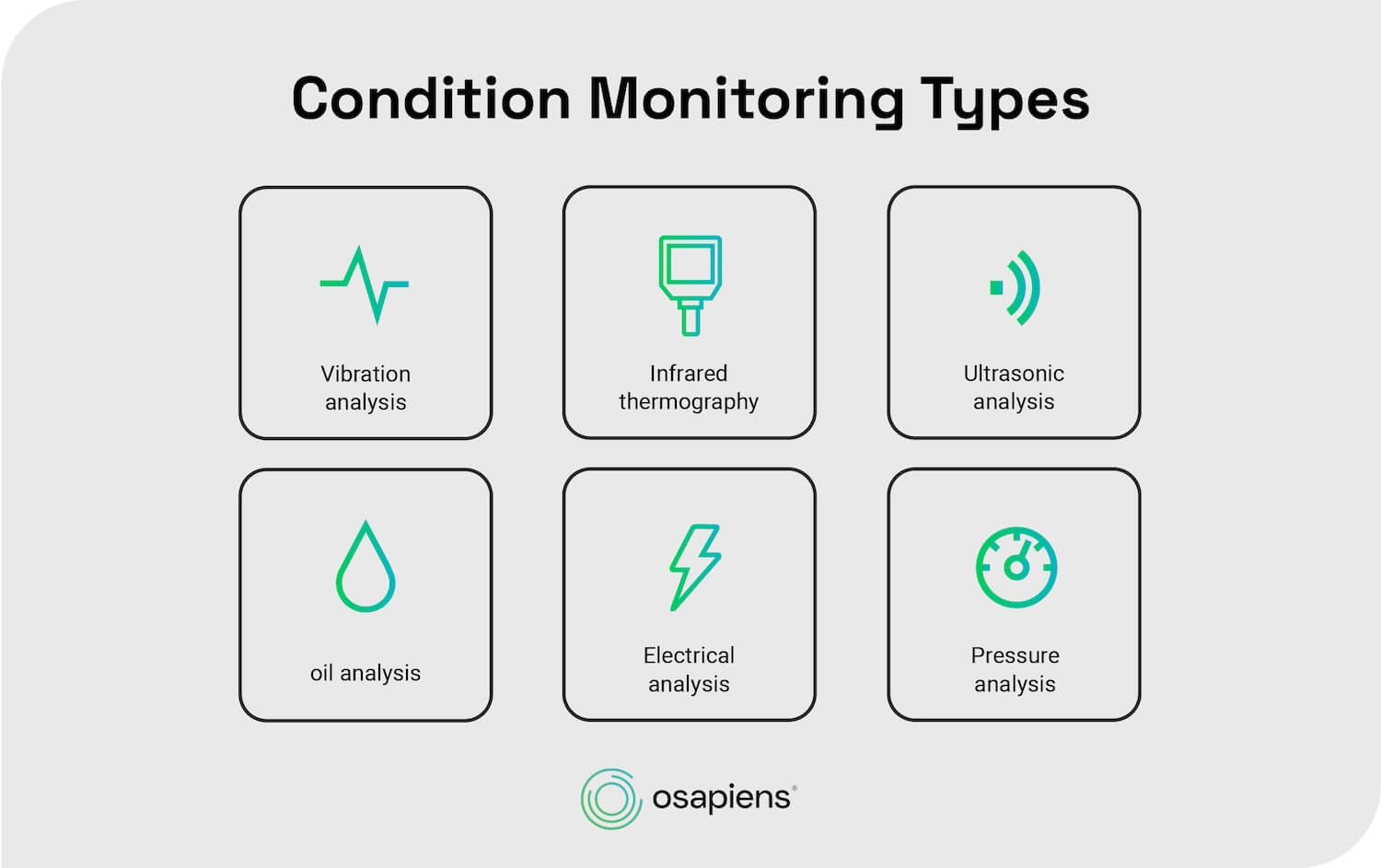
- Vibration analysis: Monitors vibration patterns in pumps, motors, and compressors to detect imbalance, misalignment, bearing wear, and looseness months before these issues cause equipment failure.
- Thermography: Uses infrared cameras to identify hotspots indicating electrical faults, insulation problems, or mechanical friction before failure occurs.
- Oil analysis: Reveals internal equipment health through laboratory testing or inline sensors that detect contamination, viscosity changes, and wear particles in lubricants.
- Ultrasonic testing: Employs high-frequency sound detection to identify leaks in compressed gas systems, steam traps, and early-stage bearing failures.
- Electrical analysis: Monitors electrical signatures to reveal rotor bar defects, stator problems, and load imbalances in motors and drives.
- Performance monitoring: Tracks flow rates, pressure, temperature, and efficiency metrics that indicate declining performance in critical assets.
Benefits of Condition Based Maintenance
The benefits of condition based maintenance extend across operations, maintenance costs, and asset reliability. The advantages of condition based maintenance become especially visible when compared to purely reactive or time-based approaches. Here is what organizations typically achieve:
Reduced maintenance costs
Eliminate 25, 30 % of maintenance expenses (U.S. Department of Energy) by performing work only when condition monitoring data indicates actual need, not arbitrary schedules. Your maintenance team focuses resources on equipment that requires attention while avoiding unnecessary part replacements and excessive labor hours.
Extended asset lifespan
CBM prevents both over-maintenance (unnecessary wear from frequent interventions) and under-maintenance (premature failure from neglect). This balanced approach extends asset lifespan while maintaining peak performance throughout the equipment lifecycle.
Minimized unplanned downtime
Catch developing issues before they cause catastrophic equipment failure. Organizations implementing comprehensive condition monitoring report significant reduction in unplanned downtime as maintenance teams address problems during scheduled windows rather than emergency repairs.
Improved OEE and MTBF
CBM directly improves the Availability component of Overall Equipment Effectiveness (OEE) by reducing both unplanned stoppages and the duration of planned maintenance windows. As CBM data accumulates and root cause analysis becomes more precise, Mean Time Between Failures (MTBF) increases over time. Each avoided breakdown adds to the historical dataset that makes future threshold calibration more accurate.
Improved maintenance efficiency
Focus resources where they are actually needed rather than following fixed schedules. Technicians spend time solving real problems while condition data guides them directly to root causes. This targeted approach improves your maintenance efficiency and reduces the administrative burden on your team.
Enhanced safety
Identify hazardous conditions like overheating electrical equipment, excessive vibration in rotating machinery, and pressure anomalies before they endanger personnel. Early intervention prevents failures that could injure workers or damage surrounding equipment.
Better resource allocation
Schedule work during planned downtime rather than responding to emergency failures. Condition data provides advance warning of developing problems, allowing maintenance managers to coordinate repairs with production schedules and ensure technician availability.
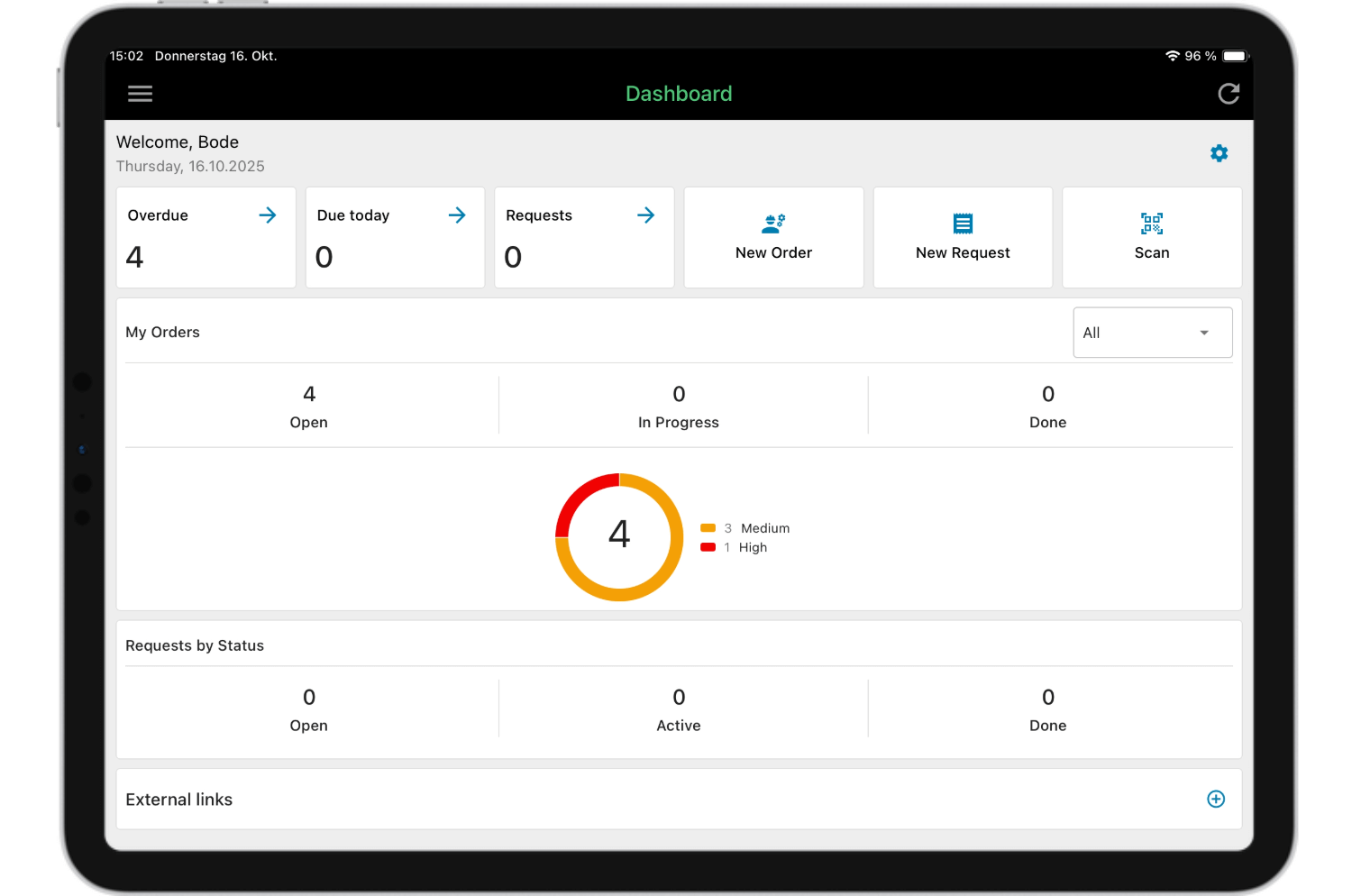
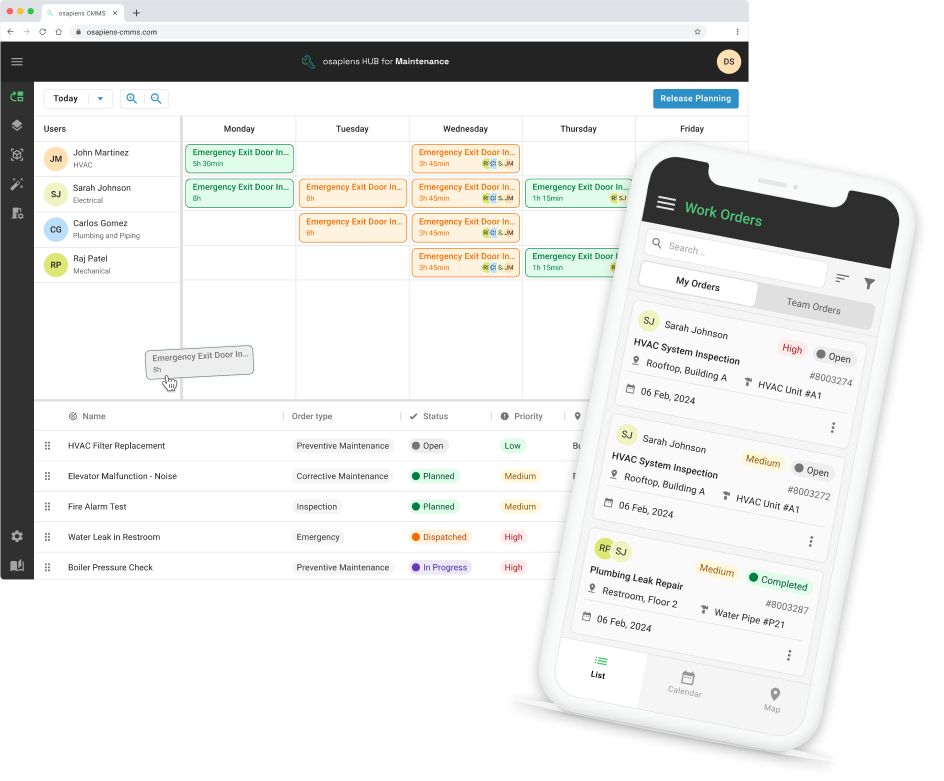
Ready to quantify the impact CBM could have on your operations? osapiens HUB for Maintenance includes built-in analytics that track maintenance costs, equipment availability, and other key metrics.
Challenges of Condition Based Maintenance
CBM delivers compelling results, but a realistic implementation plan must account for the obstacles. Understanding these challenges upfront prevents stalled projects and unrealistic expectations.
High initial investment
Sensors, data acquisition hardware, network infrastructure, and integration work represent a significant upfront cost. The business case is strong for critical assets, but harder to justify for lower-priority equipment. A practical approach: start with the 3, 5 assets responsible for the most unplanned downtime, demonstrate ROI, and expand from there. osapiens HUB for Maintenance supports this phased approach through its Asset Management module, which allows you to classify assets by criticality and roll out monitoring incrementally.
Data volume and analytical complexity
Continuous sensor streams generate enormous volumes of data. Without the right tools, maintenance teams drown in alerts rather than acting on meaningful signals. osapiens addresses this through its Event Streaming Engine, which filters raw sensor data against configurable thresholds and only surfaces actionable alerts, keeping your team focused on real problems.
Sensor calibration and maintenance
Sensors themselves require periodic calibration and occasional replacement. An uncalibrated sensor produces false positives that erode team confidence in the system. Building sensor maintenance into your standard Preventive Maintenance schedules within the osapiens HUB ensures calibration intervals are tracked automatically alongside equipment maintenance tasks.
Integration with legacy systems
Many manufacturing environments run a mix of modern PLCs and older equipment without native sensor ports. Retrofitting legacy assets requires careful planning and, in some cases, external vibration or temperature clamps rather than embedded sensors. osapiens HUB for Maintenance connects to existing SCADA systems and PLCs via its IoT Engine, reducing the need for full infrastructure replacement.
Workforce skills and change management
CBM shifts maintenance work from physical inspection rounds to data interpretation. Technicians who have spent years relying on tactile and auditory cues need training to trust and act on digital readings. Equally important is involving maintenance personnel early in the design of alert thresholds and workflows. Teams that help configure the system are far more likely to use it consistently.
Condition Based Maintenance vs. Other Maintenance Strategies?
Condition based maintenance monitors real-time equipment condition and triggers maintenance when specific thresholds are exceeded. Your maintenance team receives alerts when vibration levels spike, temperatures rise beyond normal ranges, or oil analysis reveals contamination. CBM responds to current condition indicators.
Predictive maintenance uses advanced analytics and machine learning to forecast future failures before condition thresholds are breached. Rather than waiting for abnormal readings, predictive systems analyze historical patterns, operating conditions, and performance trends to predict optimal maintenance timing weeks or months in advance.
Key differences at a glance:
| Aspect | Condition Based Maintenance | Predictive Maintenance |
|---|---|---|
| Approach | Threshold-based monitoring | Forecasting with AI/ML |
| Trigger | Current condition exceeds limits | Predicted future failure |
| Technology | Sensors + CMMS integration | Advanced analytics + historical data |
| Complexity | Moderate implementation | Higher technical requirements, though decreasing with modern SaaS platforms |
| Best for | Critical equipment with clear failure indicators | Complex assets with rich historical data |
How Condition Based Maintenance Fits Into Your Maintenance Strategy
CBM should not exist in isolation. The most effective maintenance programs integrate CBM into broader enterprise asset management strategies, combining preventive maintenance for routine tasks, CBM for critical assets with measurable parameters, and predictive maintenance where advanced analytics add value.
Consider your pumps, motors, and compressors as prime candidates for CBM through vibration analysis and motor current readings. Meanwhile, routine tasks like filter changes and lubrication remain on preventive schedules. Critical assets with complex failure modes and sufficient historical data can graduate to predictive maintenance over time.
The decision framework is straightforward: implement CBM on critical equipment where condition monitoring is technically feasible and economically justified. Start with assets whose failure would significantly impact production, safety, or maintenance costs. As your condition based maintenance program matures and generates more performance data, you can evolve toward predictive capabilities for your most critical assets.

Pradeep Dalal, Product Director – Planning & Execution
★ ★ ★ ★ ★CONA Services
“Working with osapiens has been a positive experience for our company. Their innovative solutions and exceptional support have not only met but exceeded our expectations, paving the way for a successful partnership.”
Lifecycle: Implementing Condition Based Maintenance
Condition based maintenance follows a continuous lifecycle that evolves as you gather more data and refine your approach. Understanding this lifecycle helps organizations set realistic expectations, continuously improve their CBM program, and maximize operational efficiency.
Planning
Establish the foundation by identifying critical assets through comprehensive criticality analysis. Assets can be classified into three tiers: critical (failure causes immediate production stoppage, safety risk, or major cost), semi-critical (failure causes partial impact or has a workaround), and non-critical (failure has minimal operational impact). Prioritizing CBM investment on the first tier maximizes ROI and makes the business case for expansion straightforward.
Once assets are classified, select appropriate monitoring techniques for each asset type, define success metrics including target reductions in maintenance costs and improvements in equipment availability, and establish accurate baselines for normal operating conditions as reference points for anomaly detection.
Expert tip from osapiens
Don't try to implement CBM across all assets simultaneously – begin with your 3–5 most problematic assets that generate the most unplanned downtime or maintenance costs.
Florian Bartholomäus, osapiens Expert
Implementation
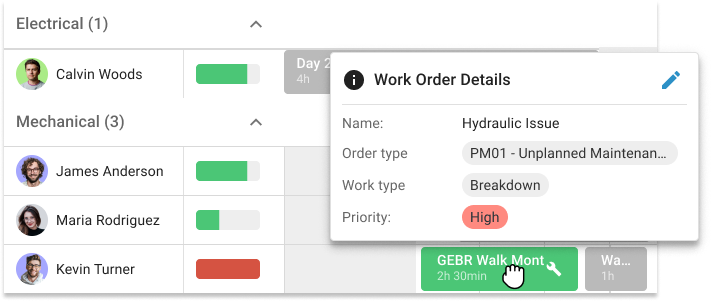
Transform maintenance planning into action by installing sensors on critical assets and integrating monitoring systems with your CMMS platform. Configure alert thresholds based on established baselines and train maintenance personnel to interpret condition data appropriately.
osapiens HUB for Maintenance streamlines this integration through its IoT Engine, which connects your existing condition monitoring systems directly to your CMMS. The platform’s event streaming technology processes sensor data continuously, automatically generating Work Orders when thresholds are exceeded and eliminating delays between problem detection and maintenance response.
Monitoring
Sensors collect continuous or periodic condition data from your critical equipment. Real-time data streams flow into your CMMS, creating comprehensive performance records that enable trend analysis and pattern recognition.
osapiens HUB for Maintenance provides a centralized dashboard that visualizes condition data from all monitoring systems in one place. Your maintenance team can see vibration trends, temperature patterns, and oil analysis results alongside asset history and upcoming maintenance tasks. This unified view enables faster decision-making and helps identify cross-asset patterns that might indicate systemic issues.
Analysis
Your maintenance team interprets condition data to identify trends, detect anomalies, and determine optimal maintenance timing. Advanced analytics identify subtle pattern changes that precede equipment failure, while trending analysis reveals gradual degradation requiring attention.
Action
Execute maintenance activities based on condition analysis, ensuring your team addresses problems before they cause equipment failure. Thorough documentation of maintenance findings creates valuable feedback that improves future analysis. Asset records are updated with maintenance history and lessons learned, building institutional knowledge.
Optimization
Continuously refine your condition based maintenance program based on accumulated experience. Adjust alert thresholds to reduce false positives while maintaining sensitivity, modify monitoring frequency based on equipment behavior patterns, and expand CBM to additional assets as the program demonstrates value.
How osapiens HUB for Maintenance Supports Your Condition Based Maintenance Program
Condition based maintenance represents a fundamental shift from reactive firefighting to proactive, data-driven maintenance operations. By monitoring equipment condition continuously and triggering maintenance only when real-time data indicates actual need, organizations achieve 25–30 % reduction in maintenance costs, 8 % less downtime, and 14 % improvement in productivity using osapiens HUB for Maintenance.
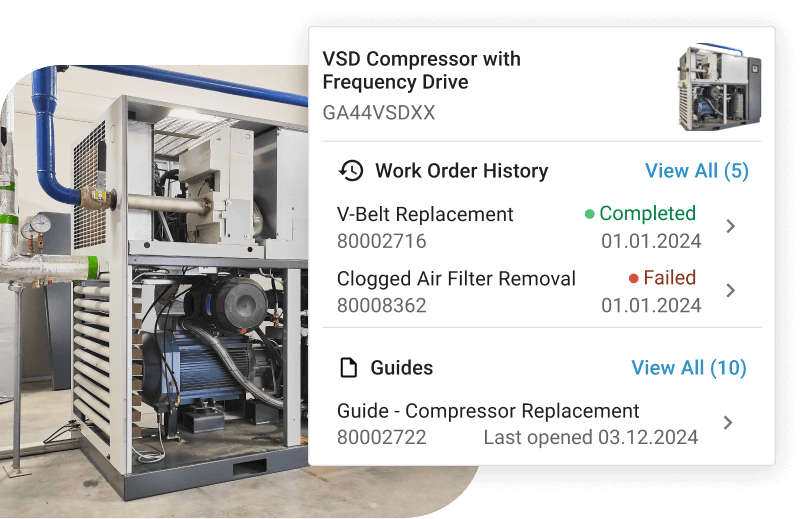
Success requires seamless integration between condition monitoring systems and maintenance workflows. osapiens HUB for Maintenance serves as this command center through its IoT Engine, connecting vibration sensors, SCADA systems, and PLCs to your CMMS. The platform’s Event Streaming Engine processes sensor data in real time, automatically generating maintenance tasks when thresholds are exceeded – eliminating delays between problem detection and maintenance response while providing unified visibility across all critical assets.
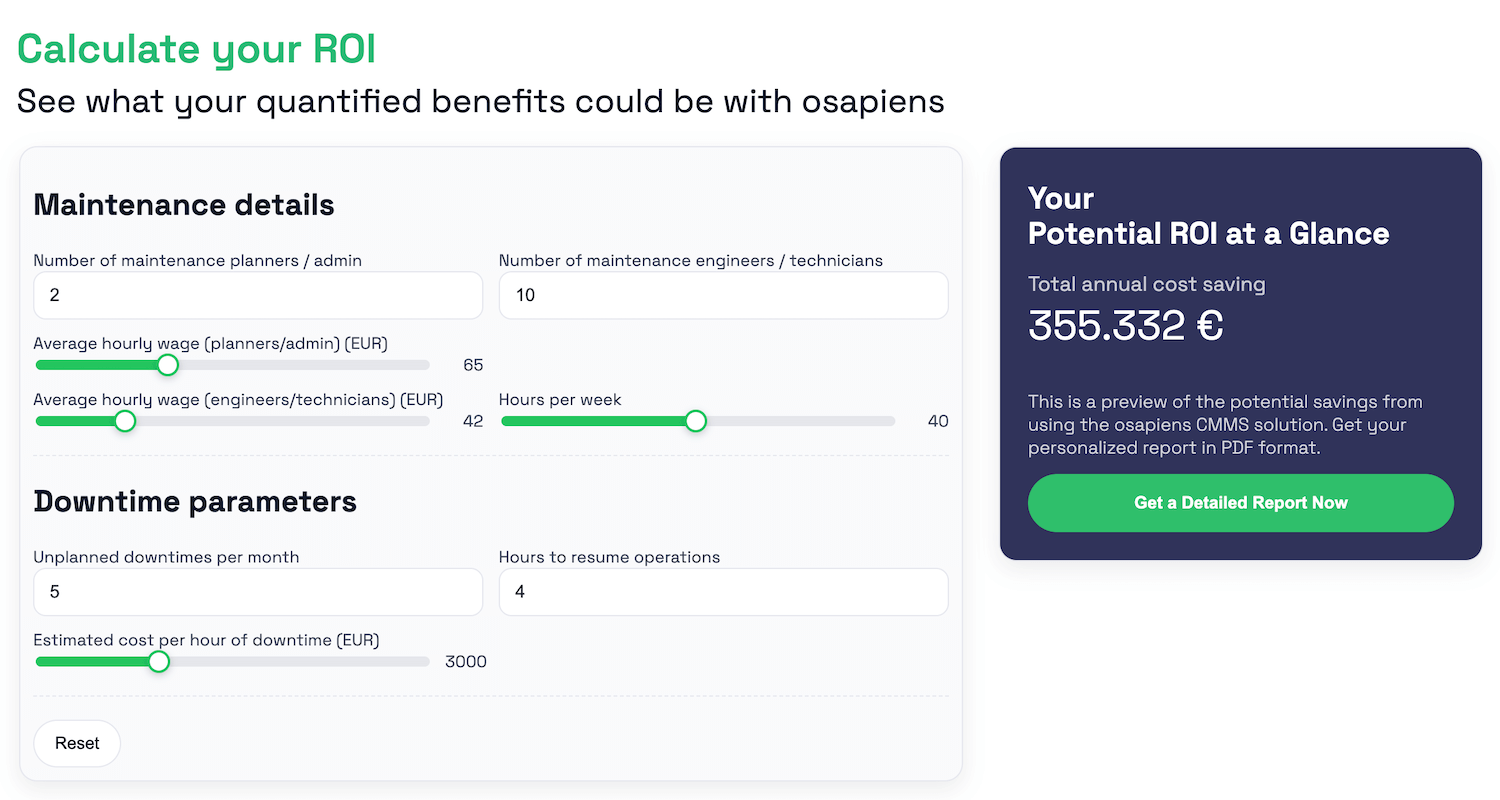
See what your quantified benefits could be with osapiens. Try our ROI calculator
FAQ
What is condition-based maintenance?
Condition based maintenance is a proactive maintenance strategy that performs maintenance activities based on the actual condition of equipment rather than on a fixed schedule. It uses real-time monitoring data—such as vibration, temperature, pressure, or oil quality—to determine when maintenance is truly needed. This approach prevents both premature maintenance and unexpected equipment failure by intervening at the optimal time based on objective performance data.
Which is an example of condition-based maintenance?
A manufacturing plant monitors vibration levels on critical pumps using wireless sensors connected to their CMMS. When vibration exceeds normal baseline levels, indicating potential bearing wear or misalignment, the system automatically generates a work order for the maintenance team to investigate and repair. The pump receives attention exactly when needed: not too early (wasting resources) and not too late (risking catastrophic failure and production downtime).
What is the difference between CBM and TBM?
Time-based maintenance (TBM) performs maintenance activities on a fixed schedule regardless of actual equipment condition. Condition based maintenance cbm only performs maintenance when monitoring data indicates it’s necessary. While TBM provides predictability, it often results in unnecessary maintenance or misses emerging problems. CBM optimizes maintenance timing based on actual need, reducing costs while improving reliability.
What are the 4 types of maintenance?
The four primary maintenance strategies are:
- Reactive maintenance: fixing equipment after it fails
- Preventive maintenance: scheduled maintenance based on time or usage intervals
- Condition based maintenance: maintenance triggered by monitoring data indicating degradation
- Predictive maintenance: using advanced analytics to forecast failures before they occur.
Most effective maintenance programs combine multiple strategies, applying each where it delivers the best results for specific critical assets and operational contexts.
Maintenance Schedule Template
Use our template with asset overview, task catalog, and annual plan. Ready to use for your maintenance planning.
Download for free
ENTERPRISE CAPABILITIES
- SAP ECC & S/4HANA Certified
- Infor & MS Dynamics
- Microsoft Entra ID / Okta
- ISO 27001 & 9001
- EU Cloud · Data Sovereignty
- Development, Test, and Production Environments
- Multi-Entity & Multi-Site
- Power BI Integration
- Audit Trail & Compliance
Related content

July 14, 2025
Unlocking Operational Excellence Through Preventive Maintenance
January 1, 2026
Booster Pump Maintenance Checklist – Tasks, Tips & Template
January 1, 2026
Fire Apparatus Maintenance Checklist – Tasks, Tips & Best Practices
January 1, 2026
Compactor Maintenance Checklist – Essential Tasks & Digital Execution

September 21, 2026
CMMS vs. ERP Maintenance Module: Which One Actually Works for Your Team?
January 1, 2026
Gear Cutting Machine Maintenance Checklist – Tasks, Safety & Digital Execution
January 1, 2026
Uninterruptible Power Supply Maintenance Checklist – Tasks, Safety & Digital Execution

August 17, 2026
Best Fleet Maintenance Software for Enterprise: Top 5 in 2026
January 1, 2026
Dump Truck Maintenance Checklist: What to Inspect & When
January 1, 2026
Biomass Boiler Maintenance Checklist – Tasks, Safety & Digital Execution

January 15, 2026
IBM Maximo Alternatives: The Best EAM & CMMS Platforms Compared

December 4, 2025