

CMMS

Florian Bartholomäus, osapiens Expert | 6. February 2026 | Lesezeit 14 min.
The best solution combines powerful functionality with an interface that requires minimal training, especially for mobile field workers who need quick access to asset information and work orders. If your technicians avoid using the system, even the most advanced features become worthless.
Start with asset maintenance software





TRUSTED BY LEADING COMPANIES



ENTERPRISE-READY
 SAP Certification
 ISO 27001
 EU Hosting
 Entra ID & Okta
 Multi-Entity
Table of Contents
- Key Facts
- What Is Asset Maintenance Software?
- Core Features of Asset Maintenance Management Software
- The Best Asset Maintenance Software Compared
- How to Choose the Right Asset Management and Maintenance Software
- Expert tip from osapiens
- Conclusion: Make the Strategic Investment in Asset Maintenance with osapiens HUB
- FAQ
What if a single equipment failure could cost your facility €50,000 per hour in lost production? For many manufacturing plants, this isn’t a hypothetical scenario: it’s a quarterly reality. The question isn’t whether you need asset maintenance software, but which solution will prevent these costly disruptions before they happen. Asset maintenance software has evolved from a luxury to an operational necessity, helping organizations prevent costly downtime, extend equipment lifespan, and transform reactive firefighting into proactive maintenance management. In this guide we examine leading asset maintenance management software solutions to help you identify the platform that best aligns with your facility’s requirements and goals.
Key Facts
- Software prevents costly failures: Asset maintenance software reduces unplanned downtime by automating preventive maintenance schedules, centralizing equipment data, and enabling real-time asset tracking
- Integration eliminates operational silos: Modern maintenance platforms connect seamlessly with existing enterprise systems like SAP, ensuring consistent data flow while eliminating manual data entry and reducing errors.
- Choose based on your operational context: The right asset maintenance solution depends on your existing systems, organizational size (enterprise vs. SME requirements), industry needs, and growth trajectory.
- osapiens HUB combines enterprise capabilities with intuitive design: Specialized maintenance software for asset-intensive industries delivers powerful analytics, full SAP integration, and user-friendly workflows that technicians actually adopt.
What Is Asset Maintenance Software?
Asset maintenance software is a digital platform designed to streamline the entire lifecycle of physical assets, from acquisition and deployment through maintenance, monitoring, and eventual retirement. Unlike traditional spreadsheet-based tracking, modern asset maintenance management software centralizes critical information including maintenance schedules, work order histories, spare parts inventory, and performance metrics in one accessible system.
For facilities managing dozens or hundreds of assets, this technology transforms operations:
- Manufacturing plants experience fewer production interruptions
- Energy providers maintain regulatory compliance more efficiently
- Service organizations optimize technician deployment and reduce response times.
The software eliminates manual processes that consume valuable time and introduce errors, replacing them with automated workflows that ensure nothing falls through the cracks.
The business impact is measurable: reduced equipment failures, extended asset lifespan, lower maintenance costs, and improved resource allocation. In industries where asset availability directly impacts revenue, maintenance software becomes a strategic competitive advantage.
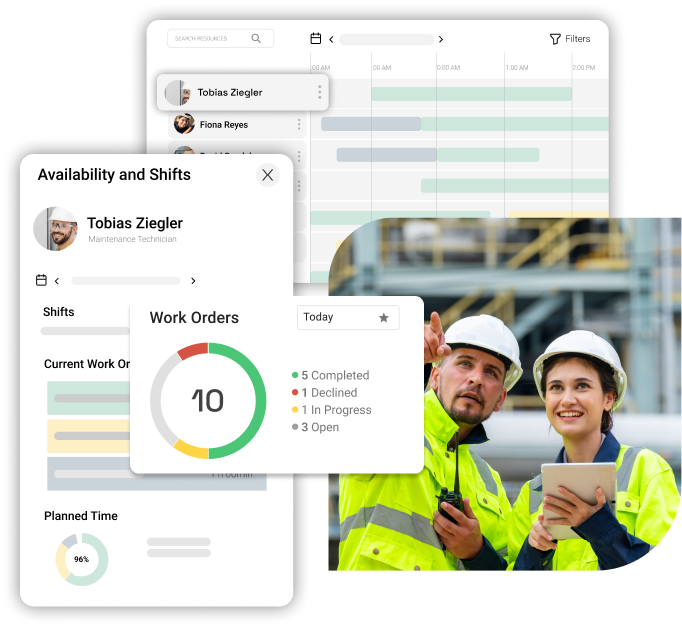
Ready to Transform Your Maintenance Operations?
Discover how osapiens HUB combines enterprise-grade functionality with intuitive design. Whether you’re managing SAP systems or scaling from manual processes, our platform delivers measurable results from day one.
Core Features of Asset Maintenance Management Software
Understanding essential capabilities helps you evaluate solutions effectively. Leading asset management and maintenance software platforms share the following fundamental features:
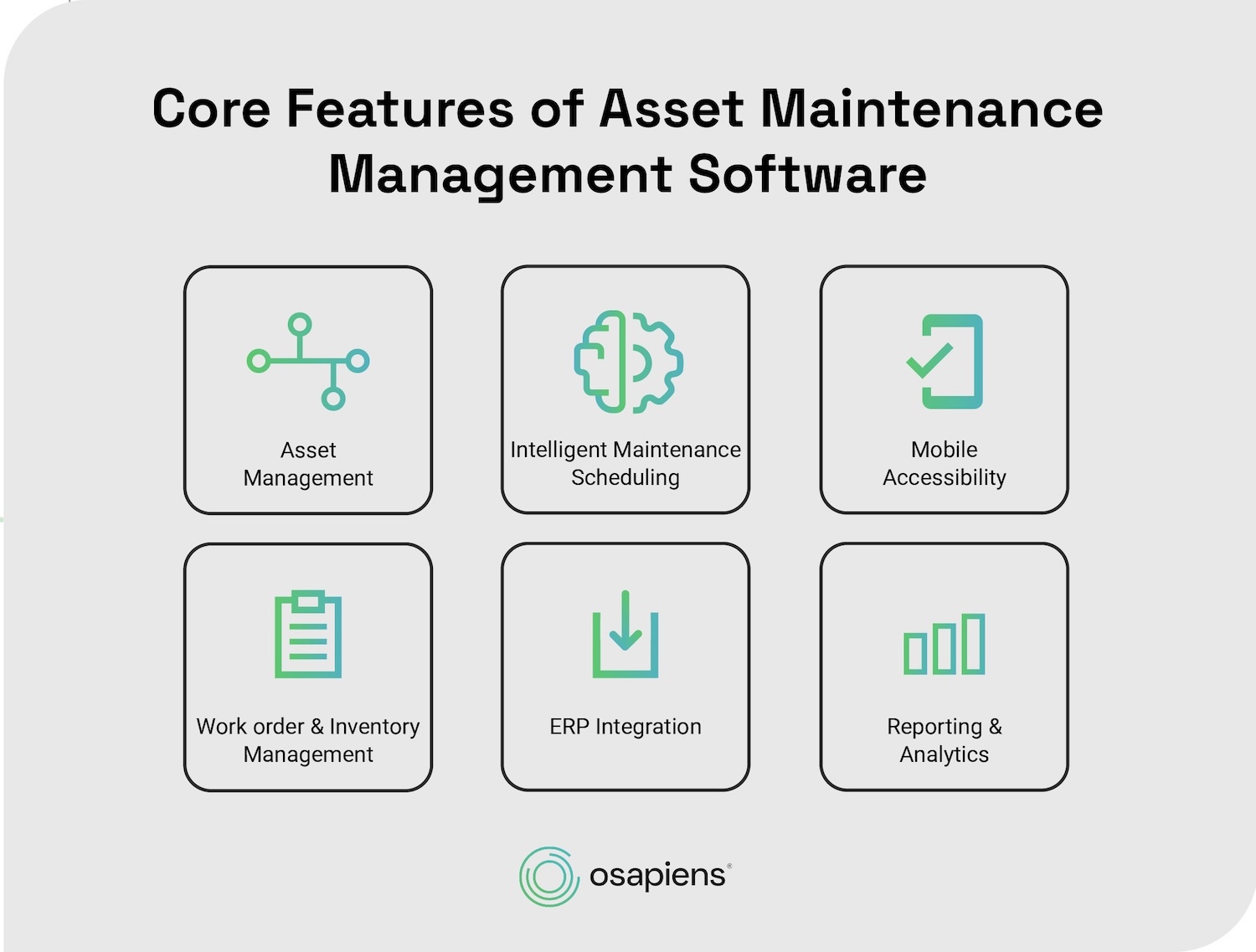
- Asset Registry and Tracking: Comprehensive database capturing equipment specifications, locations, custodians, and operational status with QR code or RFID integration for instant identification and real-time asset tracking across multiple facilities.
- Preventive Maintenance Scheduling: Automated calendar-based or meter-based maintenance triggers that prevent reactive repairs, reduce downtime, and extend equipment life through systematic preventive maintenance strategies.
- Work Order and Inventory Management: Digital planning, tracking, and documentation of maintenance tasks combined with integrated spare parts control, automated reordering, and asset-specific usage history to reduce costs and prevent delays.
- Mobile Accessibility: Field technician access to work orders, asset histories, and documentation through smartphone or tablet applications, enabling mobile device compatibility for on-site maintenance activities.
- Reporting and Analytics: Customizable dashboards displaying KPIs like mean time between failures (MTBF), mean time to repair (MTTR), technician productivity, and asset performance metrics for data-driven decision-making.
- ERP Integration: Seamless integration with ERP systems such as SAP enables bidirectional data exchange between maintenance, purchasing, controlling, and financial accounting. This eliminates information silos, ensures consistent data, and allows processes to be digitally connected end to end.
The Best Asset Maintenance Software Compared
Selecting the right platform requires understanding how leading solutions differ in functionality, target users, and implementation complexity. This comparison examines six asset maintenance software options, highlighting their strengths and ideal use cases to help you find the best solution for your needs.
osapiens HUB for Maintenance
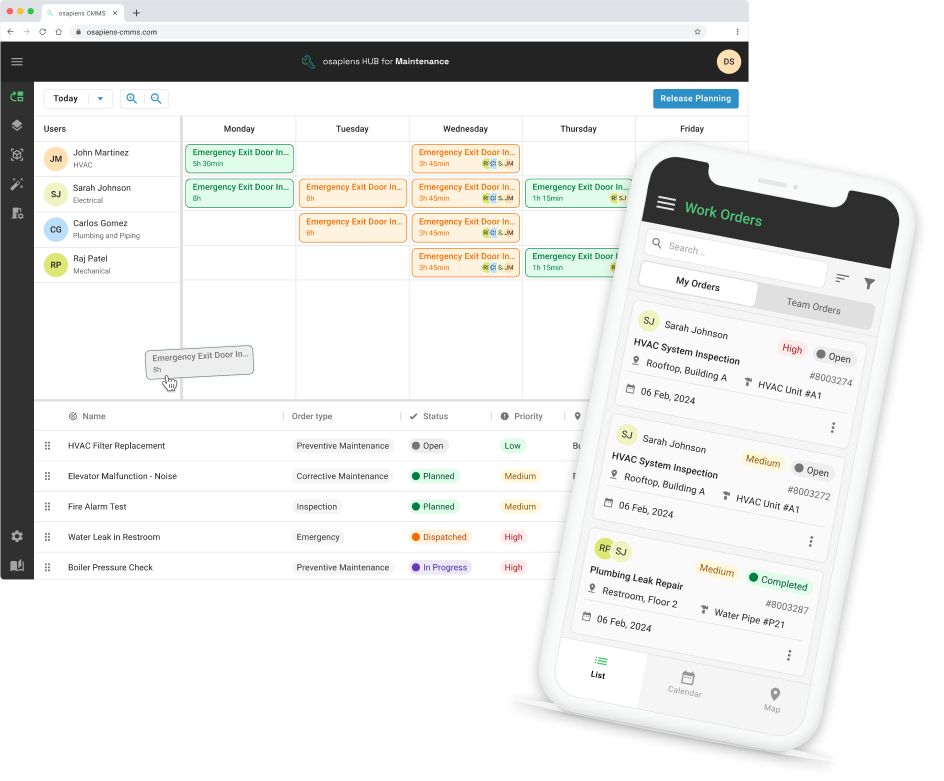
osapiens HUB for Maintenance delivers comprehensive asset and maintenance management software specifically designed for asset-intensive industries including manufacturing, energy, and technical services. The platform offers an exceptional SAP integration, enabling organizations to leverage existing enterprise data while adding modern, user-friendly maintenance workflows that technicians actually adopt.
Strengths:
- SAP-certified integration that synchronizes asset data, work orders, and maintenance records bidirectionally without custom development, ensuring seamless data flow between maintenance operations and enterprise systems
- Mobile App enabling technicians to execute maintenance tasks, capture findings, and update asset conditions from any location using mobile devices, improving field productivity and asset tracking accuracy
- Modern user interface that drastically reduces training requirements compared to complex SAP transaction workflows
- Scalable architecture supporting everything from single-facility operations to global enterprise deployments across multiple sites, accommodating growing asset portfolios and expanding maintenance teams
- Intelligent maintenance planning that automates work orders based on preventive, condition-based or predictive strategies
Ideal For: Organizations already using SAP who need more intuitive maintenance tools, companies scaling from manual processes to digital systems, and asset-intensive businesses requiring mobile access for field technicians managing equipment across distributed facilities.
Implementation: Rapid deployment for freemium users (1–2 weeks), structured rollout for enterprise customers with SAP integration (1–3 months including training and customization). osapiens provides implementation support to ensure clean asset records, optimized maintenance schedules, and effective inventory management from day one.
osapiens HUB bridges the gap between complex enterprise platforms and simple tracking tools, delivering enterprise functionality with exceptional usability that reduces downtime, improves asset performance, and helps maintenance teams streamline operations without sacrificing depth or reliability.
Experience osapiens HUB for Maintenance for free. Start with our freemium model and scale as your maintenance operations grow. Get up and running in 1–2 weeks with full access to essential asset management capabilities.
From Reactive Firefighting to Proactive Asset Management
Spreadsheet tracking, missed maintenance schedules, and costly equipment failures drain productivity and budgets. osapiens HUB centralizes asset data, automates preventive maintenance, and delivers mobile access for technicians.
Start with asset maintenance
IBM Maximo
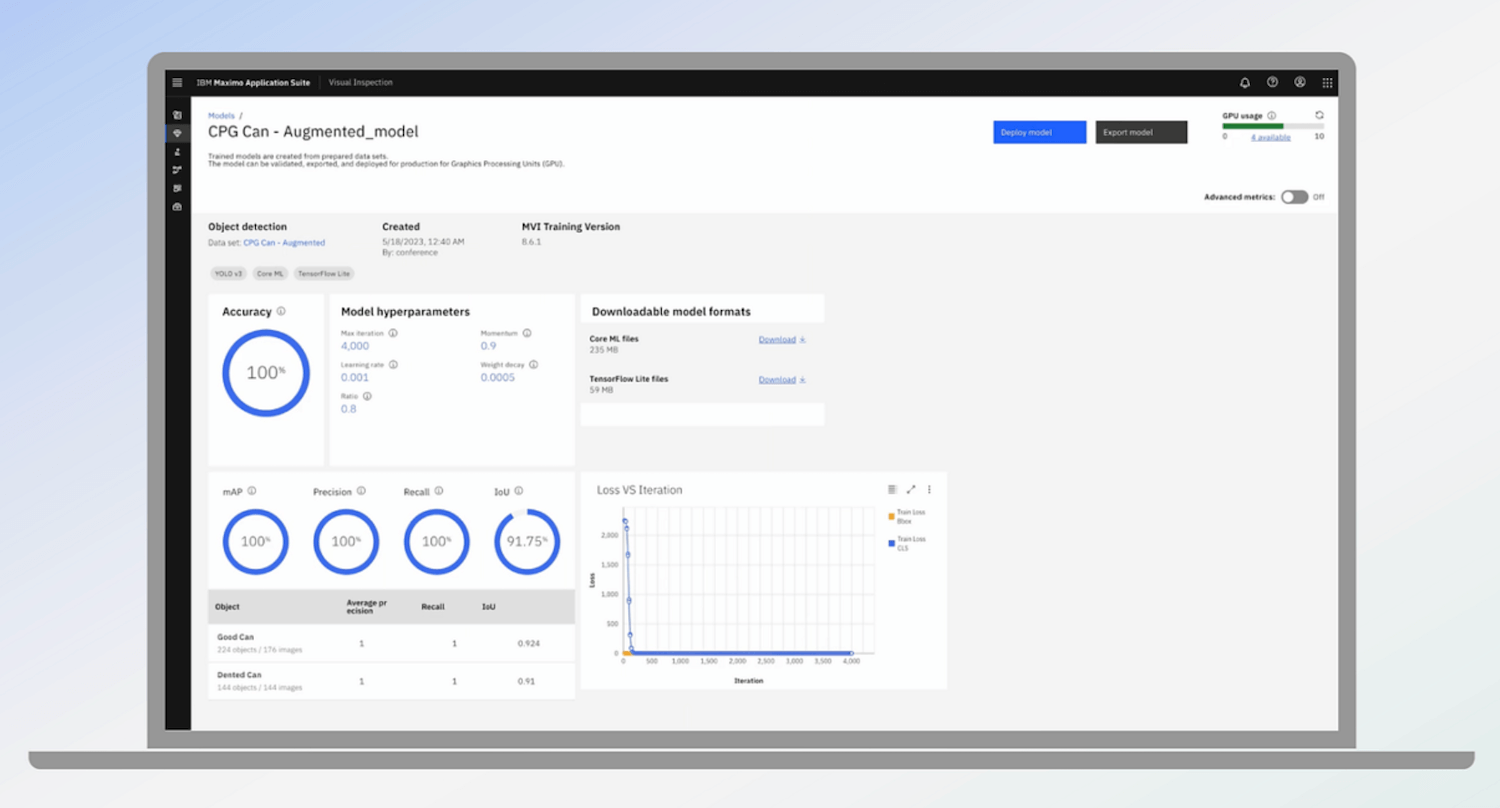
IBM Maximo represents one of the most established enterprise asset management (EAM) platforms, offering comprehensive functionality for large organizations with complex asset portfolios. The solution excels in industries with stringent regulatory requirements and extensive compliance documentation needs, providing deep asset lifecycle management capabilities across global operations.
Strengths:
- Scalability: Manage millions of assets across global locations with a unified database
- AI-powered maintenance: IBM Watson Analytics enables predictive maintenance and failure forecasting based on historical data
- IoT integration (Maximo Monitor): Real-time sensor monitoring with automatic work order creation when thresholds are reached
- Contract management: Comprehensive control of maintenance contracts, SLAs, and supplier relationships
- Compliance & audit: Complete documentation for regulated industries with granular access rights
Limitations:
- Implementation complexity, often requiring specialized consultants and extended deployment timelines
- The platform’s broad feature set may feel overwhelming for organizations with simpler maintenance requirements
- Mobile access can require additional configuration to meet field technicians’ usability expectations
- Higher total cost of ownership due to licensing, customization, and ongoing maintenance expenses
Best Suited For: Large businesses with dedicated IT resources, organizations requiring extensive customization and integration with multiple enterprise systems, and industries like utilities, transportation, or fleet management with complex regulatory environments and stringent compliance requirements.
SAP PM
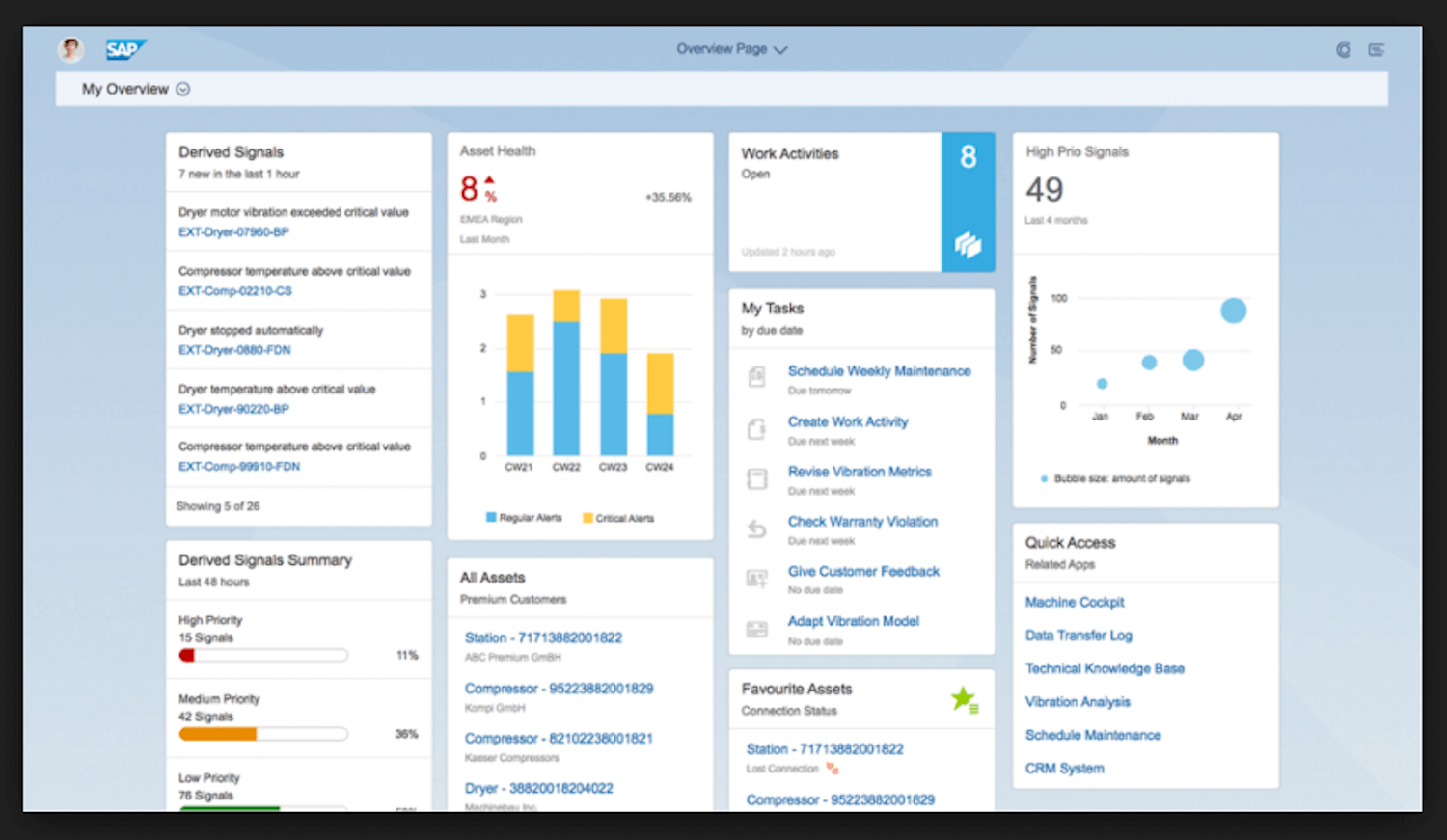
SAP Plant Maintenance (PM) serves as the native maintenance module within SAP ERP systems, providing tight integration with procurement, finance, and production planning modules. Organizations already invested in SAP infrastructure often consider SAP PM as their default asset maintenance solution for managing equipment and facilities.
Strengths
- Native SAP integration: Complete data consistency with FI, CO, MM, HR, and other SAP modules without external interfaces
- Equipment hierarchies: Detailed technical structures with maintenance plans, parts lists, and documentation
- Maintenance planning: Time-, performance-, and condition-based maintenance strategies directly within SAP PM
- Cost controlling: Transparent allocation of maintenance costs to cost centers, orders, and profit centers
- Compliance management: GxP-compliant documentation for pharmaceuticals and MPBetreibV requirements for medical technology
Limitations:
- User interface complexity hampers technician adoption, particularly for field workers who need quick mobile access to maintenance activities.
- Limited mobile capabilities without additional modules reduce productivity for maintenance teams working on-site.
- Configuration challenges require specialized SAP expertise and extended implementation timelines.
Many organizations find SAP PM powerful for asset lifecycle management but not user-friendly for daily maintenance operations, leading to workarounds that undermine system effectiveness.
Best Suited For: SAP-centric enterprises with dedicated IT resources, large businesses willing to invest in extensive training and customization, and organizations prioritizing deep ERP integration over ease of use for maintenance management.
Hexagon HxGN EAM
HxGN EAM is an enterprise asset management (EAM) platform designed for asset-intensive organizations operating complex equipment portfolios across multiple sites and geographies. The solution is commonly used in industries such as utilities, manufacturing, oil and gas, transportation, and the public sector, where long asset lifecycles, regulatory requirements, and operational reliability are key priorities.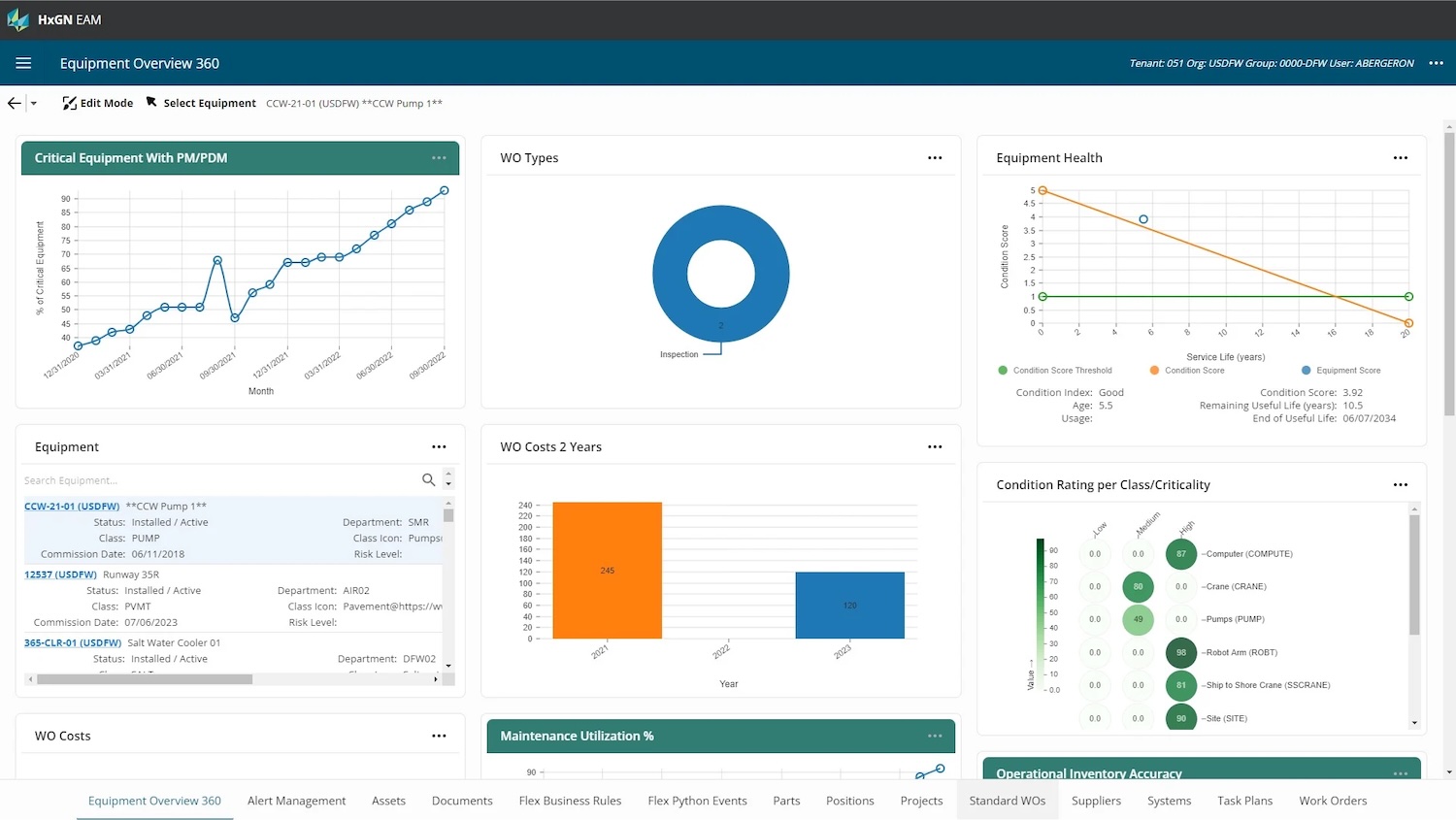
Strengths:
- Enterprise-grade asset lifecycle management supporting detailed asset structures, maintenance strategies, work order processing, and inventory management across large and distributed asset portfolios.
- AI-powered predictive maintenance using machine learning algorithms to analyze asset performance data and predict potential failures before they occur
- Offers integration capabilities with ERP systems such as SAP, enabling data exchange for assets, maintenance orders, procurement, and financial processes.
- Mobile accessibility through native iOS and Android apps enabling field technicians to access work orders, asset histories, and complete maintenance tasks on-site
- Advanced analytics and reporting with built-in Cognos reporting for real-time insights and customizable dashboards displaying critical KPIs
Limitations:
- Complex setup and configuration requiring specialized IT skills and extended implementation timelines, particularly for advanced analytics and custom integrations
- Higher total cost of ownership compared to simpler CMMS solutions
- Documentation challenges as some users report that system documentation is outdated and doesn’t adequately address common implementation issues
Best Suited For: Medium to large enterprises in heavily regulated industries (utilities, oil and gas, pharmaceuticals, manufacturing) with complex asset portfolios, organizations requiring deep compliance documentation and audit trails, and businesses with dedicated IT resources capable of managing sophisticated EAM implementations and customizations.
UpKeep
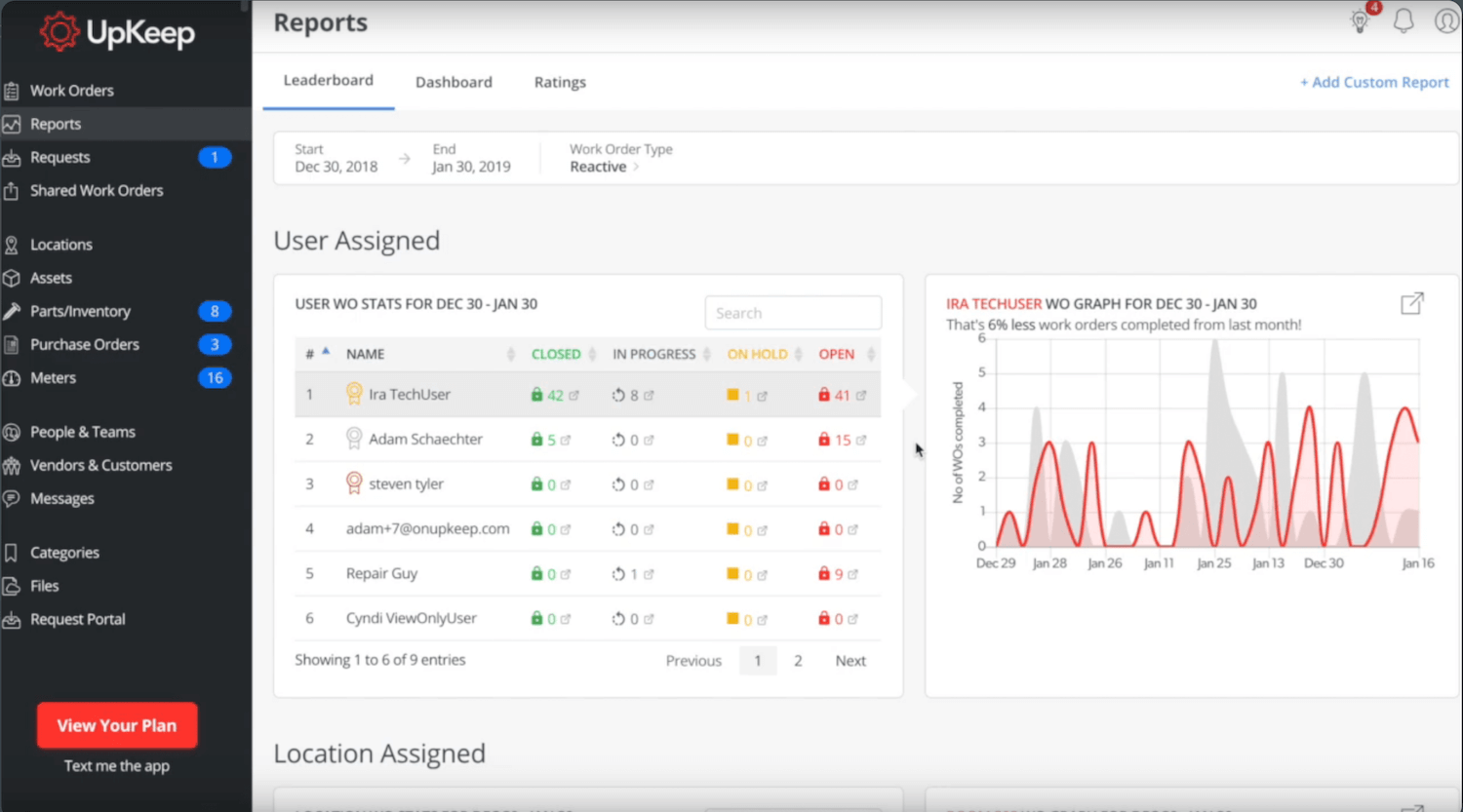
UpKeep differentiates itself through mobile-first design, targeting technicians who primarily work in the field rather than at desks. The platform gained popularity for its smartphone-native experience and simple interface that reduces the learning curve for maintenance teams transitioning from paper-based processes to digital asset maintenance software.
Strengths:
- Excellent mobile user experience optimized for technicians performing maintenance activities on-site
- Quick implementation timeline, enabling organizations to start tracking assets within days
- Built-in communication tools that improve technician collaboration and streamline work order management
- Strong support for basic preventive maintenance scheduling and asset tracking in straightforward operations
Limitations:
- Limited functionality for complex preventive maintenance strategies may reduce effectiveness for organizations with advanced scheduling needs
- Limited integration capabilities for organizations with extensive system landscapes or SAP-based environments
- No native SAP integration
- Weaker presence in Europe: Limited local support and regional localization options.
- Scalability limitations: As operations grow more complex, customization and asset lifecycle management depth may become restrictive.
Best Suited For: Ideal for US-based small and mid-sized businesses without an ERP system, multi-site operations with distributed asset portfolios (e.g., retail or hospitality), and organizations pursuing a cloud-first strategy without on-premise requirements.
MaintainX
MaintainX is a user-friendly CMMS solution focused on rapid implementation and intuitive mobile use, making it ideal for small to mid-sized teams without complex ERP environments. Its ease of use allows organizations to become productive quickly. The mobile app supports efficient work order execution on-site, including QR code scanning and offline functionality.
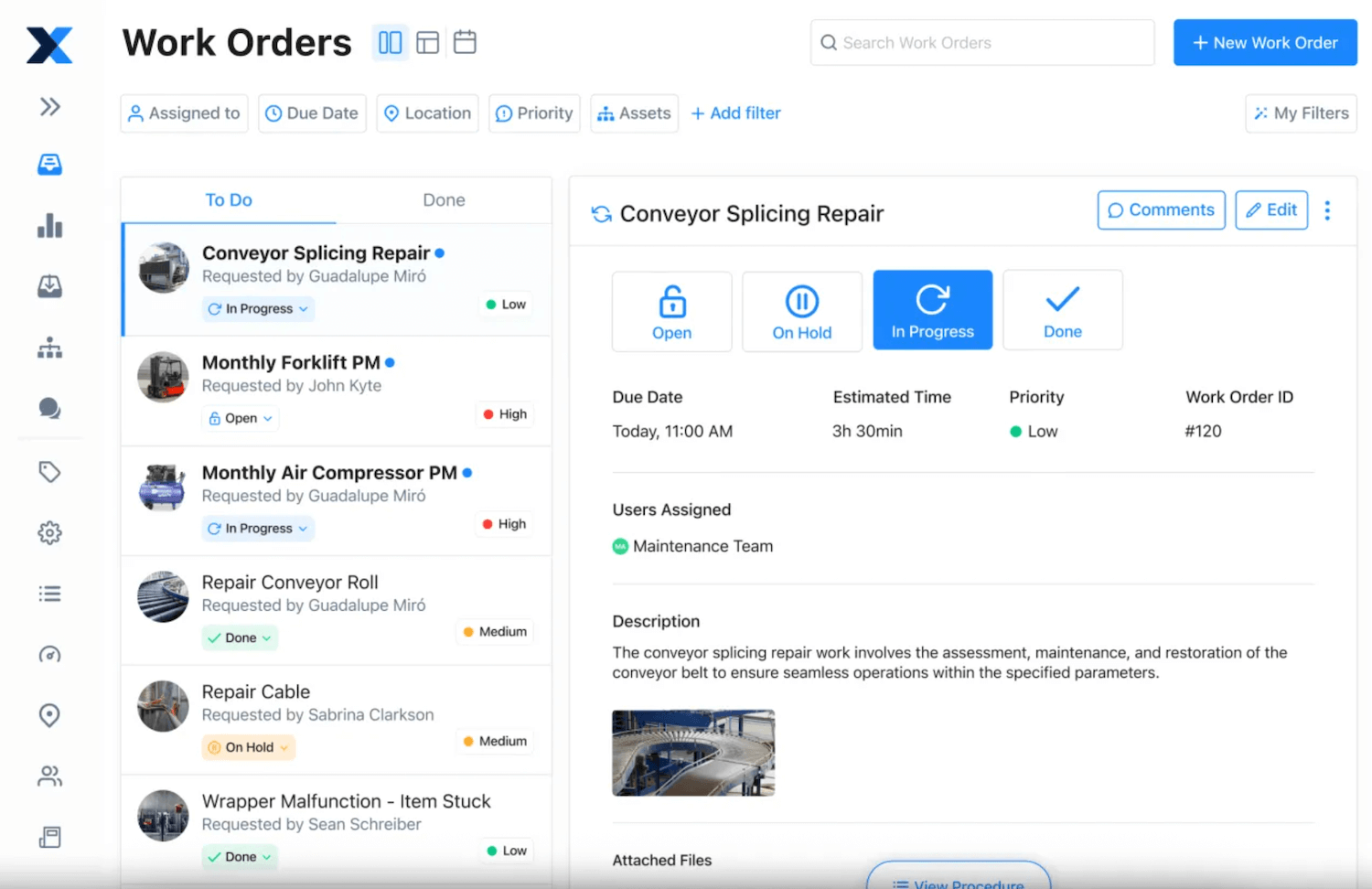
Strengths:
- Simple and intuitive interface requiring virtually no training for technicians
- Mobile App: iOS/Android app with offline mode, photo upload, digital checklists and QR code asset tracking
- Team communication: In-app messaging and comment function for direct exchange between technicians
- Quick setup process enabling organizations to start tracking maintenance activities within hours
- Free tier enables a risk-free entry point
Limitations:
- Limited asset management depth restricts visibility into asset lifecycle management and performance trends
- Basic reporting and analytics provide minimal insights for data-driven decision-making
- Minimal integration options with enterprise systems create potential data silos
- Scalability limitations: Teams managing complex equipment or advanced maintenance strategies may quickly outgrow the platform’s capabilities.
Best Suited For: Small facilities transitioning from paper-based processes to digital maintenance management, restaurants and retail locations managing basic equipment maintenance, and teams seeking basic digitization without complex requirements, extensive inventory management, or enterprise system integration.
How to Choose the Right Asset Management and Maintenance Software
Selecting appropriate facility maintenance and asset management software CMMS requires systematic evaluation aligned with your operational reality. Consider these critical decision factors:
- Assess Current Pain Points: Document specific challenges (for example unplanned downtime, compliance gaps, technician inefficiency, or inventory waste) to ensure solutions directly address your problems. Organizations experiencing frequent equipment failures should prioritize preventive maintenance capabilities, while those struggling with data silos need robust integration features.
- Evaluate Integration Requirements: Identify existing systems (ERP, procurement, IoT sensors) that must connect with your maintenance platform to avoid creating new data silos. Asset maintenance software that seamlessly integrates with your current technology ecosystem ensures consistent asset data across operations and reduces manual data entry that wastes time and introduces errors.
- Consider User Adoption: Prioritize intuitive interfaces that technicians will actually use in daily maintenance activities; sophisticated features provide no value if your team bypasses the system. Mobile access for field technicians and simplified work order management workflows directly impact productivity and asset tracking accuracy across your facilities.
- Plan for Scalability: Choose platforms that accommodate growth in asset count, user numbers, and functional complexity without requiring complete replacement. Asset management systems should support expanding equipment portfolios, additional facilities, and evolving maintenance strategies as your business grows and operational excellence becomes more critical.
- Verify Industry Fit: Seek solutions with proven success in your sector and templates addressing industry-specific workflows. Manufacturing operations, energy providers, and fleet management organizations have distinct requirements for asset lifecycle management, compliance documentation, and risk estimation that generic platforms may not adequately address.
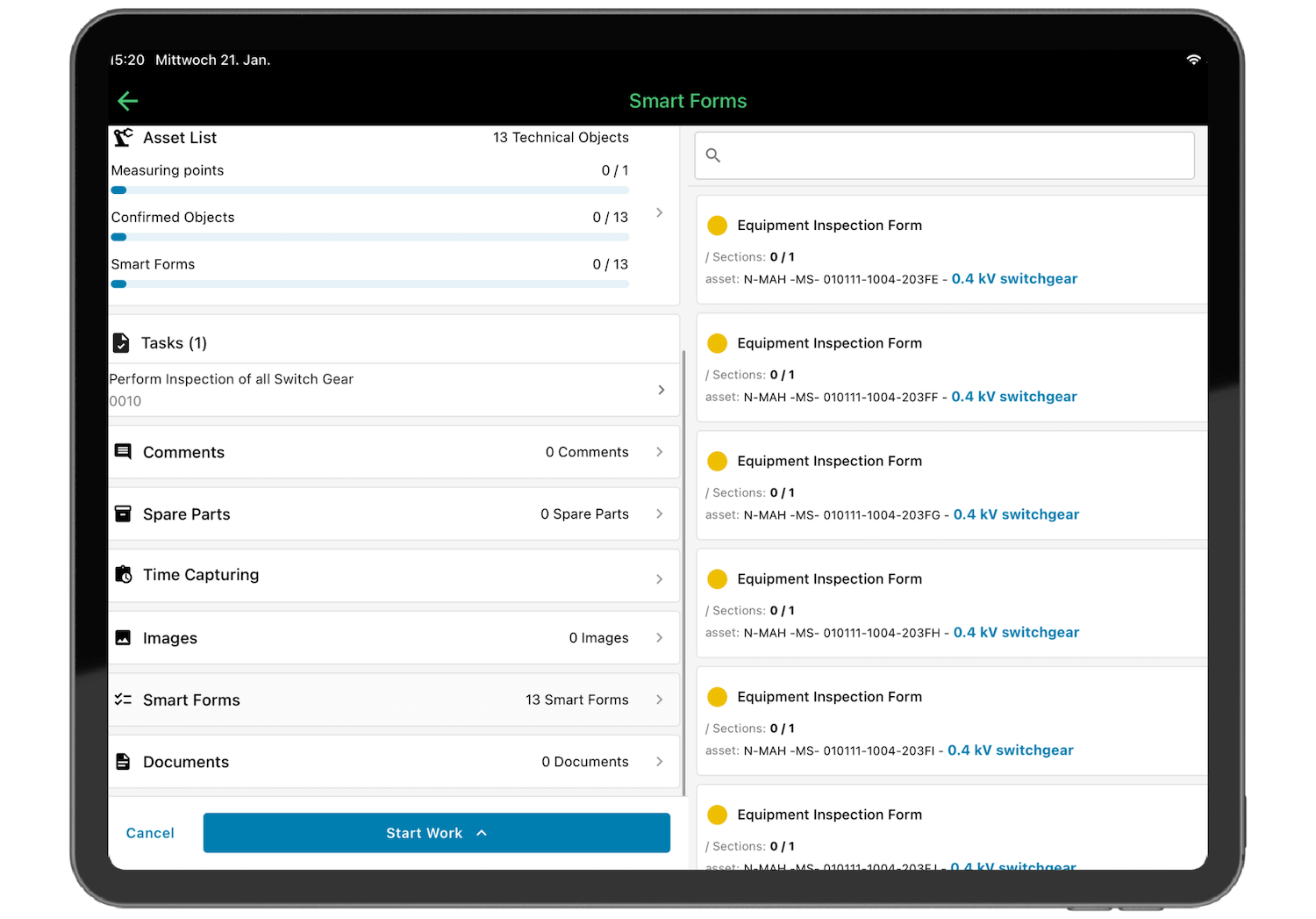
Organizations with SAP environments should prioritize solutions offering certified integration, like osapiens HUB for Maintenance, to maximize existing technology investments while improving user experience. This approach enables maintenance teams to leverage enterprise asset information while avoiding the complexity and adoption challenges of native SAP PM interfaces.
Expert tip from osapiens
The best solution combines powerful functionality with an interface that requires minimal training, especially for mobile field workers who need quick access to asset information and work orders. If your technicians avoid using the system, even the most advanced features become worthless.
Florian Bartholomäus, osapiens Expert
Conclusion: Make the Strategic Investment in Asset Maintenance with osapiens HUB
Asset maintenance software represents a strategic investment that directly impacts operational efficiency, equipment reliability, and bottom-line performance. While numerous platforms offer maintenance management capabilities, the right choice depends on your specific operational context, existing technology ecosystem, and growth trajectory.
For organizations seeking enterprise-grade functionality without enterprise-level complexity, particularly those with SAP environments, osapiens HUB delivers an optimal balance. The platform combines intuitive user experience with powerful asset management capabilities, SAP-certified integration that eliminates data silos, and flexible deployment options that scale from single facilities to global operations managing thousands of assets.
Don’t let outdated maintenance processes limit your operational potential. Explore how osapiens HUB transforms reactive maintenance into strategic asset management that reduces downtime, extends equipment life, and empowers maintenance teams with mobile access to complete asset information and streamlined work order management.
Enterprise Asset Management That Technicians Actually Use
SAP-certified integration, mobile-first design, automated preventive maintenance scheduling, and real-time asset tracking. All in one platform that combines enterprise functionality with intuitive usability.
Start with osapiens
FAQ
What is an asset maintenance system?
An asset maintenance system is software that helps organizations track, schedule, and manage maintenance activities for physical equipment and facilities. It centralizes asset information, automates preventive maintenance schedules, manages work orders, and provides analytics on equipment performance and maintenance costs.
What is the best asset management software?
The “best” solution depends on your specific requirements. Enterprise organizations with SAP often benefit from osapiens HUB’s certified integration and user-friendly interface. IBM Maximo suits large enterprises with complex needs, while solutions like UpKeep or MaintainX work well for smaller facilities prioritizing simplicity over comprehensive functionality.
How does osapiens HUB integrate with existing SAP systems?
osapiens HUB offers SAP-certified integration that synchronizes asset data, work orders, and maintenance records bidirectionally. This eliminates manual data entry, ensures consistency across systems, and allows organizations to leverage SAP’s robust data management while providing technicians with intuitive mobile tools for daily maintenance execution.
Can osapiens HUB support facilities without SAP infrastructure?
Absolutely. osapiens HUB functions as a complete standalone maintenance management platform. While SAP integration provides additional value for enterprises already using SAP, the software delivers full asset tracking, preventive maintenance, work order management, and analytics capabilities independently for organizations of any size.
Start using osapiens for free
Improve your uptime, extend the life of your equipment, and simplify work order management.
Book a demo
Related content
January 1, 2026
Industrial Preventive Maintenance Checklist – Tasks, Documentation & Digital Execution

September 19, 2025
Meet the osapiens maintenance experts at Pharma Maintenance Reloaded 2025
January 1, 2026
Pressure Regulating Station Maintenance Checklist – Tasks, Safety & Digital Execution
January 1, 2026
Concrete Mixer Truck Maintenance Checklist – Tasks, Safety & Digital Execution
March 2, 2026
Resource planning with Field Service: The most important functions and biggest cost levers
March 17, 2026
GxP Compliance Software: What Pharma and Life Sciences Industries Need to Know
January 1, 2026
UPS Maintenance Checklist – Tasks, Tips & Template
January 1, 2026
Water Treatment Plant Maintenance Checklist – Tasks, Compliance & Digital Execution
January 1, 2026
Manufacturing Facility Maintenance Checklist – Essential Tasks & Digital Execution
January 1, 2026
Lorry Maintenance Checklist – Tasks, Tips & Template
January 1, 2026
Gas Turbine Maintenance Checklist – Tasks, Tips & Template
November 4, 2025