

Maintenance Checklist

Florian Bartholomäus, osapiens Expert | 1. January 2026 | Lesezeit 10 min.
Most elevator failures follow predictable warning patterns—unusual sounds, door hesitation, or leveling drift—that appear weeks before complete breakdown. A structured checklist ensures technicians document these early signals systematically, preventing costly emergency repairs and unplanned downtime.
Start using this checklist for free
More than 2200 companies place their trust in osapiens











Table of Contents
- Elevator Preventive Maintenance: Key Facts
- Why You Need an Elevator Preventive Maintenance Checklist
- What to Include in Your Elevator Preventive Maintenance Checklist
- Common Elevator Problems Your Maintenance Checklist Prevents
- From Paper Checklist to Digital: How the osapiens HUB Automates Your Elevator Preventive Maintenance Checklist
- FAQ
Elevators operate thousands of cycles daily, moving passengers and goods through buildings with remarkable reliability. Yet this reliability depends entirely on systematic preventive maintenance that identifies wear patterns, addresses degradation, and maintains safety systems before failures occur. Without a structured approach, subtle warning signs go unnoticed until catastrophic failure forces emergency repairs, operational disruption, and significant expense.
Elevator Preventive Maintenance: Key Facts
Understanding the operational context of elevator maintenance helps facility managers prioritize resources and structure maintenance programs effectively. Consider these essential facts:
- Predictable failure patterns: Research from facility operations demonstrates that 73% of elevator failures follow discernible warning patterns, with door operator failures accounting for 42% of service calls and leveling problems affecting 23% of operations.
- Financial impact of deferred maintenance: Elevators properly maintained can operate reliably for 20-30 years, while those with inadequate preventive care often require premature replacement after only 10-15 years—a difference that can cost building owners hundreds of thousands of dollars.
- Structured checklists prevent failures: Organizations implementing preventive maintenance strategies with standardized checklists report 52.7% less unplanned downtime compared to reactive approaches.
- Digital execution improves compliance: Modern CMMS platforms enable mobile checklist execution with photo documentation, real-time data capture, and automatic audit trails—eliminating the gaps and errors inherent in paper-based workflows.
Why You Need an Elevator Preventive Maintenance Checklist
Elevator maintenance without a structured checklist relies on technician memory, experience, and judgment—an approach that introduces inconsistency, overlooks critical tasks, and creates compliance gaps. A comprehensive checklist transforms maintenance from ad-hoc activity into systematic process.
- Consistency across technicians and shifts: Checklists ensure that every required inspection is performed regardless of which technician conducts the service visit, eliminating the variability that occurs when maintenance depends on individual memory or experience.
- Risk reduction through systematic inspection: Door operator failures, leveling problems, and emergency communication malfunctions represent the majority of elevator service calls. Checklists ensure these high-risk components receive consistent attention during every maintenance cycle.
- Documentation and traceability: Regulatory compliance requires detailed records of all maintenance activities, safety tests, and component replacements. Checklists create the documentation foundation necessary for demonstrating compliance during inspections and defending against liability claims.
- Technician guidance and training support: Structured checklists provide clear guidance for less experienced technicians, ensuring they perform all required tasks without relying solely on senior staff supervision or institutional knowledge.
- Standardization across multiple sites: Organizations managing elevator portfolios across multiple buildings benefit from standardized checklists that ensure consistent maintenance quality regardless of location, shift, or service provider.
- Early detection of degradation trends: When technicians document observations systematically across multiple service visits, patterns emerge—components wearing faster than expected, recurring issues, or progressive degradation—enabling proactive intervention before failure occurs.
What to Include in Your Elevator Preventive Maintenance Checklist
Effective elevator maintenance checklists organize tasks by component and system rather than by frequency alone. This structure reflects how technicians actually experience the equipment and ensures comprehensive coverage of all critical systems.
The checklist should address visual inspection, functional testing, lubrication, safety verification, and documentation requirements. Tasks are examples based on common elevator configurations; actual requirements depend on equipment type, manufacturer specifications, usage patterns, and regulatory requirements in your jurisdiction.
| Component / System | Inspection & Maintenance Tasks | Purpose |
|---|---|---|
| Machine Room & Controller | Inspect for cleanliness and proper ventilation; check electrical components for overheating, unusual noise, or wear; verify circuit protection and grounding; test safety relays and limit switches | Control reliability, fire prevention, electrical safety |
| Door Systems (Car & Landing) | Check door operation and alignment; inspect door operators, clutch engagement, and closing force; lubricate door mechanisms; test door interlocks and safety edges | Passenger safety, accessibility, operational reliability |
| Hoistway & Guide Rails | Inspect guide rails for wear, alignment, and secure attachment; examine rollers and guide shoes; check traveling cables for fraying, pinches, or damage; verify hoistway access switches | Ride quality, structural integrity, cable safety |
| Cables, Ropes & Suspension | Inspect suspension ropes/cables for broken strands, wear, or corrosion; check cable tension and sheave condition; examine counterweights for proper balance | Load-bearing integrity, passenger safety |
| Brakes & Safety Devices | Test emergency brakes and verify proper engagement; inspect brake linings for wear; test governor and safety gear; verify buffer condition and secure attachment | Emergency stopping, passenger protection |
| Drive System (Motor & Sheave) | Inspect motor, bearings, and sheave shaft for vibration, leaks, or unusual noise; verify proper lubrication; check drive belts or gearbox condition; test motor performance | Mechanical reliability, energy efficiency |
| Hydraulic System (if applicable) | Check hydraulic fluid level and quality; inspect pump and motor; examine hoses and connections for leaks; test pressure and flow; verify cylinder condition | Lifting force, system integrity, leak prevention |
| Elevator Pit | Ensure pit is clean, dry, and free of debris; inspect buffers for damage or corrosion; verify sump pump operation; check pit ladder and lighting; test GFCI outlets | Safety access, corrosion prevention, emergency readiness |
| Emergency & Communication Systems | Test emergency phone and alarm systems; verify emergency lighting; test fire service recall operation; check earthquake/flood operation modes (if applicable) | Passenger safety, emergency response, regulatory compliance |
| Interior Car Condition | Inspect car interior for damage to walls, ceiling, handrails; verify all lights function properly; check ventilation; ensure signage and operating device symbols are legible | Passenger comfort, accessibility, code compliance |
This component-based structure ensures technicians address all critical systems during each service visit. Actual maintenance intervals—monthly, quarterly, or annually—depend on equipment usage, manufacturer recommendations, and regulatory requirements. Organizations should consult maintenance audit best practices to verify their checklist addresses all compliance obligations.
Turn Your Elevator Maintenance Checklist into Mobile Work Orders
Create structured checklists for every component—from door systems to emergency phones. Execute them on mobile, capture photos in elevator pits and machine rooms, sync with SAP PM, and maintain complete audit trails automatically.Start with Your Elevator Preventive Maintenance Checklist
Common Elevator Problems Your Maintenance Checklist Prevents
Understanding typical failure modes clarifies why systematic preventive maintenance delivers measurable value. A structured checklist addresses the root causes of these common problems:
- Door operator failures and alignment issues: Door systems account for 42% of elevator service calls. Regular inspection of door operators, clutch mechanisms, and alignment prevents the progressive degradation that leads to doors failing to open or close properly—a problem that traps passengers and requires emergency service.
- Leveling accuracy drift: Elevators that stop slightly above or below floor level create tripping hazards and accessibility problems. Leveling drift signals worn brakes, stretched cables, or controller issues. Systematic inspection detects these problems before they create safety risks or passenger complaints.
- Cable and rope degradation: Suspension cables experience continuous stress and wear. Visual inspection during preventive maintenance identifies fraying, broken strands, or corrosion before cable failure occurs—preventing catastrophic accidents and the extended downtime required for emergency cable replacement.
- Emergency communication system failures: Emergency phones and alarm systems must function reliably when passengers become trapped. Regular testing ensures these systems work when needed, preventing the regulatory violations and liability exposure that occur when trapped passengers cannot contact help.
- Hydraulic system leaks and pressure loss: Hydraulic elevators depend on proper fluid levels and pressure. Systematic inspection identifies leaks, fluid degradation, and pressure problems before they cause erratic operation or complete system failure.
- Electrical component overheating and failure: Control systems, motors, and electrical components generate heat during operation. Regular inspection identifies overheating, loose connections, and component degradation before electrical failures cause unexpected downtime.
Each of these failure modes follows predictable patterns that systematic maintenance detects and addresses. Organizations implementing predictive maintenance strategies can further refine their approach by monitoring real-time performance data to identify components approaching failure.
From Paper Checklist to Digital: How the osapiens HUB Automates Your Elevator Preventive Maintenance Checklist
Traditional paper-based elevator maintenance creates significant operational friction. Technicians arrive with printed checklists, manually record findings, and return completed paperwork to the office for data entry. This workflow introduces transcription errors, loses context and detail, delays issue reporting, and makes comprehensive audit trails nearly impossible to maintain.
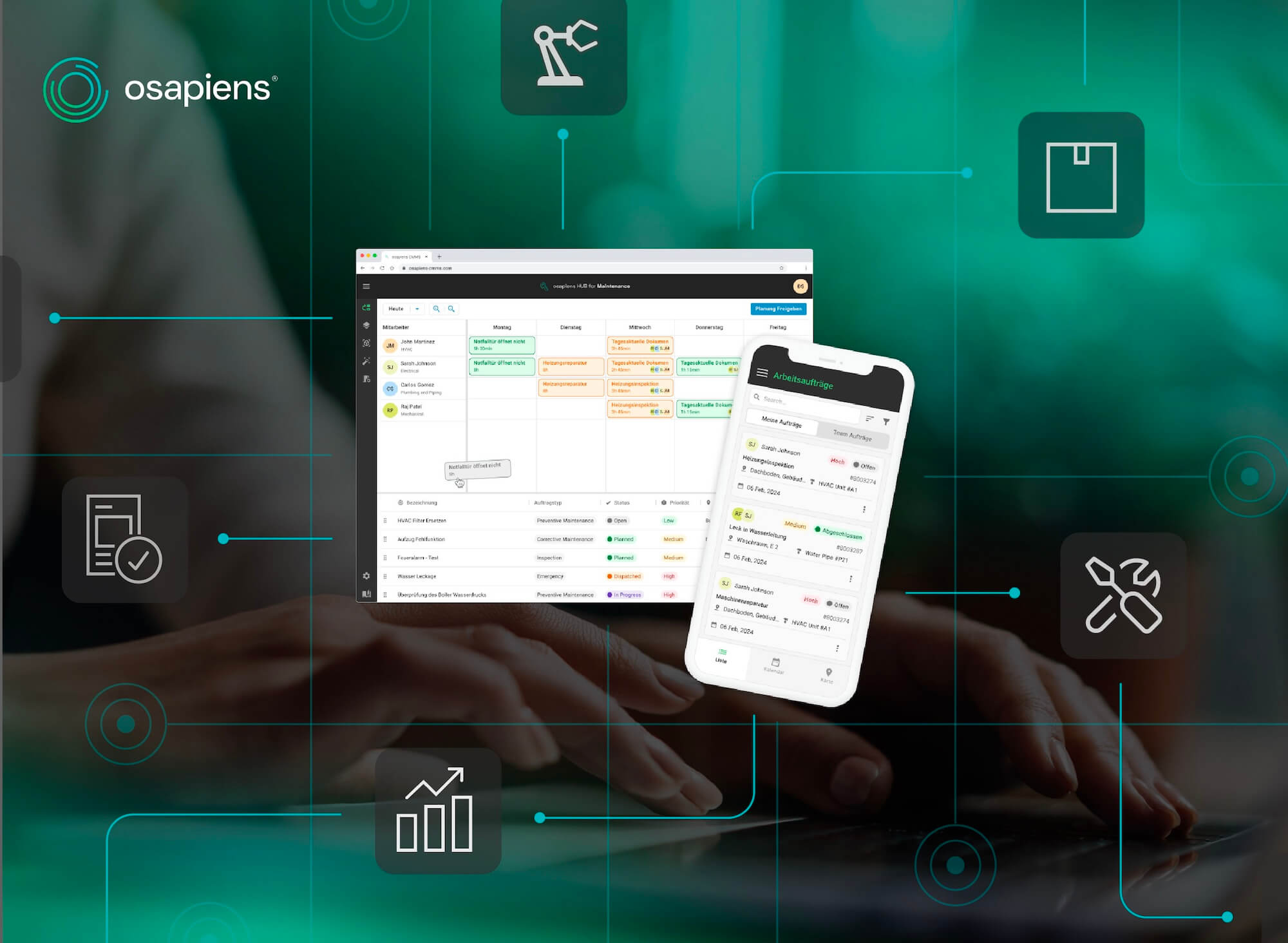
The osapiens HUB for Maintenance transforms elevator maintenance execution through mobile-first digital workflows that eliminate paper entirely. Technicians access complete maintenance checklists on smartphones or tablets, capture photos and observations in real time, and sync data automatically when connectivity is available—even in elevator pits and machine rooms with poor coverage.
Key capabilities that address elevator maintenance challenges include offline mobile access ensuring technicians complete checklists without constant connectivity, photo documentation capturing equipment conditions that are difficult to describe verbally, real-time issue escalation enabling immediate notification of critical findings, and automatic audit trails documenting every inspection with timestamps, technician identification, and complete history.
The platform’s SAP PM integration ensures maintenance data flows seamlessly into enterprise systems for financial tracking and asset management, while field technicians benefit from intuitive mobile interfaces that require minimal training. This hybrid approach recognizes that SAP PM excels at enterprise governance while modern CMMS platforms deliver superior field execution.
| Aspect | Paper or Excel Checklist | Digital Checklist with osapiens HUB |
|---|---|---|
| Data Capture | Manual entry, transcription errors, lost context | Real-time mobile entry with photos, timestamps, and technician identification |
| Issue Reporting | Delayed until paperwork returns to office | Immediate notification of critical findings to supervisors and facility managers |
| Audit Trail | Paper records require manual filing and cross-referencing | Complete digital history automatically maintained and instantly accessible |
| Connectivity | Not applicable | Offline functionality with automatic sync when connection resumes |
| Compliance Documentation | Manual compilation for regulatory inspections | Automated reports with complete maintenance history and photo evidence |
| Trend Analysis | Requires manual data extraction and analysis | Automatic tracking of recurring issues and component degradation patterns |
Organizations transitioning from paper to digital maintenance execution should consider preventive maintenance software that balances powerful functionality with ease of adoption. The osapiens HUB achieves this balance through intuitive design that technicians master in hours rather than weeks.
Stop Losing Uptime to Missed Elevator Inspections
Digitize your maintenance checklists, automate work order creation, and give every technician a mobile tool that works offline in machine rooms and hoistways. Full SAP PM integration included.Try osapiens HUB for Free
FAQ
What should be included in an elevator preventive maintenance checklist?
A comprehensive elevator maintenance checklist should include inspection of door systems and operators, examination of cables and suspension components, testing of safety devices and emergency systems, verification of control systems and electrical components, lubrication of moving parts, inspection of guide rails and hoistway, and documentation of all findings and work performed. The specific tasks depend on elevator type, manufacturer specifications, and regulatory requirements in your jurisdiction.
How often should I complete my elevator preventive maintenance checklist?
Maintenance frequency depends on usage patterns, equipment age, manufacturer recommendations, and regulatory requirements. Common practice includes monthly service visits for lubrication and basic inspection, quarterly testing of safety systems, and annual comprehensive inspections equivalent to regulatory compliance testing. High-traffic elevators or those in critical facilities may require more frequent service. Consult your local authority having jurisdiction and manufacturer guidance to determine appropriate intervals for your specific equipment.
Can I customize this elevator preventive maintenance checklist template?
Yes, customization is essential. Every elevator installation has unique characteristics—different manufacturers, control systems, drive types, and usage patterns—that require tailored maintenance approaches. Start with a comprehensive baseline checklist covering all major systems, then adapt it based on your specific equipment, manufacturer recommendations, historical failure patterns, and regulatory requirements. Digital CMMS platforms enable easy customization while maintaining standardization across your elevator portfolio.
How does a digital CMMS improve maintenance checklist management?
A CMMS transforms maintenance execution by automating checklist scheduling, providing mobile access for technicians in the field, capturing real-time data with photos and timestamps, creating automatic audit trails for compliance, enabling immediate escalation of critical findings, and tracking performance trends across multiple service visits. For organizations managing multiple elevators or sites, CMMS platforms provide centralized visibility and ensure consistent maintenance quality. The osapiens HUB for Maintenance combines these capabilities with SAP PM integration, making it suitable for both mid-sized facilities and enterprise operations.
Start using osapiens for free
Improve your uptime, extend the life of your equipment, and simplify work order management.
Book a demo
Related content
January 1, 2026
Ventilation System Maintenance Checklist – Tasks, Tips & Template
January 1, 2026
Solar Panel Maintenance Checklist: What to Inspect & When
January 1, 2026
Electric Generator Maintenance Checklist – Tasks, Tips & Best Practices
January 1, 2026
Automatic Sliding Door Preventive Maintenance Checklist – Tasks, Tips & Best Practices
January 1, 2026
Tube Bending Machine Maintenance Checklist – Tasks, Safety & Digital Execution
November 4, 2025
CMMS Software for Small Business: Choosing the Right Solution
January 1, 2026
Diesel Generator Set Maintenance Checklist – Tasks, Best Practices & Digital Execution
January 1, 2026
Pharmaceutical HVAC Cleanroom Maintenance Checklist – Tasks, Standards & Digital Execution
January 1, 2026
Band Saw Maintenance Checklist – Tasks, Tips & Template

November 27, 2025
Condition Based Maintenance: Real-Time Monitoring That Keeps Your Critical Equipment Running
January 1, 2026
Hydroelectric Turbine Maintenance Checklist – Tasks, Tips & Best Practices
January 1, 2026