

Maintenance Checklist

Florian Bartholomäus, osapiens Expert | 1. January 2026 | Lesezeit 8 min.
Many pharmaceutical facilities still track lyophilizer maintenance on paper or spreadsheets, creating gaps in documentation and compliance risk. A structured digital checklist ensures every vacuum system check, refrigeration task, and door seal inspection is documented, traceable, and audit-ready—critical for FDA cGMP compliance.
Create your checklist for free







TRUSTED BY LEADING COMPANIES



ENTERPRISE-READY
 SAP Certification
 ISO 27001
 EU Hosting
 Entra ID & Okta
 Multi-Entity
Table of Contents
- Lyophilizer Maintenance: Key Facts
- Why You Need a Lyophilizer Maintenance Checklist
- What to Include in Your Lyophilizer Maintenance Checklist
- Common Lyophilizer Problems Your Maintenance Checklist Prevents
- From Paper Checklist to Digital: How the osapiens HUB Automates Your Lyophilizer Maintenance Checklist
- FAQ
Lyophilizers are among the most complex and critical assets in pharmaceutical and biotechnology manufacturing. Preventive maintenance based on structured checklists ensures these freeze-drying systems maintain vacuum integrity, temperature control, and sterility assurance—all essential for product quality and regulatory compliance. Without systematic maintenance, even minor component failures can halt production, compromise batch quality, or trigger costly FDA observations.
Lyophilizer Maintenance: Key Facts
- Structured checklists prevent costly failures: Systematic maintenance reduces unplanned downtime and extends equipment service life beyond 15 years, according to lifecycle analysis of industrial freeze-drying systems
- Regulatory compliance depends on documentation: FDA cGMP regulations under 21 CFR Part 211 require documented maintenance procedures, equipment logs, and traceability for all pharmaceutical manufacturing equipment
- Multiple critical subsystems require attention: Vacuum systems, refrigeration, control instrumentation, chamber seals, and heating elements each have distinct maintenance needs and failure modes
- Digital execution improves consistency: Mobile-first CMMS platforms like osapiens HUB for Maintenance eliminate paper-based gaps, ensure task completion, and provide audit-ready documentation automatically
Why You Need a Lyophilizer Maintenance Checklist
Lyophilizers operate through three interdependent phases—freezing, primary drying, and secondary drying—each requiring precise control of temperature, pressure, and timing. Even minor deviations can compromise product quality or trigger equipment failures.
A structured maintenance checklist addresses these operational realities:
- Consistency across shifts and sites: Checklists standardize maintenance execution regardless of technician experience level, ensuring critical tasks are never skipped due to memory lapses or shift handover gaps
- Risk reduction through early detection: Regular inspections identify refrigerant leaks, vacuum system degradation, and seal wear before they cause batch failures or unplanned downtime
- Documentation for regulatory compliance: FDA cGMP regulations require documented maintenance procedures and equipment logs. Checklists provide the structure needed to demonstrate compliance during audits
- Technician guidance and knowledge transfer: Detailed checklists support less experienced team members by providing step-by-step instructions, reducing errors and improving maintenance quality
- Standardization across facilities: Multi-site pharmaceutical operations benefit from consistent maintenance procedures that ensure all lyophilizers receive equivalent care regardless of location
- Audit readiness: Comprehensive checklists create traceable records of maintenance activities, supporting regulatory inspections and internal quality reviews
What to Include in Your Lyophilizer Maintenance Checklist
An effective lyophilizer maintenance checklist organizes tasks by component or system rather than by frequency alone. This approach ensures technicians address all critical subsystems systematically.
The following table organizes maintenance tasks by the physical component or subsystem of the lyophilizer. Actual maintenance intervals depend on usage patterns, operating environment, and manufacturer specifications.
| Component / System | Inspection & Maintenance Tasks | Purpose |
|---|---|---|
| Vacuum System | Change oil in oil-sealed pumps (every 2,000–3,000 hours); clean dry-scroll pump surfaces (every 6 months); check thermal sensors and cooling fans quarterly; test vacuum efficiency monthly; inspect for metal particles in oil (>15 ppm indicates wear) | Maintains vacuum integrity, prevents contamination, ensures sublimation effectiveness |
| Refrigeration System | Perform electronic leak detection quarterly; check coolant levels weekly; clean condenser surfaces after defrost cycles; inspect compressor oil and vibration twice yearly; verify pressure differentials monthly; defrost cold trap monthly | Sustains cooling capacity, prevents efficiency loss, maintains condenser performance |
| Control System & Instrumentation | Calibrate temperature and pressure sensors quarterly against NIST-traceable references; verify firmware updates; test automated transfer switch systems; check data verification protocols monthly; document as-found and as-left data | Ensures accurate process control, prevents sensor drift, maintains ISO/IEC 17025 compliance |
| Chamber & Door Seals | Inspect door gaskets for cracks, compression set, or hardened surfaces; perform monthly pressure decay tests; verify vacuum leakage rates remain within specifications; replace degraded seals promptly; conduct full decontamination after each batch | Maintains vacuum stability, ensures sterility assurance level (SAL) 10⁻⁶ requirements |
| Heating System | Calibrate heating elements and temperature controls per SOP; verify shelf temperature uniformity; test thermal response during empty chamber runs; inspect heating element integrity; document temperature deviation patterns | Prevents incomplete drying, ensures accurate temperature control, avoids product collapse |
| Mechanical Components | Lubricate guide rails, bearings, and door mechanisms quarterly using FDA-approved synthetics; verify proper lubricant application (excess grease attracts dirt and accelerates wear); inspect mechanical wear patterns | Prevents bearing failures, reduces friction damage, extends component life |
| Electrical & Safety Systems | Verify dielectric properties of electrical panels biannually; test ground-fault circuit interrupters; inspect wiring and connections; check emergency stop functionality; document electrical safety verification | Reduces arc flash risk, ensures operator safety, maintains electrical system integrity |
Turn Your Lyophilizer Maintenance Checklist into Digital Work Orders
Create structured checklists for every component — from vacuum systems to door seals. Execute them on mobile, sync with SAP PM, and keep full audit trails automatically.Start with Your Lyophilizer Maintenance Checklist
Common Lyophilizer Problems Your Maintenance Checklist Prevents
Structured maintenance checklists address the most frequent failure patterns observed in pharmaceutical freeze-drying operations:
- Refrigeration system failures: Refrigerant leaks reduce cooling efficiency by approximately 15% annually. Regular leak detection and coolant level checks prevent gradual performance degradation that may not trigger immediate alarms but compromises process capability over time
- Vacuum system degradation: Oil-based vacuum pumps require oil changes every 2,000–3,000 hours. Neglecting this maintenance allows contamination buildup that reduces pumping speed and prevents the system from reaching required vacuum levels for effective sublimation
- Door seal failures: Brittle or degraded door gaskets allow moisture ingress that disrupts sublimation and compromises sterile environmental protection. Ice buildup accelerates by approximately 40% when seals fail, potentially compromising batches within 60 hours of operation
- Control system inaccuracies: Temperature and pressure sensors drift at approximately 1–2% annually without calibration. This drift can push processes outside validated parameters, requiring product quarantine and investigation
- Heating element malfunctions: Damaged heating elements or faulty temperature sensors prevent proper temperature control during secondary drying, resulting in incomplete water removal or product degradation
- Documentation gaps: Paper-based maintenance records create traceability issues during FDA inspections. Missing or incomplete documentation represents a material cGMP deviation even when physical maintenance was performed correctly
From Paper Checklist to Digital: How the osapiens HUB Automates Your Lyophilizer Maintenance Checklist
Many pharmaceutical facilities continue managing lyophilizer maintenance through paper checklists, Excel spreadsheets, or isolated digital systems. These approaches create predictable friction points that compromise maintenance quality and compliance.
Paper-based documentation suffers from an average error rate around 1% for single-phase data entry. When maintenance data requires two-phase entry—paper forms followed by computer transcription—error rates compound significantly. Manual data entry delays mean maintenance findings may not be available to planners and quality personnel for hours or days after work completion.
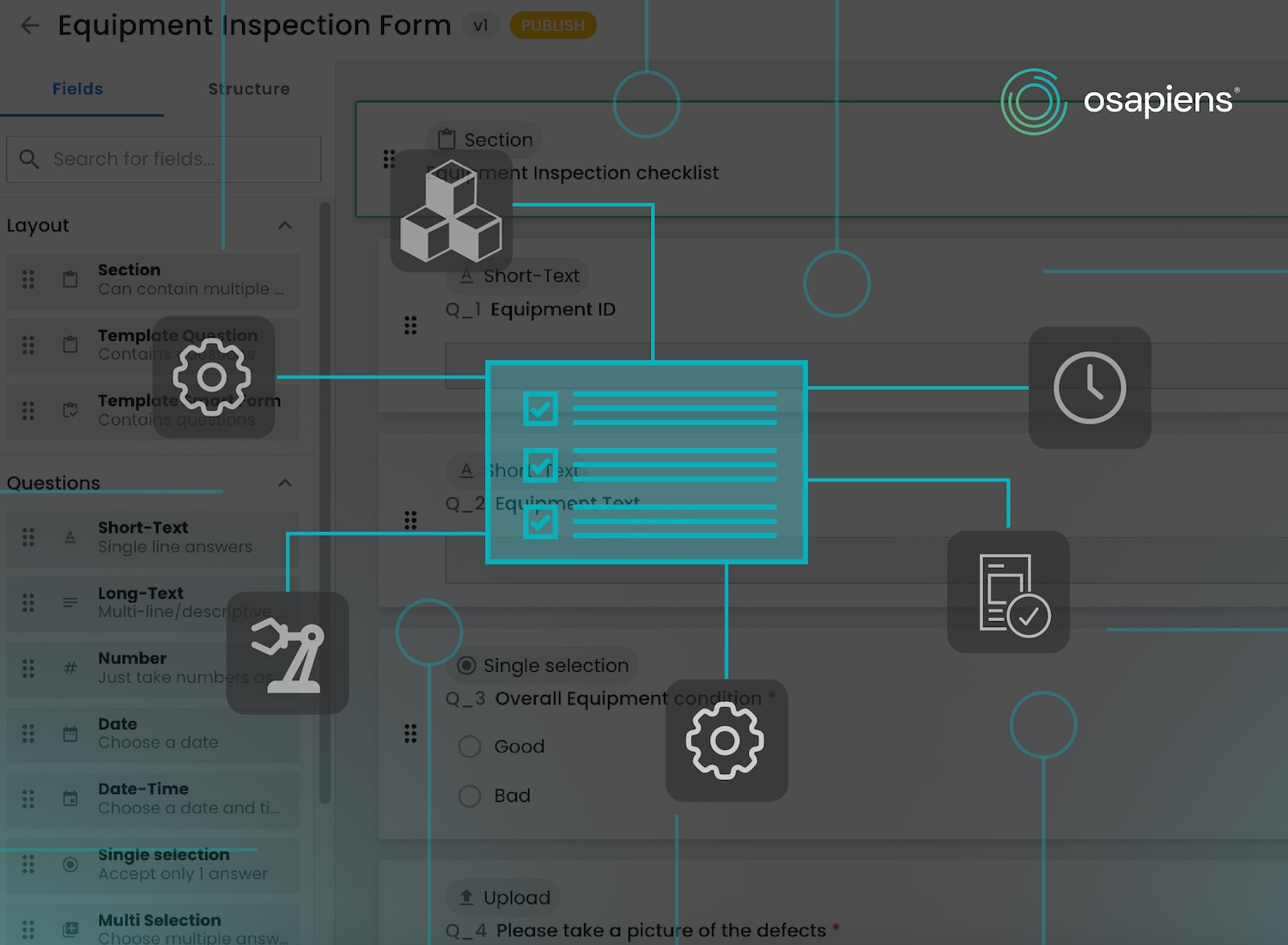
The osapiens HUB for Maintenance addresses these challenges through mobile-first execution, automated scheduling, and integrated documentation. Technicians access complete maintenance checklists on mobile devices at the equipment location, eliminating trips to central offices for work orders or equipment history.
The platform’s SAP PM integration ensures maintenance data flows seamlessly between execution and enterprise systems without manual transfers. Preventive maintenance schedules generate work orders automatically based on time intervals, operating hours, or meter readings, ensuring no maintenance falls through scheduling gaps.
Key capabilities supporting lyophilizer maintenance include:
- Mobile checklist execution: Technicians complete structured checklists on smartphones or tablets, capturing photos, timestamps, and measurements directly at the equipment location
- Offline functionality: Work continues in areas with poor connectivity, with data automatically synchronizing when connection resumes
- SAP PM synchronization: Maintenance data flows bidirectionally between osapiens HUB and SAP PM, maintaining a single source of truth without duplicate entry
- Audit-ready documentation: Every maintenance activity creates timestamped records with technician identification, task completion verification, and deviation documentation
- Asset history and trending: Complete maintenance history enables analysis of failure patterns, optimization of maintenance intervals, and data-driven decision-making
| Aspect | Paper or Excel Checklist | Digital Checklist with osapiens HUB |
|---|---|---|
| Data Entry | Manual transcription from paper to computer, 1% error rate per phase | Direct digital capture at point of work, no transcription errors |
| Access to History | Requires searching through binders or scattered files, time-consuming | Instant access to complete maintenance history via mobile device or desktop |
| Scheduling | Manual calendar management, tasks easily forgotten or delayed | Automated work order generation based on time, usage, or condition triggers |
| Compliance Documentation | Difficult to compile for audits, missing signatures or dates common | Automatic audit trails with timestamps, user identification, and completion verification |
| Real-Time Visibility | Managers lack visibility until paperwork is submitted and processed | Real-time dashboards show work order status, completion rates, and overdue tasks |
| Integration | Requires manual data entry into SAP PM or other enterprise systems | Bidirectional SAP PM integration eliminates duplicate entry and data silos |
Stop Losing Uptime to Missed Lyophilizer Inspections
Digitize your maintenance checklists, automate work order creation, and give every technician a mobile tool that works — even offline. SAP PM integration included.Try osapiens HUB for Free
FAQ
What should be included in a lyophilizer maintenance checklist?
A comprehensive lyophilizer maintenance checklist should cover vacuum system maintenance (pump oil changes, leak detection, efficiency testing), refrigeration system care (coolant levels, condenser cleaning, leak detection), control system calibration (temperature and pressure sensors), chamber and door seal inspection, heating system verification, mechanical component lubrication, and electrical safety checks. The checklist should be organized by component or system rather than frequency alone, with tasks adapted to your specific equipment model, usage patterns, and operating environment.
How often should I complete my lyophilizer maintenance checklist?
Maintenance frequency depends on equipment usage, operating environment, and manufacturer specifications. Common intervals include daily visual inspections, weekly coolant level checks, monthly vacuum efficiency tests and pressure decay checks, quarterly sensor calibration and leak detection, and biannual electrical safety verification. High-utilization equipment in 24/7 pharmaceutical production typically requires more frequent maintenance than research-scale systems. Usage-based maintenance triggered by operating hours often provides better results than fixed calendar schedules.
Can I customize this lyophilizer maintenance checklist template?
Yes, customization is essential. Every lyophilizer operates in a unique context defined by product characteristics, batch frequency, cleanroom classification, and regulatory requirements. Effective checklists incorporate manufacturer recommendations, historical failure patterns from your specific equipment, and site-specific procedures addressing your facility’s quality management system. Digital CMMS platforms like osapiens HUB allow you to create customized checklists with equipment-specific instructions, required measurements, and conditional tasks that adapt to inspection findings.
How does a digital CMMS improve maintenance checklist management?
A digital CMMS eliminates paper-based documentation errors, provides real-time visibility into maintenance execution, automates preventive maintenance scheduling, and creates audit-ready compliance records automatically. Mobile access enables technicians to execute checklists at the equipment location, capturing photos and measurements directly. SAP PM integration ensures maintenance data flows seamlessly to enterprise systems without manual transcription. The result is higher data quality, better maintenance consistency, and significantly reduced audit preparation time.
Start using osapiens for free
Improve your uptime, extend the life of your equipment, and simplify work order management.
Book a demo
ENTERPRISE CAPABILITIES
- SAP ECC & S/4HANA Certified
- Infor & MS Dynamics
- Microsoft Entra ID / Okta
- ISO 27001 & 9001
- EU Cloud · Data Sovereignty
- Development, Test, and Production Environments
- Multi-Entity & Multi-Site
- Power BI Integration
- Audit Trail & Compliance
Related content
January 1, 2026
Lorry Maintenance Checklist – Tasks, Tips & Template
January 1, 2026
Dust Collector Maintenance Checklist – Tasks, Safety & Digital Execution
January 1, 2026
Conveyor Belt Preventive Maintenance Checklist – Tasks, Tips & Digital Execution
January 1, 2026
Building Maintenance Checklist – Essential Tasks, Best Practices & Template
January 1, 2026
Solar Panel Maintenance Checklist: What to Inspect & When
January 1, 2026
Busbar Maintenance Checklist: What to Inspect & When
January 1, 2026
Electrical Preventive Maintenance Checklist – Tasks, Safety & Digital Execution

January 12, 2026
SAP S/4HANA Migration: Complete Guide for a Successful ERP Transition in 2026

January 15, 2026
IBM Maximo Alternatives: The Best EAM & CMMS Platforms Compared
January 1, 2026
Grinding Machine Maintenance Checklist – Tasks, Safety & Digital Execution

March 24, 2026
Multi-Site Maintenance Management: How to Scale Without Losing Control

January 20, 2026