

Maintenance Checklist

Florian Bartholomäus, osapiens Expert | 1. January 2026 | Lesezeit 8 min.
Most water heater failures appear sudden but result from hidden internal degradation—sediment buildup, anode rod depletion, or corrosion—that progresses invisibly for months or years. A structured checklist catches these issues early, before catastrophic failure disrupts operations.
Start using this checklist for free
More than 2200 companies place their trust in osapiens











Table of Contents
- Water Heater Maintenance: Key Facts
- Why You Need a Water Heater Maintenance Checklist
- What to Include in Your Water Heater Maintenance Checklist
- Common Water Heater Problems Your Maintenance Checklist Prevents
- From Paper Checklist to Digital: How the osapiens HUB Automates Your Water Heater Maintenance Checklist
- FAQ
Water heaters are critical assets in facilities, yet they often receive attention only after catastrophic failure occurs. Preventive maintenance for water heaters addresses hidden degradation—sediment accumulation, anode rod corrosion, and pressure valve dysfunction—that progresses silently inside sealed tanks until sudden, complete failure disrupts operations. A structured water heater maintenance checklist provides the systematic approach needed to extend equipment lifespan, reduce unplanned downtime, and maintain audit-ready documentation across your facility portfolio.
Water Heater Maintenance: Key Facts
- Hidden failure modes: Most water heater degradation occurs internally—sediment layers, anode rod depletion, and corrosion advance invisibly until triggering sudden failure
- Significant cost impact: Preventive maintenance can extend equipment lifespan by 20–40% and reduce repair costs compared to reactive approaches, according to industry research
- Safety-critical components: Temperature and pressure relief valves prevent catastrophic failures; annual testing confirms these safety devices function when needed most
- Digital execution advantage: Mobile checklists with photo documentation and automatic timestamping eliminate paper-based gaps and create complete audit trails
Why You Need a Water Heater Maintenance Checklist
Water heaters fail suddenly because the majority of degradation occurs inside sealed components, invisible to facility personnel until structural integrity collapses. Without structured maintenance, unplanned downtime becomes harder to predict, and repair costs increase significantly compared to planned corrective actions.
- Consistency: Ad-hoc maintenance based on experience alone misses critical inspection intervals. Checklists ensure every component receives appropriate attention regardless of which technician performs the work, standardizing quality across shifts and sites.
- Risk reduction: Sediment buildup reduces heating efficiency and creates thermal stress that causes premature tank failure. Anode rod depletion allows corrosion to attack tank walls directly. Missing these inspections exposes facilities to emergency replacement costs and operational disruption.
- Documentation: Regulatory agencies, insurance underwriters, and internal auditors require verifiable evidence that maintenance occurred as scheduled. Complete records demonstrate due diligence and support compliance readiness during audits.
- Technician guidance: Structured checklists support less experienced team members by providing step-by-step procedures, safety warnings, and escalation criteria. This becomes critical as skilled labor shortages reduce mentorship opportunities.
- Standardization: Facilities operating multiple water heaters across different locations benefit from repeatable procedures that ensure consistent maintenance quality, enabling meaningful performance comparisons and trend analysis.
What to Include in Your Water Heater Maintenance Checklist
Effective water heater maintenance checklists organize tasks by the physical components and systems requiring attention, not by arbitrary time intervals. This structure ensures technicians address all critical areas systematically.
Your checklist should cover visual inspection for leaks and corrosion, functional checks of heating elements and thermostats, safety verification of relief valves and venting systems, cleaning and servicing to remove sediment and maintain efficiency, and documentation steps that create audit-ready records. Actual maintenance intervals depend on water quality, usage patterns, and risk assessment—not fixed schedules.
| Component / System | Inspection & Maintenance Tasks | Purpose |
|---|---|---|
| Tank & Exterior | Inspect for leaks, corrosion, or water pooling; verify insulation wrap integrity; check area clearance | Early leak detection, thermal efficiency, safe access |
| Sediment Management | Drain and flush tank to remove mineral buildup; inspect discharge water clarity; verify drain valve function | Heating efficiency, prevent overheating, extend tank life |
| Anode Rod | Remove and inspect rod for corrosion; measure remaining diameter; replace if below 1/2 inch or heavily corroded | Prevent internal tank corrosion, extend equipment lifespan |
| Temperature & Pressure Relief Valve | Test valve operation by lifting test lever; verify water discharge; inspect discharge piping for proper termination | Critical safety device, prevent explosion risk |
| Heating Elements & Thermostats | Test thermostat calibration; verify element continuity with multimeter; confirm temperature settings (typically 120°F) | Consistent hot water supply, energy efficiency, scalding prevention |
| Gas Burner Assembly (Gas Units) | Inspect flame pattern for steady blue color; clean burner of debris; verify ignition system function | Combustion efficiency, safety, prevent incomplete burning |
| Venting & Flue System (Gas Units) | Inspect flue pipe for corrosion or separation; verify proper slope; check draft hood condition; confirm no blockages | Carbon monoxide safety, proper exhaust, occupant protection |
| Electrical Connections (All Types) | Inspect wiring for damage or burn marks; verify voltage at connections; confirm circuit breaker position | Fire risk prevention, reliable operation, electrical safety |
Turn Your Water Heater Maintenance Checklist into Digital Work Orders
Create structured checklists for every component—from anode rods to relief valves. Execute them on mobile, sync with SAP PM, and keep full audit trails automatically.Start with Your Water Heater Maintenance Checklist
Common Water Heater Problems Your Maintenance Checklist Prevents
Structured maintenance checklists address the specific failure mechanisms that cause sudden, costly water heater breakdowns. Understanding these problems clarifies why each checklist task matters.
- Sediment-induced efficiency loss and tank failure: Minerals settle at the tank bottom, forming insulating layers that force heating elements to work harder. This drives excessive temperatures that cause metal fatigue and microscopic cracks. Annual flushing removes sediment before it accumulates into damaging layers, maintaining heating efficiency and preventing premature structural failure.
- Internal corrosion from anode rod depletion: The sacrificial anode rod protects the tank by corroding preferentially. Once depleted, rust attacks tank walls directly, advancing silently until catastrophic leaks occur. Regular inspection and timely replacement—typically every 3–5 years, more frequently in hard water regions—maintains this critical protection.
- Safety valve malfunction creating explosion risk: Temperature and pressure relief valves must open when thresholds are exceeded to prevent dangerous pressure buildup. Valves that aren’t tested annually may fail when needed most. Testing confirms functionality; non-responsive valves require immediate replacement because they cannot perform their safety function.
- Component failures without warning signals: Heating elements, thermostats, and gas valves fail inside sealed assemblies, providing no advance symptoms. Systematic functional testing during preventive maintenance detects degraded performance before complete failure, enabling planned replacement during scheduled maintenance windows rather than emergency response.
- Documentation gaps preventing compliance verification: Facilities lacking complete maintenance records face regulatory penalties, insurance coverage disputes, and inability to demonstrate due diligence. Digital checklists with automatic timestamps and photo documentation create audit-ready trails that satisfy compliance requirements.
From Paper Checklist to Digital: How the osapiens HUB Automates Your Water Heater Maintenance Checklist
Paper-based and spreadsheet checklists create friction that undermines maintenance quality. Technicians carry printed forms that become illegible or lost. Historical maintenance data remains inaccessible in the field. Media breaks—manual transcription from paper to digital systems—introduce errors and delays. Documentation quality depends entirely on individual technician discipline.
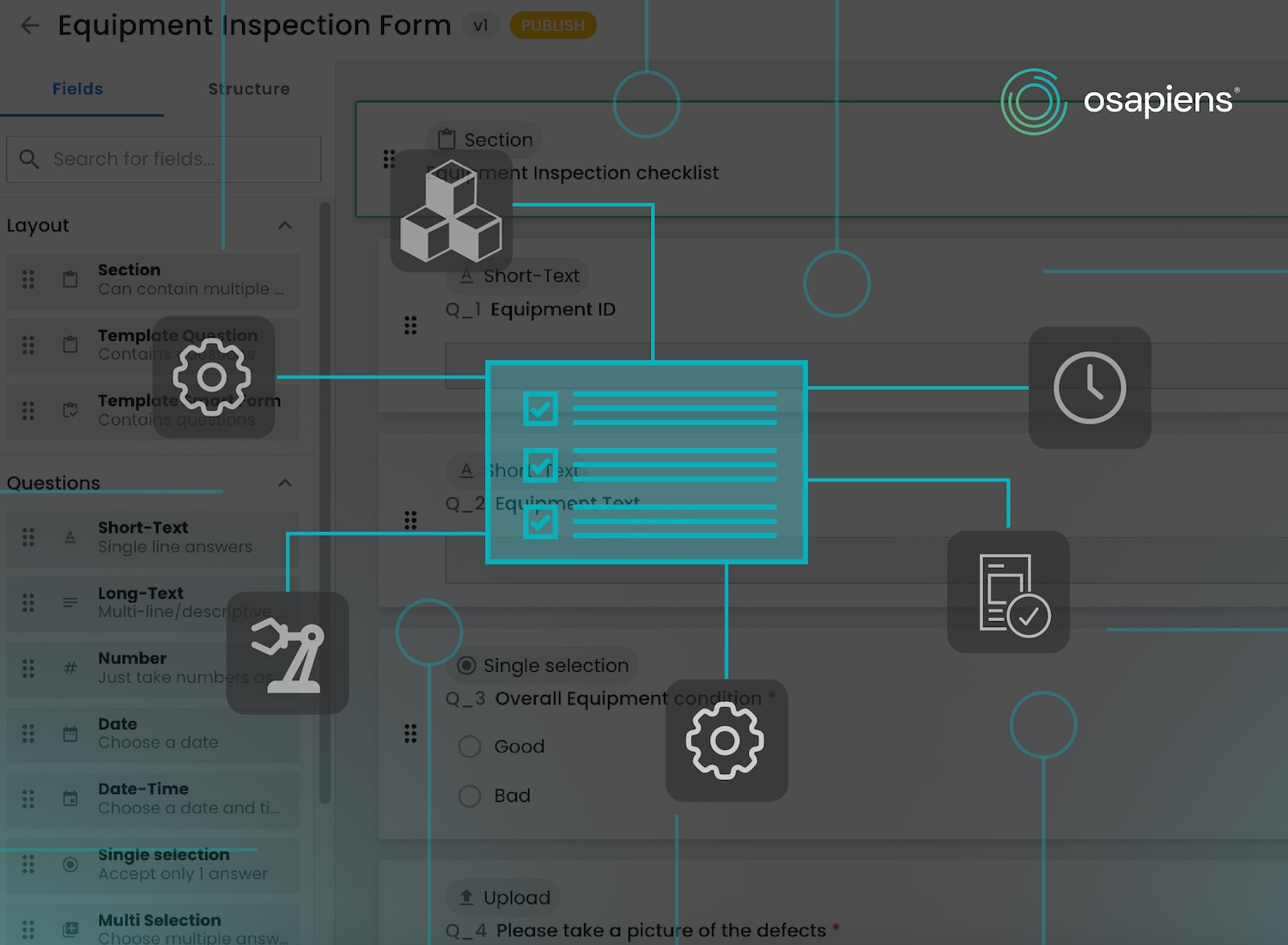
The osapiens HUB for Maintenance eliminates these limitations through mobile-first execution that guides technicians through structured checklists on rugged devices. Technicians photograph anode rod condition, capture temperature readings, document relief valve testing, and record observations using voice notes or text—all automatically timestamped and linked to the specific asset. SAP PM integration synchronizes maintenance data bidirectionally, ensuring financial systems and field execution share a single source of truth without manual data entry.
| Aspect | Paper or Excel Checklist | Digital Checklist with osapiens HUB |
|---|---|---|
| Accessibility | Printed sheets carried in tool bags; historical data requires office visit | Complete asset history, procedures, and manuals accessible on mobile device in the field |
| Documentation Quality | Handwritten notes often illegible; photos taken separately and not linked to work orders | Photos, timestamps, and observations automatically attached to asset records |
| Data Entry | Manual transcription from paper to digital systems creates errors and delays | Data captured once in the field, automatically synchronized to CMMS and SAP PM |
| Audit Readiness | Scattered records across filing cabinets and spreadsheets; difficult to retrieve during audits | Complete audit trail with timestamps, technician identity, and photo evidence instantly accessible |
| Compliance Verification | Proving maintenance occurred requires manual record searches | Automatic compliance reporting shows completion rates, overdue tasks, and historical trends |
| Continuous Improvement | Identifying patterns requires manual data aggregation across multiple sources | Analytics reveal failure patterns, maintenance cost trends, and optimization opportunities |
Organizations implementing digital maintenance checklists report measurable improvements: technician productivity increases as time spent on administrative tasks decreases, first-time fix rates improve because technicians access detailed procedures and historical troubleshooting data, and mean time to repair decreases through guided troubleshooting rather than trial-and-error approaches. For water heaters specifically, digital checklists ensure that critical safety inspections—relief valve testing, anode rod condition, venting verification—are completed consistently and documented completely, reducing liability exposure and regulatory risk.
Stop Losing Uptime to Missed Water Heater Inspections
Digitize your maintenance checklists, automate work order creation, and give every technician a mobile tool that works—even offline. SAP PM integration included.Try osapiens HUB for Free
FAQ
What should be included in a water heater maintenance checklist?
A comprehensive checklist includes visual inspection for leaks and corrosion, sediment flushing to remove mineral buildup, anode rod inspection and replacement when depleted, temperature and pressure relief valve testing to confirm safety device function, thermostat calibration and heating element testing, and for gas units, burner cleaning and venting system verification. Documentation of all observations and parts replaced creates the audit trail needed for compliance verification. Actual tasks should be customized based on equipment type, water quality, and facility-specific risk assessments.
How often should I complete my water heater maintenance checklist?
Maintenance frequency depends on water quality, usage intensity, and equipment criticality rather than fixed universal intervals. Industry practice commonly includes monthly visual inspections for leaks and unusual sounds, annual tank flushing to remove sediment, and anode rod inspection every 3–5 years (more frequently in hard water regions). Critical facilities may perform quarterly flushing where water hardness accelerates sediment accumulation. Preventive maintenance scheduling should reflect actual operating conditions and risk tolerance, not arbitrary calendar intervals.
Can I customize this water heater maintenance checklist template?
Yes—customization is essential because water heater maintenance requirements vary by equipment type (tank vs. tankless), fuel source (gas vs. electric), water chemistry (hard vs. soft water), and facility risk profile. Effective checklists adapt manufacturer recommendations to site-specific conditions. Digital CMMS platforms like osapiens HUB enable checklist customization per asset while maintaining standardized data collection for performance analysis across your facility portfolio.
How does a digital CMMS improve maintenance checklist management?
A CMMS automates checklist scheduling, eliminating manual calendar tracking across hundreds of assets. Mobile execution provides technicians with step-by-step procedures, photo documentation capability, and offline access in areas with poor connectivity. Automatic data synchronization eliminates manual transcription errors and creates complete audit trails. For organizations using SAP PM, integration ensures maintenance data flows seamlessly between field execution and enterprise financial systems, providing single-source-of-truth visibility without duplicate data entry.
Start using osapiens for free
Improve your uptime, extend the life of your equipment, and simplify work order management.
Book a demo
Related content

November 21, 2025
Field Service Management Solutions Comparison: The 6 Best FSM Solutions for Small Businesses

December 19, 2025
Best MRO Asset Management Software: Top 6 Comparison 2026
January 1, 2026
Building Maintenance Checklist – Essential Tasks, Best Practices & Template
January 1, 2026
CNC Machine Maintenance Checklist: What to Inspect, When & How

June 25, 2025
What is a CMMS? A Guide to Modern Maintenance Software
January 1, 2026
Grinding Machine Maintenance Checklist – Tasks, Safety & Digital Execution
January 1, 2026
Gas Meter Maintenance Checklist – Tasks, Safety & Digital Execution
January 1, 2026
Generator Maintenance Checklist – Tasks, Tips & Best Practices
January 1, 2026
Emergency Lighting System Maintenance Checklist – Tasks, Compliance & Digital Execution
January 1, 2026
Laser Cutting Machine Maintenance Checklist: Prevent Downtime & Extend Equipment Life
January 1, 2026
Die Casting Machine Maintenance Checklist – Tasks, Best Practices & Digital Execution
January 1, 2026