

CMMS

Florian Bartholomäus, osapiens Expert | 24. November 2025 | Lesezeit 8 min.
Many manufacturers hesitate to implement predictive maintenance, assuming it requires a complete infrastructure overhaul. That's a misconception. The osapiens HUB for Maintenance enables a phased approach – start with your most critical assets, integrate existing sensor data, and expand gradually as you see results. Our clients typically begin with 5–10 critical machines and achieve measurable ROI within 3–6 months before scaling across the facility.
Book a demo
More than 2200 companies place their trust in osapiens










Table of Contents
A single hour of unplanned downtime can cost manufacturers thousands of euros per minute. Lost output, idle workforce, emergency repairs, and missed delivery deadlines add up quickly. Traditional maintenance approaches force you to choose between costly scheduled interventions or even costlier breakdowns. Predictive maintenance offers a third way that transforms how manufacturing facilities manage critical equipment. Understanding the benefits of predictive maintenance is essential for manufacturers looking to reduce costs, minimize downtime, and optimize equipment performance.
Key Facts
- Lower maintenance costs through data-driven planning: Predictive maintenance significantly reduces total maintenance expenses compared to reactive approaches, eliminating unnecessary preventive tasks while catching issues early.
- Dramatically reduce unplanned downtime: Manufacturers achieve substantial reductions in unplanned downtime through automated preventive maintenance scheduling and early failure detection.
- Extend equipment lifespan and optimize performance: Condition-based interventions keep machinery operating within optimal parameters, extending service life and maximizing asset availability.
- Transform your maintenance with osapiens HUB – start free: The osapiens HUB for Maintenance integrates predictive strategies through real-time monitoring, automated work order creation, and analytics dashboards that turn sensor data into actionable maintenance plans.
What Is Predictive Maintenance in Manufacturing?
Predictive maintenance uses real-time equipment data to detect potential failures before they occur, enabling manufacturers to schedule interventions precisely when needed. Unlike reactive maintenance that responds after breakdowns or preventive maintenance that follows fixed schedules, predictive approaches optimize timing through continuous condition monitoring.
How Predictive Maintenance Architecture Works
The technology behind predictive maintenance follows a structured five-layer approach. IoT sensors track vibration, temperature, pressure, current consumption, and operating hours across critical machinery, transmitting data through industrial protocols like MQTT, OPC UA, or Modbus. A sensor data management layer collects and analyzes these streams, monitoring thresholds, detecting statistical anomalies, and identifying degradation trends through machine learning.

When the system detects concerning patterns, it generates structured alerts containing asset identification, measured values, severity classification, and recommended actions. The osapiens HUB for Maintenance receives these alerts and automatically creates work orders, enriches them with asset histories and documentation, assigns tasks to qualified technicians, and tracks completion. Finally, a feedback loop flows data from completed work orders back into the analytics layer, continuously refining threshold values and improving prediction accuracy.
Expert tip from osapiens
Many manufacturers hesitate to implement predictive maintenance, assuming it requires a complete infrastructure overhaul. That's a misconception. The osapiens HUB for Maintenance enables a phased approach – start with your most critical assets, integrate existing sensor data, and expand gradually as you see results. Our clients typically begin with 5–10 critical machines and achieve measurable ROI within 3–6 months before scaling across the facility.
Florian Bartholomäus, osapiens Expert
5 Key Benefits of Predictive Maintenance in Manufacturing
Manufacturing facilities adopting predictive maintenance strategies achieve measurable improvements across multiple performance indicators. The following benefits demonstrate why leading manufacturers prioritize data-driven maintenance approaches over traditional reactive or calendar-based methods.
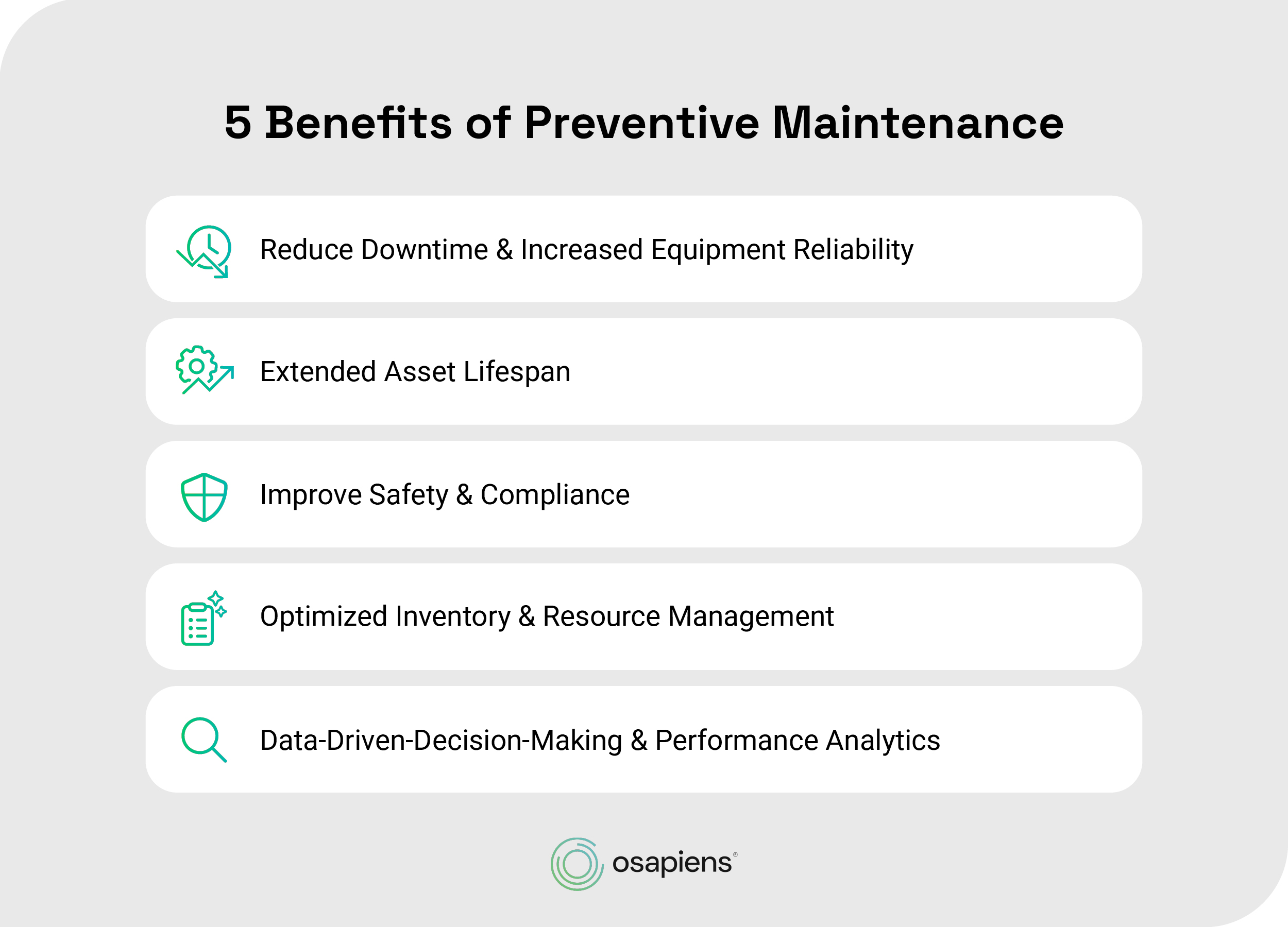
Reducing Maintenance Costs Through Data-Driven Planning
Predictive maintenance reduces total maintenance costs compared to traditional approaches. Instead of replacing components on fixed schedules, manufacturers intervene only when data indicates genuine need. According to an ARC Advisory Group study, around 30% of preventive maintenance is performed too frequently.
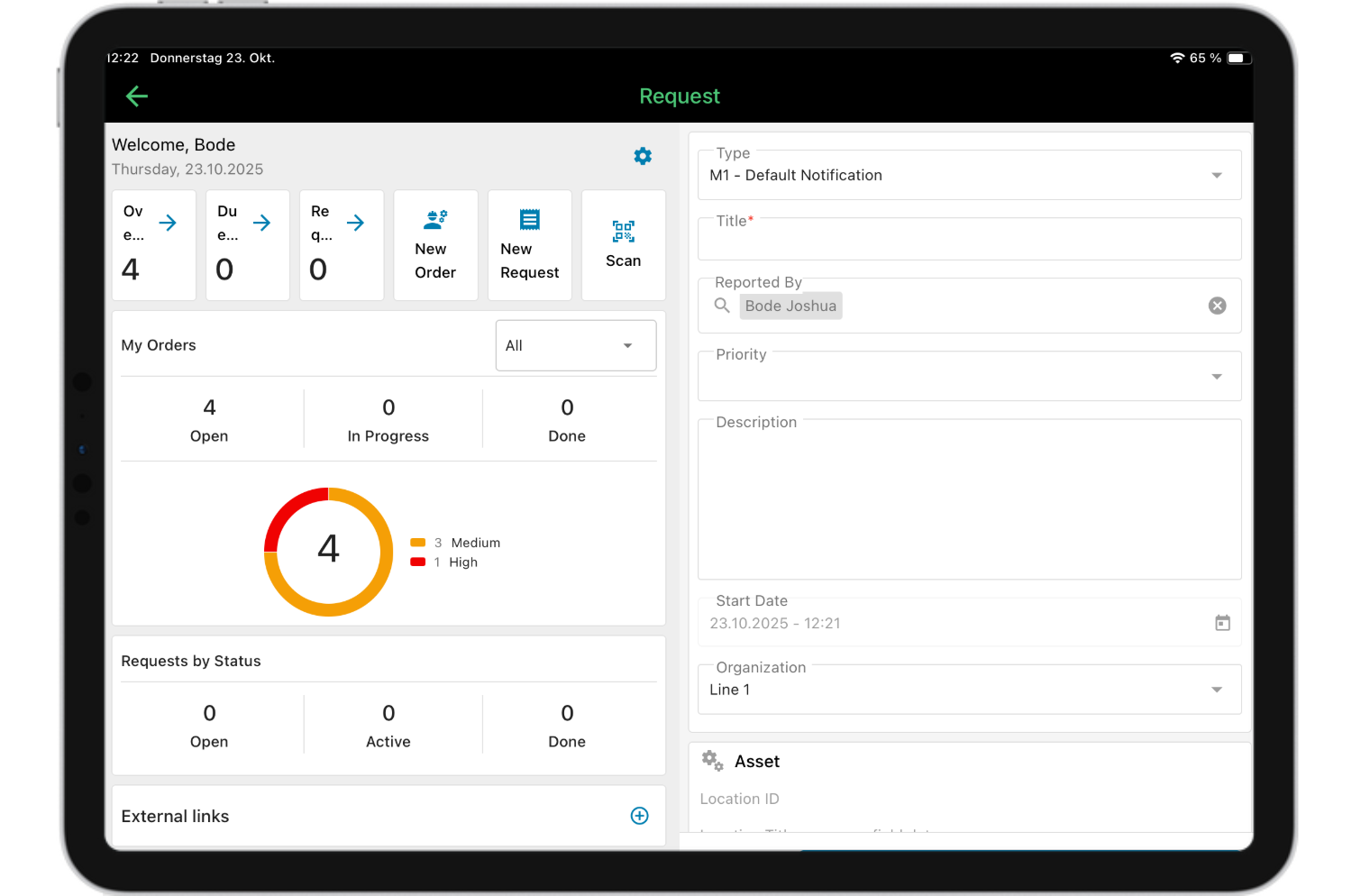
The osapiens HUB for Maintenance enables cost optimization through automated scheduling that adapts to actual equipment condition. Advanced dashboards track maintenance expenses per asset, identifying cost drivers and optimization opportunities. When sensors detect developing issues, the system automatically generates work orders with precise scope definitions, catching problems early when repairs remain inexpensive.
Reduce Unplanned Downtime
Unplanned downtime costs industrial manufacturers an estimated $50 billion annually. Manufacturing facilities typically lose 323 production hours per year due to unexpected equipment failures, with costs reaching $260,000 per hour when critical production lines shut down.
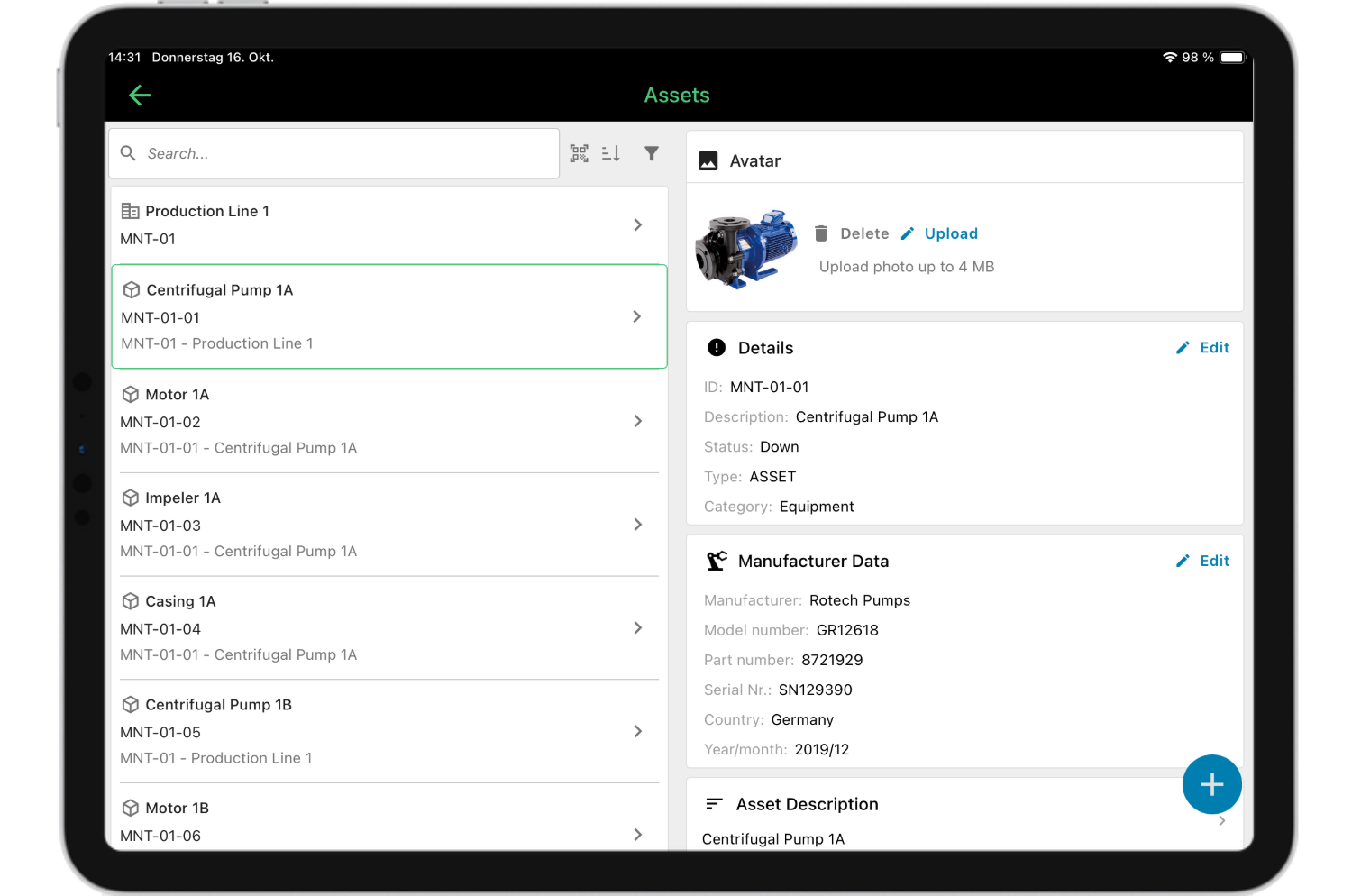
Predictive maintenance reduces unplanned downtime by up to 50 % through early failure detection. The osapiens HUB for Maintenance provides real-time dashboards and analytics that give maintenance teams complete visibility into asset health across all facilities. These dashboards display equipment performance metrics, failure patterns, and predictive alerts in one centralized view, enabling teams to identify critical issues before they cause production interruptions.
Extend Equipment Lifespan and Performance
Predictive maintenance extends equipment lifespan by 20–40 % through condition-based interventions that keep machinery operating within optimal parameters. Traditional preventive maintenance often causes unnecessary wear through excessive disassembly and reassembly, while reactive approaches allow damage to accumulate unchecked.
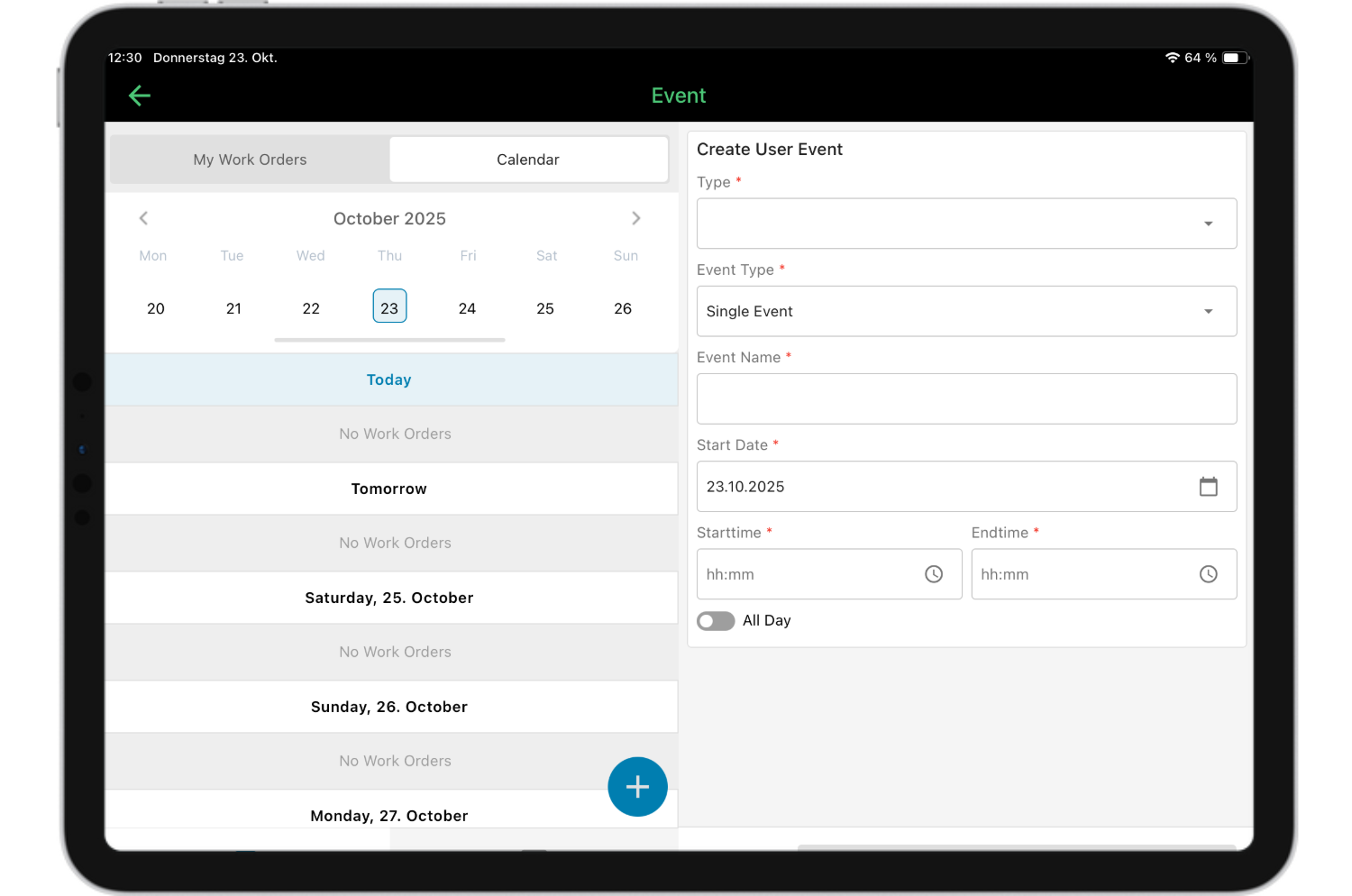
The Planning and Scheduling module in the osapiens HUB optimizes maintenance timing based on actual equipment condition rather than arbitrary calendars. Teams can schedule interventions during planned production windows, coordinate resource availability, and manage contractor assignments to minimize operational impact. This precision timing prevents both under-maintenance that leads to failures and over-maintenance that introduces unnecessary stress on components.
Improve Workplace Safety and Compliance
Equipment failures are a leading cause of occupational injuries in manufacturing. Unexpected malfunctions create hazardous situations from flying debris, chemical leaks, or structural collapses. Predictive maintenance reduces these risks by identifying potential safety hazards before they escalate into dangerous failures.

The Mobile CMMS App in the osapiens HUB enables technicians to document maintenance activities directly in the field, creating verifiable compliance records. Safety-critical checklists guide technicians through proper lockout/tagout procedures, ensuring maintenance work follows regulatory requirements. This documentation proves essential during safety audits and helps manufacturers avoid costly penalties while protecting workers.
Optimize Resource Allocation and Maintenance Schedules
Traditional time-based maintenance wastes resources by servicing equipment regardless of actual condition. Predictive approaches allocate maintenance teams and spare parts precisely where needed, eliminating unnecessary interventions while ensuring critical equipment receives attention.
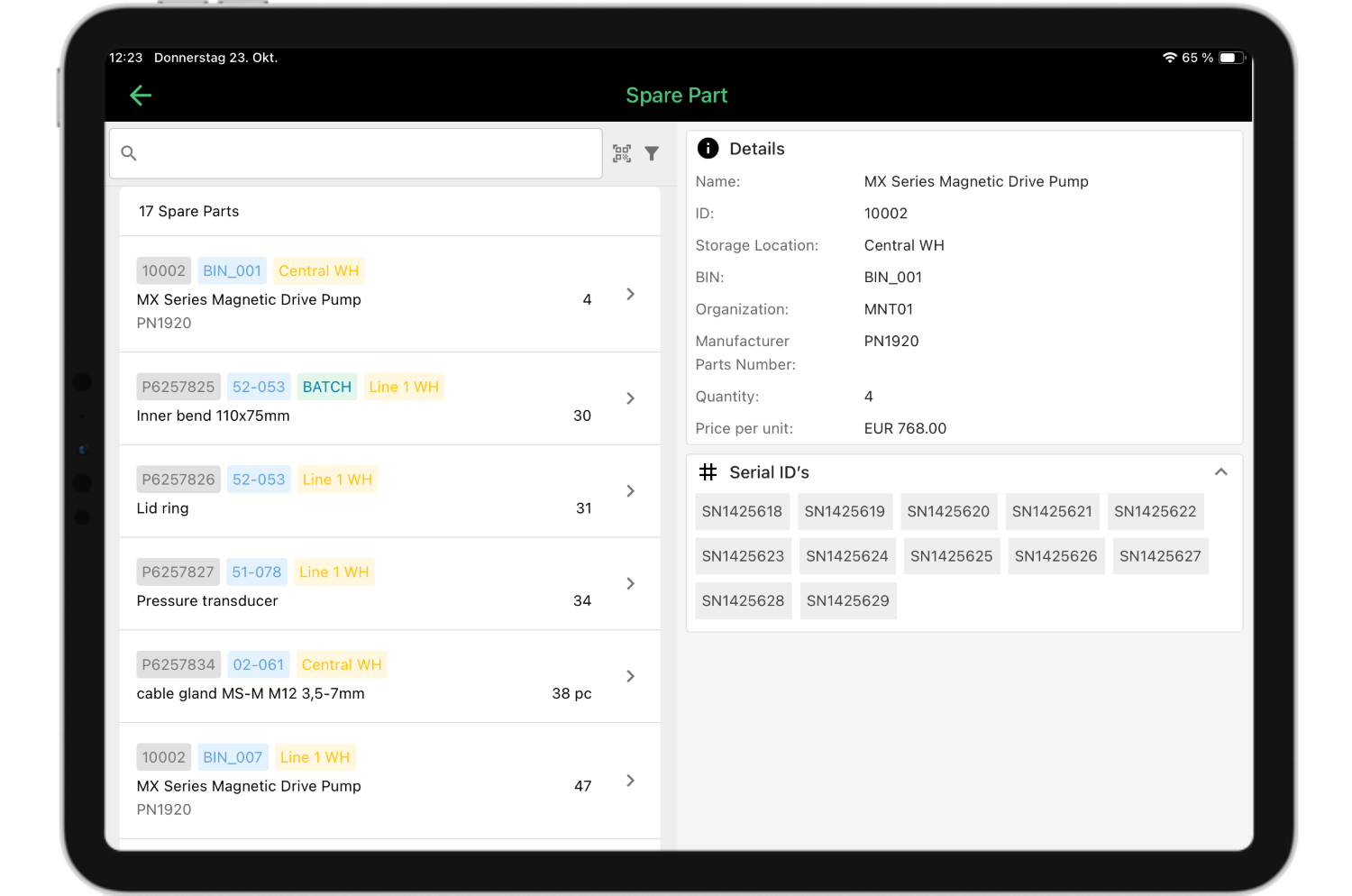
The Spare Parts and Inventory module in the osapiens HUB tracks component usage patterns and predicts replacement needs based on actual equipment condition. This data-driven approach reduces carrying costs by eliminating overstocking while ensuring critical components remain available when required. The system automatically generates procurement requests when predictive models indicate upcoming part requirements, preventing emergency orders and premium pricing.
Predictive Maintenance vs. Preventive Maintenance: What Manufacturers Need to Know
Understanding the distinction between predictive and preventive maintenance helps manufacturers choose the optimal strategy for different equipment types. While both approaches are proactive, they differ fundamentally in timing and data usage.
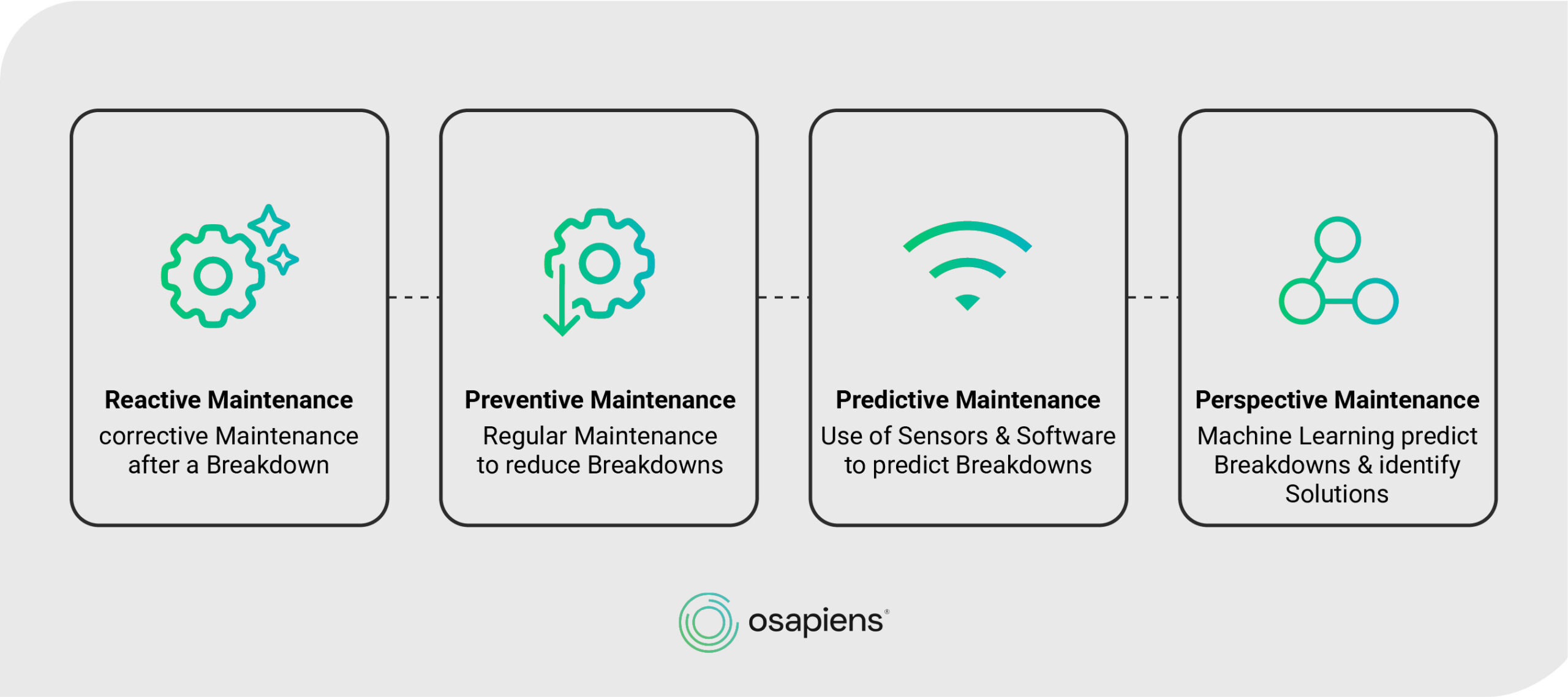
Preventive maintenance follows predetermined schedules based on manufacturer recommendations or historical averages. Equipment receives routine service at fixed intervals regardless of actual condition. This approach provides predictable scheduling but often results in unnecessary interventions on healthy equipment while potentially missing rapidly developing faults between scheduled intervals.
Predictive maintenance monitors real-time equipment condition through sensors and analytics, triggering interventions only when performance indicators suggest developing problems. This condition-based approach optimizes maintenance timing and eliminates unnecessary work, but requires technology investment and specialized skills.
| Aspect | Preventive Maintenance | Predictive Maintenance |
|---|---|---|
| Scheduling | Fixed intervals (time/usage-based) | Condition-based, as needed |
| Data Requirements | Historical data, manufacturer guidelines | Real-time sensor data, analytics |
| Cost Reduction | 10–15 % vs. reactive maintenance | 18–25 % vs. reactive maintenance |
| Downtime Reduction | Moderate improvement | Up to 50 % reduction |
| Initial Investment | Low | Higher (sensors, software) |
| Resource Efficiency | May include unnecessary maintenance | Optimized, targeted interventions |
| Best For | Routine equipment, predictable failures | Critical assets, high downtime costs |
Most successful manufacturers implement hybrid strategies. The osapiens HUB for Maintenance supports both approaches through flexible scheduling, enabling teams to apply preventive maintenance to routine components while leveraging predictive insights for critical production equipment.
How the osapiens HUB for Maintenance Enables Predictive Strategies
Transitioning from reactive or purely preventive maintenance to predictive strategies requires the right technology foundation. The osapiens HUB for Maintenance provides manufacturers with an integrated platform that bridges the gap between traditional maintenance approaches and data-driven predictive operations.
Key capabilities that enable predictive maintenance:
- Centralized data management: Equipment data from multiple sources creates a single source of truth for asset health across all facilities
- Real-time analytics: Dashboards transform raw sensor data into actionable insights, identifying patterns and predicting failures before they occur
- Automated workflows: Work orders generate automatically when predictive alerts indicate developing issues
- Intelligent scheduling: Planning and Scheduling coordinates maintenance with production to minimize operational impact
- Predictive inventory: Spare Parts management ensures critical components remain available based on predicted replacement needs
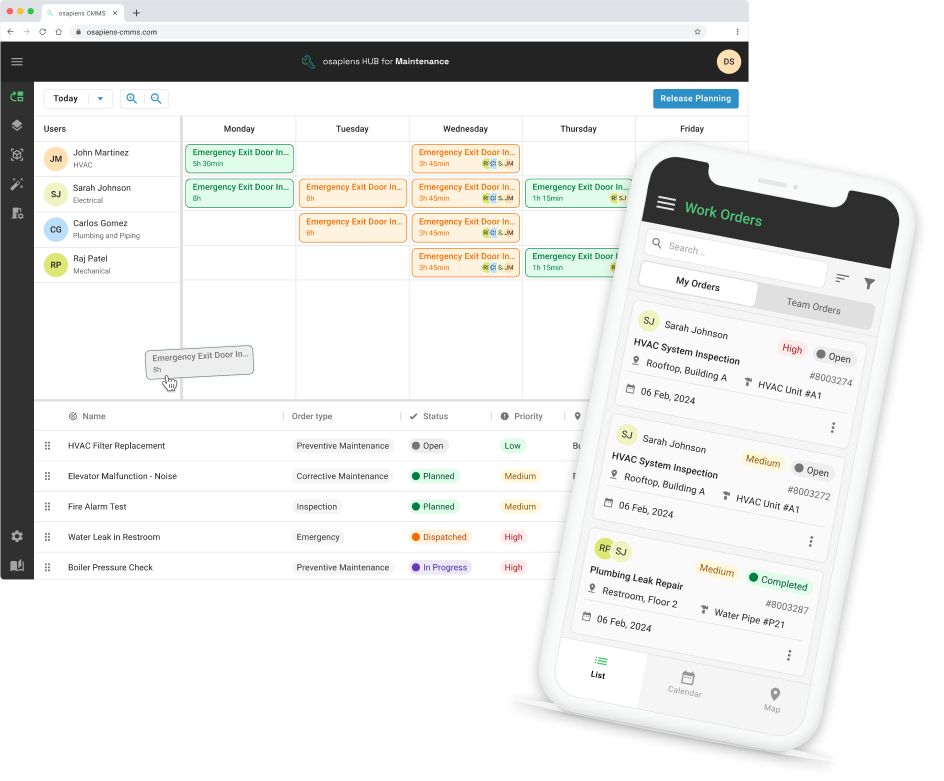
This integrated approach delivers measurable results: 17 minutes saved per work order, 8 % reduction in downtime, and 14 % increase in productivity through automated end-to-end processes. Whether implementing predictive maintenance for the first time or scaling existing programs across multiple sites, the osapiens HUB adapts to your operational maturity level and grows with your organization.
FAQ
How does predictive maintenance benefit the manufacturing industry?
Predictive maintenance benefits manufacturing by reducing unplanned downtime by up to 50 %, lowering maintenance costs by 18–25 %, and extending equipment lifespan by 20–40 %. It enables manufacturers to schedule maintenance based on actual equipment condition rather than arbitrary timelines, preventing costly downtime while eliminating unnecessary interventions. A well-implemented predictive maintenance program uses data analysis to optimize equipment performance, improve workplace safety, and maximize production efficiency while reducing energy consumption through properly maintained equipment.
What are the advantages of predictive maintenance?
Understanding predictive maintenance reveals key advantages including significant cost savings through targeted maintenance activities, dramatic reductions in machine downtime, and extended asset lifecycles. Unlike traditional maintenance strategies that follow fixed schedules, predictive approaches provide early warning of potential machine failures, allowing maintenance teams to plan interventions during optimal windows. It also improves workplace safety by preventing catastrophic equipment failures and creates verifiable compliance records for regulatory requirements.
What are the 4 benefits of corrective maintenance?
Corrective maintenance addresses immediate equipment failures, restores production quickly after breakdowns, requires minimal planning infrastructure, and works well for non-critical equipment where downtime has limited impact. However, it represents a reactive approach with higher overall costs compared to predictive strategies, as unplanned failures typically cost 3–4 times more than planned maintenance interventions.
How much can manufacturers save with predictive maintenance?
Maintenance managers implementing predictive strategies typically achieve 18–25 % reduction in overall maintenance costs. How predictive maintenance delivers these savings becomes clear when examining downtime prevention: unplanned production interruptions cost an average of $260,000 per hour in lost production. Studies show that large manufacturing facilities save an average of $172 million annually by reducing the 323 production hours typically lost to unexpected equipment failures. The osapiens HUB for Maintenance enables these savings through automated workflows that save 17 minutes per work order and reduce downtime by 8 %.
Start using osapiens for free
Improve your uptime, extend the life of your equipment, and simplify work order management.
Book a demo
Related content

December 4, 2025
Best UpKeep Alternatives for Enterprise CMMS in 2026
January 1, 2026
Solar Inverter Maintenance Checklist – Tasks, Tips & Template

July 14, 2025
Unlocking Operational Excellence Through Preventive Maintenance
January 1, 2026
UPS Maintenance Checklist – Tasks, Tips & Template
January 1, 2026
Turret Punch Press Maintenance Checklist – Tasks, Tips & Template
January 1, 2026
Cooling System Maintenance Checklist – Tasks, Tips & Template
July 22, 2025
Simplify Maintenance with SAP and osapiens

June 25, 2025
How Utilities Can Modernize Workforce and Asset Management and Drive Efficiency
January 1, 2026
Roof Coating Maintenance Checklist – Tasks, Best Practices & Digital Execution
January 1, 2026
Shot Blasting Machine Maintenance Checklist – Tasks, Tips & Digital Execution
January 1, 2026
Industrial Turbines Maintenance Checklist – Tasks, Tips & Digital Execution
January 1, 2026