

Maintenance Checklist

Florian Bartholomäus, osapiens Expert | 1. January 2026 | Lesezeit 10 min.
Most centrifuge failures stem from rotor degradation that develops invisibly—metal fatigue and stress corrosion progress without external warning signs. Your checklist must distinguish between surface scratches (acceptable) and gouges removing base metal (requiring immediate rotor replacement), because small defects can precipitate catastrophic failure within hundreds of operating hours.
Create your checklist for free













TRUSTED BY LEADING COMPANIES




ENTERPRISE-READY
 SAP Certification
 ISO 27001
 EU Hosting
 Entra ID & Okta
 Multi-Entity
Table of Contents
- Centrifuge Maintenance: Key Facts
- Why You Need a Centrifuge Maintenance Checklist
- What to Include in Your Centrifuge Maintenance Checklist
- Common Centrifuge Problems Your Maintenance Checklist Prevents
- From Paper Checklist to Digital: How the osapiens HUB Automates Your Centrifuge Maintenance Checklist
- FAQ
Centrifuges operate under extreme physical forces, generating thousands of gravities that create stress concentrations within rotor materials invisible to routine inspection. Without structured preventive maintenance, these forces accelerate rotor degradation, tube breakage, and aerosol generation hazards that transform equipment breakdowns into safety incidents rather than simple maintenance events. A comprehensive centrifuge maintenance checklist addresses these equipment-specific risks through systematic inspection, cleaning, lubrication, and documentation—preventing the catastrophic failures that can cost facilities thousands of dollars per incident while compromising sample integrity and personnel safety.
Centrifuge Maintenance: Key Facts
- Rotor failures are violent and sudden: Metal fatigue and stress corrosion develop at the molecular level without visible external signs, making systematic inspection essential for early detection before catastrophic failure occurs.
- Tube breakage cascades into multiple failures: Broken glass fragments abrade rotor surfaces, create imbalance triggering excessive vibration, and generate aerosol hazards—structured checklists prevent these cascading consequences through proper loading verification and tube inspection.
- Documentation protects against regulatory risk: Clinical and pharmaceutical facilities operating under CLIA, CAP, and FDA requirements must demonstrate systematic maintenance discipline through audit-ready records—digital checklists create the compliance evidence regulators explicitly require.
- Digital execution eliminates paper friction: The osapiens HUB for Maintenance enables mobile checklist execution with photos, timestamps, and automatic documentation, ensuring technicians complete every critical step without manual paperwork burden.
Why You Need a Centrifuge Maintenance Checklist
Ad-hoc maintenance approaches fail for centrifuges because the equipment’s failure modes—rotor degradation, tube breakage, mechanical wear—develop gradually and invisibly until sudden catastrophic failure occurs. Structured checklists transform maintenance from reactive crisis response into systematic prevention.
- Consistency across shifts and sites: Checklists ensure that every technician performs the same critical inspections regardless of experience level, eliminating the variability that allows early-stage problems to go undetected until they escalate into failures.
- Risk reduction through early detection: Systematic rotor inspection detects corrosion, stress cracking, and material degradation before catastrophic failure—preventing the sample loss, equipment damage, and potential personnel injury that characterize centrifuge accidents.
- Documentation for audit readiness: Regulatory bodies expect facilities to demonstrate systematic maintenance programs with documented oversight—checklists create the longitudinal records proving that equipment receives consistent attention rather than sporadic intervention.
- Technician guidance for complex judgments: Differentiating between acceptable surface scratches and dangerous gouges removing base metal requires explicit guidance—checklists provide the nuance necessary for appropriate field judgment rather than leaving critical decisions to individual interpretation.
- Standardization prevents forgotten tasks: Safety checks like rotor balance verification, speed limit confirmation, and tube inspection prevent the operator errors that precipitate failures—checklists ensure these critical steps occur before every operation.
- Handover quality during shift transitions: Structured documentation improves communication between shifts, ensuring emerging problems identified during one inspection receive follow-up attention rather than being forgotten in verbal handovers.
What to Include in Your Centrifuge Maintenance Checklist
Effective centrifuge checklists organize maintenance tasks by the physical component or subsystem requiring attention, ensuring technicians systematically address every critical area. Tasks should reflect manufacturer specifications, operational environment, and usage intensity—actual intervals depend on risk assessment and equipment-specific factors rather than fixed schedules.
Your checklist should cover visual inspection (detecting visible damage, corrosion, or wear), functional checks (verifying mechanical and electrical systems operate correctly), safety verification (confirming interlocks, guards, and emergency stops function as designed), cleaning and basic servicing (removing debris and maintaining lubrication), and documentation steps (recording findings, parts replaced, and any anomalies discovered).
| Component / System | Inspection & Maintenance Tasks | Purpose |
|---|---|---|
| Rotor & Rotor Lids | Inspect for cracks, corrosion, discoloration, missing anodization, gouges; verify rotor properly seated and locked; check bucket pivots and grooves for wear | Prevent catastrophic rotor failure from metal fatigue and stress corrosion |
| Tubes & Sample Containers | Inspect tubes for cracks, flaws, or stress damage before use; verify proper tube material and specifications for rotor type | Prevent tube breakage during operation and cascading failures |
| Rotor Chamber & Spindle | Clean interior surfaces with mild detergent; remove debris and foreign material; verify chamber is clean and dry before operation | Prevent contamination, imbalance, and mechanical binding |
| Safety Interlocks & Door Mechanisms | Test door interlocks prevent rotor access during operation; verify emergency stop functions correctly; inspect lid closure mechanisms | Personnel safety and compliance with IEC 61010-2-020 standards |
| Drive Motor & Bearings | Listen for abnormal noise (grinding, squealing); check for excessive vibration; verify speed reaches and maintains set RPM; inspect bearings for wear | Detect motor degradation and bearing wear before failure |
| Cooling System (Refrigerated Units) | Verify temperature control maintains set point; inspect ventilation and cooling fans; check for blocked airflow | Prevent overheating and maintain sample integrity |
| Electrical Systems & Controls | Inspect control panel for error messages; verify speed and temperature displays function correctly; check electrical connections | Control reliability and early detection of electronic drift |
| Balance & Loading Verification | Confirm paired tubes of equal weight positioned opposite each other; verify total load does not exceed rotor maximum; check speed does not exceed limits for sample density | Prevent imbalance-induced vibration and rotor stress damage |
These tasks represent common maintenance activities—actual checklists must be customized based on your specific centrifuge model, manufacturer recommendations, and operational context. High-density samples exceeding 1.2 g/mL specific gravity require reduced rotor speeds according to manufacturer calculations to prevent material stress damage.
Turn Your Centrifuge Maintenance Checklist into Mobile Work Orders
Create structured checklists for every component—from rotor inspection to safety interlock testing. Execute them on mobile devices, capture photos of rotor condition, and sync with SAP PM automatically while building complete audit trails.
Start with Your Centrifuge Maintenance Checklist
Common Centrifuge Problems Your Maintenance Checklist Prevents
Structured checklists prevent the failure patterns that characterize inadequate centrifuge maintenance:
- Catastrophic rotor failure from undetected fatigue: Regular inspection detects early-stage corrosion, stress cracking, and material degradation before molecular-level damage precipitates violent rotor failure—checklists ensure rotors receive systematic examination rather than operating until sudden fracture occurs.
- Tube breakage cascading into equipment damage: Pre-operation tube inspection and proper loading verification prevent the glass fragments, rotor abrasion, and imbalance that result when defective tubes break during operation—checklists catch these problems before centrifugation begins.
- Aerosol generation from spills and tube breakage: Systematic cleaning protocols and spill response procedures documented in checklists prevent the aerosol hazards that occur when liquids contact rotating components, protecting personnel from inhalation exposure to potentially infectious materials.
- Bearing wear causing excessive vibration: Scheduled bearing inspection and lubrication detect wear patterns before they progress to grinding noise and vibration—checklists enable proactive bearing replacement during planned maintenance rather than emergency response after failure.
- Speed calibration drift compromising separations: Annual professional calibration documented through checklists ensures centrifuges operate within specified speed tolerances rather than drifting beyond designed parameters that generate excessive rotor stress or compromise separation quality.
- Missing documentation during regulatory audits: Systematic checklist completion creates the longitudinal maintenance records that auditors expect—facilities demonstrate consistent maintenance discipline rather than scrambling to reconstruct undocumented activities when inspections occur.
From Paper Checklist to Digital: How the osapiens HUB Automates Your Centrifuge Maintenance Checklist
Paper checklists, Excel spreadsheets, and PDF procedures create friction that undermines maintenance discipline. Paper documents taped to equipment become illegible from laboratory humidity, get lost during facility cleaning, and provide no automated alerts when maintenance becomes overdue. Excel tracking requires manual data entry prone to transcription errors, doesn’t synchronize across multiple users, and offers limited analytics for identifying trends. These workflows create redundancy and administrative burden that reduces compliance—technicians skip detailed recording because documentation feels disconnected from actual maintenance value.
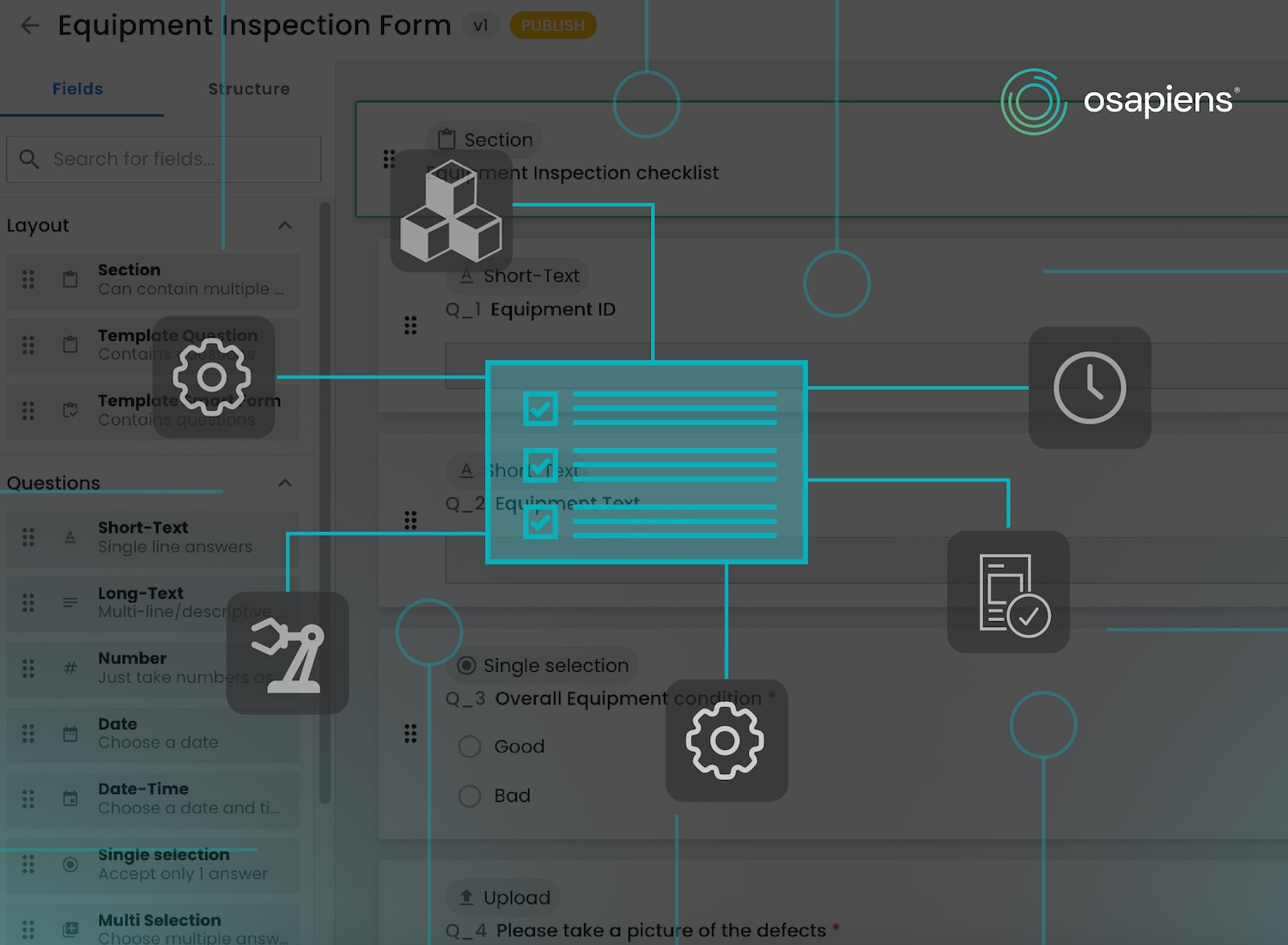
The osapiens HUB for Maintenance transforms centrifuge maintenance through mobile-first digital checklists that technicians execute directly on smartphones or tablets. The platform enables photo documentation of rotor condition, automatic timestamp capture proving when inspections occurred, mandatory fields ensuring critical steps aren’t skipped, and SAP PM integration synchronizing maintenance completion with enterprise systems without manual data transfer.
Offline functionality ensures technicians document work in areas with poor connectivity, automatically syncing to central databases when network access returns. Automated work order generation creates centrifuge maintenance tasks on predetermined schedules, eliminating the manual tracking that allows preventive maintenance to be forgotten during busy periods. Centralized equipment records provide instant access to complete maintenance history, enabling trend analysis that reveals progressive corrosion or recurring problems requiring intervention.
| Aspect | Paper or Excel Checklist | Digital Checklist with osapiens HUB |
|---|---|---|
| Accessibility | Paper documents scatter across locations; Excel files require desktop access | Mobile access from any location; offline functionality in areas without connectivity |
| Documentation Quality | Illegible handwriting; missing timestamps; lost records | Structured data entry; automatic timestamps; photo evidence; permanent digital records |
| Compliance Evidence | Manual compilation for audits; incomplete historical records | Instant audit trail retrieval; complete longitudinal records; automatic compliance reporting |
| Trend Analysis | Manual review of scattered documents; limited pattern recognition | Automated analytics identifying recurring problems; performance dashboards; predictive insights |
| Technician Efficiency | Dual documentation (field notes + system entry); transcription errors | Single-point data entry in the field; elimination of transcription; reduced administrative time |
| Integration | Manual transfer to ERP/SAP systems; data silos; synchronization delays | Real-time SAP PM synchronization; unified enterprise visibility; elimination of manual transfers |
Organizations implementing digital centrifuge maintenance through osapiens HUB report reduced administrative burden, improved maintenance consistency across multiple sites, faster audit preparation, and better visibility into equipment condition trends. The platform supports spare parts management by linking rotor replacements and component inventory to specific maintenance activities, ensuring critical parts remain available when needed. For facilities managing centrifuges alongside other laboratory and production equipment, osapiens HUB provides unified asset management across all equipment types, eliminating the fragmented systems that create information silos.
Stop Centrifuge Failures from Invisible Rotor Degradation
Digitize your maintenance checklists, automate preventive work order creation, and give every technician a mobile tool that ensures no critical inspection is ever skipped. Full SAP PM integration and offline functionality included.
Try osapiens HUB for Free
FAQ
What should be included in a centrifuge maintenance checklist?
A comprehensive centrifuge maintenance checklist should include rotor inspection for cracks, corrosion, and material degradation; tube and container examination for defects before use; rotor chamber cleaning and debris removal; safety interlock and emergency stop testing; bearing and motor inspection for wear and abnormal noise; balance verification ensuring paired tubes of equal weight; speed calibration confirmation; and documentation of all findings, parts replaced, and maintenance completion. Actual checklist content must be customized based on your specific centrifuge model, manufacturer recommendations, operational environment, and usage intensity—there is no universal one-size-fits-all checklist.
How often should I complete my centrifuge maintenance checklist?
Maintenance frequency depends on usage intensity, operational environment, sample types processed, and risk assessment rather than fixed universal intervals. Common practice includes daily or per-use tasks (visual inspection, cleaning, balance verification), weekly to monthly tasks (detailed rotor examination, component inspection), and annual tasks (professional calibration, comprehensive mechanical inspection). High-throughput facilities processing hazardous materials often require more frequent inspection than low-use research environments. Manufacturer specifications provide baseline guidance, but actual intervals should reflect your equipment-specific operational context and documented risk assessment.
Can I customize this centrifuge maintenance checklist template?
Customization is essential—generic checklists must be adapted to your specific centrifuge models, manufacturer specifications, operational requirements, and regulatory obligations. Different rotor types (fixed-angle, swing-bucket, ultracentrifuge) require different inspection approaches; refrigerated units need cooling system checks absent from ambient centrifuges; facilities processing biohazardous materials require additional safety verification beyond general laboratory settings. Digital CMMS platforms like osapiens HUB enable flexible checklist templates customized for each equipment type while maintaining standardization across similar assets, ensuring consistency without sacrificing equipment-specific requirements.
How does a digital CMMS improve maintenance checklist management?
Digital CMMS platforms transform checklist management through mobile execution enabling field technicians to complete checklists on smartphones with photo documentation and automatic timestamps; automated scheduling generating maintenance tasks on predetermined intervals without manual tracking; centralized records providing instant access to complete equipment history for trend analysis; mandatory field validation ensuring critical steps aren’t skipped; real-time visibility showing which equipment has overdue maintenance across multiple sites; and SAP PM integration synchronizing maintenance completion with enterprise systems. These capabilities eliminate the paper-based friction and manual data entry that undermine checklist compliance while creating the audit-ready documentation that regulatory bodies require. For organizations managing centrifuges alongside other assets, platforms like osapiens HUB provide unified maintenance management across all equipment types.
Start using osapiens for free
Improve your uptime, extend the life of your equipment, and simplify work order management.
Book a demo
ENTERPRISE CAPABILITIES
- SAP ECC & S/4HANA Certified
- Infor & MS Dynamics
- Microsoft Entra ID / Okta
- ISO 27001 & 9001
- EU Cloud · Data Sovereignty
- Development, Test, and Production Environments
- Multi-Entity & Multi-Site
- Power BI Integration
- Audit Trail & Compliance
Related content
January 1, 2026
Compactor Maintenance Checklist – Essential Tasks & Digital Execution

October 30, 2025
Cloud Based Maintenance Management Software: How Modern CMMS Transforms Maintenance Operations
January 1, 2026
Vehicle Maintenance Checklist – Essential Tasks, Compliance Tips & Digital Template
January 1, 2026
Grinding Machine Maintenance Checklist – Tasks, Safety & Digital Execution
January 1, 2026
Automatic Screw Machine Maintenance Checklist – Tasks, Components & Digital Execution
January 1, 2026
Hydraulic Press Maintenance Checklist – Tasks, Tips & Best Practices

January 20, 2026
Maintenance Schedule Template: Free CMMS Excel Template
January 1, 2026
Generator Maintenance Checklist – Tasks, Tips & Best Practices

January 15, 2026
IBM Maximo Alternatives: The Best EAM & CMMS Platforms Compared
January 1, 2026
Press Machine Maintenance Checklist – Tasks, Tips & Template
January 1, 2026
Bending Machine Maintenance Checklist – Tasks, Safety & Digital Execution
July 22, 2025