

Maintenance Checklist

Florian Bartholomäus, osapiens Expert | 1. January 2026 | Lesezeit 11 min.
Most fleet failures don't happen because technicians skip inspections—they happen because paper checklists create blind spots. A digital checklist with required fields, photo documentation, and automatic alerts ensures nothing gets missed, even when technicians are working under time pressure or in harsh field conditions.
Create your checklist for free









TRUSTED BY LEADING COMPANIES




ENTERPRISE-READY
 SAP Certification
 ISO 27001
 EU Hosting
 Entra ID & Okta
 Multi-Entity
Fleet maintenance represents one of the most operationally complex functions within transportation and industrial enterprises. Without structured inspection procedures, unplanned downtime costs organizations between $448 to $760 per vehicle per day, creating cascading disruptions across delivery schedules, customer commitments, and operational budgets. A comprehensive fleet maintenance checklist serves as the operational backbone that prevents catastrophic failures, ensures regulatory compliance, extends asset lifespan, and ultimately determines whether fleet operations remain profitable or become consumed by emergency repairs.
Fleet Maintenance: Key Facts
- Preventive discipline pays: Organizations implementing systematic preventive maintenance programs reduce maintenance costs by 12 to 18 percent compared to reactive approaches, while cutting unplanned downtime by an average of 32 percent.
- Documentation drives compliance: Under 49 CFR Part 396, FMCSA regulations mandate that all motor carriers “systematically inspect, repair, and maintain” every commercial vehicle—structured checklists provide the audit-ready evidence that satisfies regulatory requirements.
- Mobile execution eliminates gaps: Digital checklists with mobile access, photo capture, and offline functionality ensure technicians document findings at the point of work, eliminating the illegibility, lost records, and reconstruction delays that plague paper-based systems.
- Component-based organization improves coverage: Organizing maintenance tasks by vehicle system (brakes, engine, electrical, suspension) rather than arbitrary time intervals ensures systematic coverage across all critical components and prevents overlooked inspections.
Why You Need a Fleet Maintenance Checklist
Fleet vehicles operate under conditions that create predictable failure patterns requiring systematic monitoring. Commercial vehicles experience extreme temperature variations, variable load conditions, aggressive driving patterns, and contaminated operating environments that accelerate degradation across interconnected systems.
A structured maintenance checklist addresses the operational realities that cause fleet maintenance programs to fail:
- Consistency across technicians: Ad-hoc or experience-based maintenance creates variability where different technicians inspect different components with different thoroughness. Checklists standardize inspection scope, ensuring every vehicle receives identical systematic coverage regardless of who performs the work.
- Risk reduction through early detection: Missing or inconsistent checks create maintenance blindness that prevents early detection of developing problems. Transmission failures, brake system degradation, and engine damage rarely occur without warning signs—checklists ensure technicians look for these indicators during every inspection cycle.
- Documentation and audit readiness: FMCSA regulations require documented evidence that systematic inspection and maintenance occurred. Digital checklists with automatic timestamps, photo integration, and digital signature capability create audit-ready documentation automatically, eliminating the compliance vulnerability of paper records that are easily lost, damaged, or rendered illegible.
- Technician guidance and knowledge transfer: Checklists support less experienced team members by providing structured procedures that prevent missed components. New technicians follow documented inspection sequences rather than relying on incomplete mental models, reducing the knowledge gap between experienced and junior staff.
- Standardization across shifts and sites: Fleet operations spanning multiple locations or shift rotations face consistency challenges where different teams develop different inspection habits. Standardized checklists ensure repeatability across all operational contexts, creating uniform maintenance discipline regardless of location or time.
- Handover quality between shifts: Structured documentation improves shift transitions by providing clear records of vehicle condition, identified issues, and required follow-up actions. Incoming technicians understand exactly what was inspected, what was found, and what requires attention.
Organizations that implement systematic checklist discipline report measurable improvements in equipment reliability, maintenance cost predictability, and regulatory compliance. Learn more about preventive maintenance strategies that reduce unplanned failures.
What to Include in Your Fleet Maintenance Checklist
Effective fleet maintenance checklists organize inspection and service tasks by vehicle system to ensure systematic coverage and enable technicians to verify complete inspection across all critical components. This component-based organization prevents knowledge gaps where systems are skipped or overlooked.
The checklist structure should reflect actual vehicle systems rather than arbitrary time intervals. Tasks are examples and should be adapted based on vehicle type, manufacturer recommendations, and operational environment. Actual intervals depend on usage patterns, duty cycle severity, and risk assessment.
| Component / System | Inspection & Maintenance Tasks | Purpose |
|---|---|---|
| Brake System | Measure brake pad thickness, evaluate rotor condition for scoring, test brake fluid moisture content, inspect brake lines for corrosion, verify parking brake functionality, test ABS sensor operation | Safety-critical system preventing accidents and liability exposure |
| Engine & Powertrain | Change oil and filter per interval, inspect fuel filter condition, assess air filter contamination, verify coolant level and condition, test battery terminal connections, check spark plug condition, pressure test cooling system | Operational core requiring systematic fluid maintenance and component monitoring |
| Suspension & Steering | Assess shock absorber condition, inspect springs for cracks, test ball joint play, evaluate tie rod ends, verify steering gear functionality, measure wheel alignment parameters | Vehicle stability and handling predictability affecting safety and tire wear |
| Electrical & Lighting | Perform battery load testing, verify alternator output at multiple speeds, clean battery terminals, inspect all vehicle lighting (headlights, brake lights, turn signals), evaluate wiring harness condition, test fuse and relay operation | Visibility, compliance with regulatory requirements, and electrical system reliability |
| Tire & Wheel Systems | Verify tire pressure to OEM specifications (cold), measure tread depth with gauges, inspect for cuts or bulges, rotate tires for even wear, verify wheel balance, measure alignment parameters | Safety-critical component affecting fuel efficiency, braking performance, and handling |
| Transmission & Drivetrain | Assess transmission fluid color and odor, inspect transmission cooler for blockage, test fluid temperature under load, inspect driveshaft and U-joints, verify differential fluid level | Expensive component where preventive fluid maintenance prevents catastrophic failure |
| Safety & Compliance Systems | Test emergency stop functionality, inspect safety interlocks, verify guard operation, document inspection completion, review DVIR compliance, validate annual inspection currency | Regulatory compliance and operator safety requirements |
Digital maintenance systems like osapiens HUB for Maintenance enable customizable checklists with conditional logic that adapts inspection procedures based on vehicle type, component condition, and operational context.
Turn Your Fleet Maintenance Checklist into Digital Work Orders
Create structured checklists for every vehicle system — from brakes to engine to electrical. Execute them on mobile, sync with SAP PM, and keep full audit trails automatically.Start with Your Fleet Maintenance Checklist
Common Fleet Problems Your Maintenance Checklist Prevents
Systematic checklist discipline prevents the failure patterns that create the most significant operational and financial impact in fleet operations:
- Transmission failures from fluid neglect: Replacement costs ranging from $3,000 to $7,000 with five to seven days of downtime emerge when preventive fluid changes are skipped. Checklists ensure fluid condition monitoring occurs before degradation causes internal component damage.
- Engine damage from deferred oil maintenance: Catastrophic engine failure requiring $4,000 to $10,000 replacement with two to three days downtime results from neglecting thirty-minute oil changes costing $50 to $100. Systematic oil change scheduling prevents this 40-to-100 fold cost escalation.
- Brake system degradation and safety exposure: Deferred brake pad replacement allows rotor and caliper damage requiring $300 to $1,000 per axle replacement versus $100 to $300 preventive pad replacement. More critically, brake failures create immediate safety hazards affecting liability exposure beyond simple repair costs.
- Battery and electrical system failures: Corroded connections and degraded batteries cause no-start conditions requiring emergency service and towing. Regular electrical system inspection catches deterioration before failure strands vehicles.
- Tire pressure and condition neglect: Improper tire pressure accelerates wear, reduces fuel efficiency, and increases blowout risk. Systematic pressure verification and tread depth measurement prevent reactive tire replacement costing $800 to $2,000 with one day downtime.
- Cooling system failures and overheating: Radiator hose deterioration and coolant degradation cause overheating that can damage engines. Regular cooling system inspection and pressure testing prevent expensive engine damage.
- Documentation gaps creating compliance exposure: Missing or incomplete maintenance records create regulatory vulnerability during CVSA roadside inspections and FMCSA audits. Digital checklists with automatic documentation eliminate this compliance risk.
Organizations implementing systematic checklist programs report that early detection during scheduled inspections prevents 70 to 80 percent of potential failures before they cause operational disruption. Explore how asset maintenance software supports failure prevention through structured inspection workflows.
From Paper Checklist to Digital: How the osapiens HUB Automates Your Fleet Maintenance Checklist
Paper-based maintenance checklists create systemic problems that undermine fleet reliability and regulatory compliance. Illegible handwriting creates ambiguity regarding findings and completed work. Lost or damaged documents eliminate audit evidence. Technicians waste productive labor hours traveling to centralized facilities to retrieve information or submit completed checklists.
Scribbled field notes create data quality problems preventing analysis of maintenance patterns and failure trends. Paper records physically stored across geographically dispersed facilities prevent rapid access to complete maintenance history when technicians troubleshoot problems or regulatory auditors request documentation.
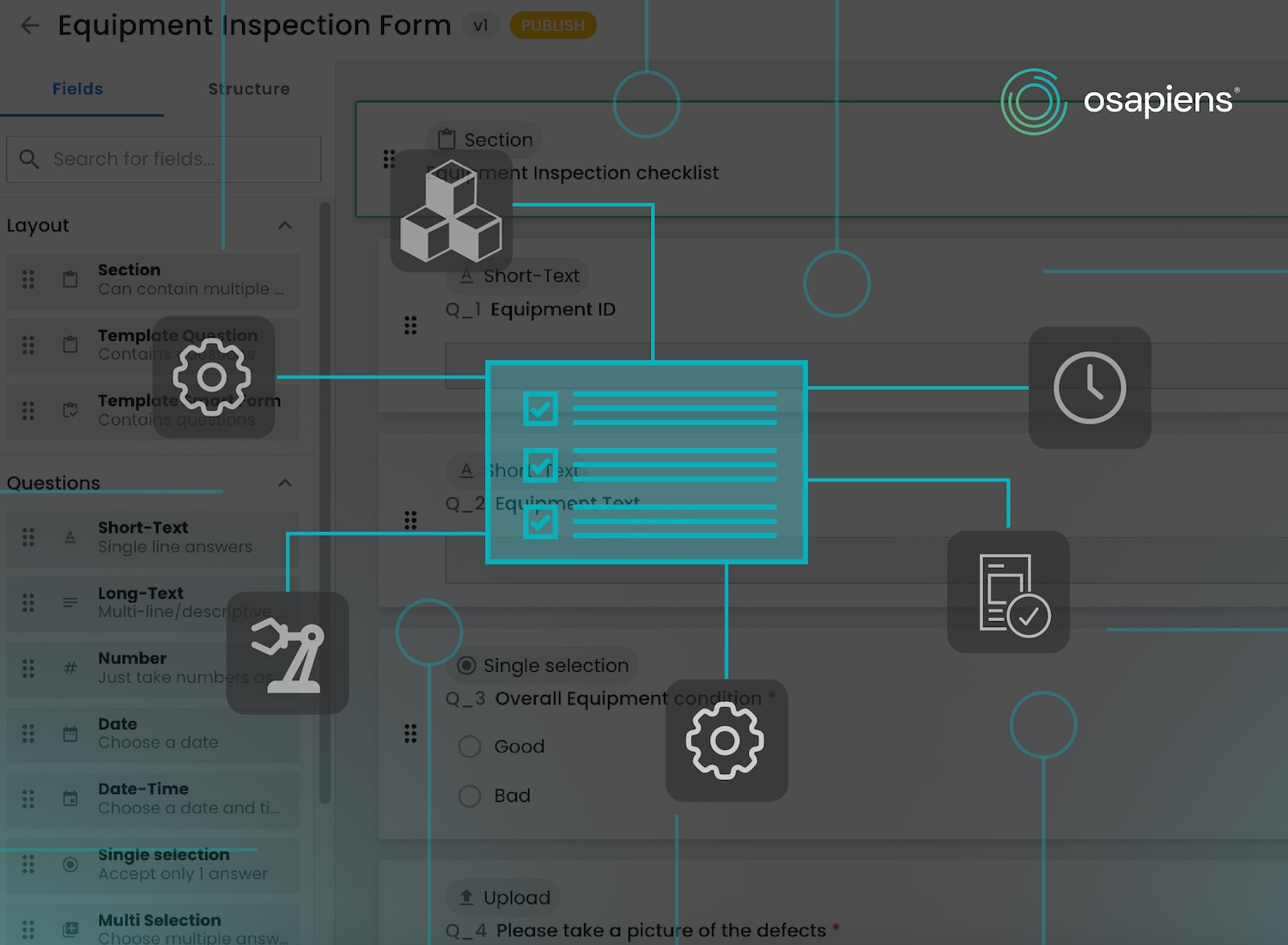
osapiens HUB for Maintenance addresses these endemic limitations by creating digital workflows where maintenance data is captured at the point of work using mobile devices, automatically timestamped and geolocated, augmented with photographic documentation when appropriate, and immediately synchronized to centralized databases creating single source of truth regarding maintenance status and history.
The platform provides mobile-first architecture where technicians use tablets or smartphones as their primary work interface. Mobile CMMS applications include real-time work order management displaying assigned maintenance tasks with complete asset history, relevant checklists, parts requirements, and estimated labor time all accessible without requiring reference to separate documents.
Technicians scan QR codes or NFC tags physically placed on equipment, automatically opening the correct asset record and inspection procedures. Digital checklists with conditional logic guide technicians through inspection procedures, automatically flagging when readings fall outside acceptable parameters and triggering corrective maintenance work order generation.
| Aspect | Paper or Excel Checklist | Digital Checklist with osapiens HUB |
|---|---|---|
| Data Capture Location | Manual entry after work completion, often hours later | Captured at point of work on mobile device with automatic timestamp |
| Documentation Quality | Illegible handwriting, lost forms, incomplete entries | Structured data entry with required fields, photo integration, digital signatures |
| Audit Readiness | Physical records requiring manual retrieval, often incomplete | Centralized digital records instantly accessible with complete history |
| Failure Pattern Analysis | Nearly impossible without manual data compilation | Automated analytics identifying recurring issues and component trends |
| Technician Efficiency | Travel time to retrieve/submit forms, duplicate data entry | Mobile access eliminating travel, automatic synchronization |
| Compliance Evidence | Vulnerable to loss, damage, illegibility during audits | Permanent digital records with cryptographic verification |
The platform’s offline functionality ensures technicians perform inspections, update work order status, and capture findings without network connectivity. When technicians return to areas with network access, the application automatically synchronizes all captured data with centralized databases.
Integration with spare parts inventory management transforms maintenance from disconnected activity into integrated workflow. When technicians identify failed components requiring replacement, they access integrated parts inventory showing current stock levels, locations, and lead times. Learn more about SAP-integrated maintenance software that connects fleet maintenance with enterprise systems.
Stop Losing Uptime to Missed Fleet Inspections
Digitize your maintenance checklists, automate work order creation, and give every technician a mobile tool that works — even offline. SAP PM integration included.Try osapiens HUB for Free
FAQ
What should be included in a fleet maintenance checklist?
A comprehensive fleet maintenance checklist should cover all critical vehicle systems organized by component rather than arbitrary time intervals. Include brake system inspection (pad thickness, rotor condition, fluid quality), engine and powertrain tasks (oil changes, filter replacements, fluid verification), suspension and steering evaluation (shock condition, ball joint play, alignment), electrical and lighting systems (battery testing, alternator output, all lighting operation), and tire and wheel inspection (pressure verification, tread depth, wear patterns). Checklists should be customized based on vehicle type, manufacturer recommendations, operational environment, and duty cycle severity. Digital systems like osapiens HUB for Maintenance enable adaptive checklists that adjust based on vehicle-specific requirements.
How often should I complete my fleet maintenance checklist?
Maintenance frequency depends on multiple factors including vehicle usage patterns, operational environment, duty cycle severity, and manufacturer recommendations. Industry practice commonly organizes maintenance into tiered intervals: basic inspections every 10,000 to 15,000 miles focusing on critical safety components, intermediate service every 20,000 to 30,000 miles addressing fluid changes and moderate maintenance, and comprehensive annual inspections covering all major systems. However, severe duty applications—including frequent short trips, towing, extreme temperature operation, or contaminated environments—often require more aggressive intervals. Organizations should analyze their specific operational patterns and adjust baseline intervals accordingly rather than relying on generic schedules. Modern fleet management software enables differentiated scheduling based on actual usage data.
Can I customize this fleet maintenance checklist template?
Customization is essential rather than optional. Generic checklists fail to address vehicle-specific maintenance needs, manufacturer specifications, or operational contexts unique to your fleet. Effective customization starts with OEM maintenance schedules, incorporates recurring failure points observed in your specific operation, defines clear pass/fail criteria using measurements rather than subjective opinions, and adapts intervals based on duty cycle and operating conditions. Digital maintenance platforms provide template frameworks that organizations customize for their specific vehicle types, operational environments, and compliance requirements while maintaining systematic structure. The osapiens HUB enables complete checklist customization with conditional logic that adapts inspection procedures based on vehicle condition and findings.
How does a digital CMMS improve maintenance checklist management?
Digital CMMS platforms transform checklist management from manual documentation exercise into automated workflow that improves efficiency, data quality, and compliance. Benefits include mobile execution enabling technicians to complete checklists at the point of work with automatic timestamps and geolocation, photo and signature integration providing visual documentation and accountability, offline functionality ensuring work continues in areas without connectivity, automatic work order generation when inspections identify issues requiring attention, centralized maintenance history enabling failure pattern analysis and interval optimization, and audit-ready documentation with permanent digital records satisfying regulatory requirements. Organizations implementing digital checklist systems report 17 minutes saved per work order and 8 percent reduction in downtime through automated processes. The osapiens HUB provides SAP PM integration ensuring fleet maintenance data flows seamlessly with enterprise systems.
Start using osapiens for free
Improve your uptime, extend the life of your equipment, and simplify work order management.
Book a demo
ENTERPRISE CAPABILITIES
- SAP ECC & S/4HANA Certified
- Infor & MS Dynamics
- Microsoft Entra ID / Okta
- ISO 27001 & 9001
- EU Cloud · Data Sovereignty
- Development, Test, and Production Environments
- Multi-Entity & Multi-Site
- Power BI Integration
- Audit Trail & Compliance
Related content

November 24, 2025
Benefits of Predictive Maintenance in Manufacturing

April 7, 2026
IFS Ultimo Alternatives: Top 5 Comparison 2026
January 1, 2026
Machine Maintenance Checklist: What to Inspect, How to Execute, and Why Digital Checklists Reduce Downtime
January 1, 2026
Commercial Building Maintenance Checklist – Tasks, Systems & Digital Execution
January 1, 2026
Uninterruptible Power Supply Maintenance Checklist – Tasks, Safety & Digital Execution
January 1, 2026
Batching Plant Maintenance Checklist – Tasks, Tips & Template
January 1, 2026
Dump Truck Maintenance Checklist: What to Inspect & When
January 1, 2026
Wind Turbine Maintenance Checklist – Tasks, Components & Digital Execution
January 1, 2026
Busbar Maintenance Checklist: What to Inspect & When
January 1, 2026
Material Handling Equipment Maintenance Checklist: Tasks, Intervals & Digital Execution
January 1, 2026
Relay Protection System Maintenance Checklist – Tasks, Standards & Digital Execution
January 1, 2026