

Maintenance Checklist

Florian Bartholomäus, osapiens Expert | 1. January 2026 | Lesezeit 9 min.
Many fabricators overlook punch-to-die alignment checks between scheduled maintenance intervals. Misalignment causes uneven wear, saw-toothing, and burr formation—potentially reducing tool life by up to 25%. Check alignment weekly, not just monthly, to catch issues before they escalate into costly tooling failures.
Create your checklist for free













TRUSTED BY LEADING COMPANIES




ENTERPRISE-READY
 SAP Certification
 ISO 27001
 EU Hosting
 Entra ID & Okta
 Multi-Entity
Table of Contents
- Turret Punch Press Maintenance: Key Facts
- Why You Need a Turret Punch Press Maintenance Checklist
- What to Include in Your Turret Punch Press Maintenance Checklist
- Common Turret Punch Press Problems Your Maintenance Checklist Prevents
- From Paper Checklist to Digital: How the osapiens HUB Automates Your Turret Punch Press Maintenance Checklist
- FAQ
A turret punch press maintenance checklist is a structured tool that guides technicians through the inspections, adjustments, and documentation required to keep sheet metal fabrication equipment running reliably. Without consistent maintenance, turret punch presses face predictable failure modes: tooling degradation, hydraulic system leaks, pneumatic pressure loss, and misalignment between punch and die—all of which lead to unplanned downtime, poor cut quality, and safety risks.
Turret Punch Press Maintenance: Key Facts
- Preventive maintenance is widely adopted: Research indicates that 80 to 90 percent of industrial facilities use a preventive maintenance strategy, with 67 percent of manufacturers actively implementing it to reduce downtime.
- Tooling alignment matters: Misalignment between punch and die can reduce tool life by up to 25 percent if left uncorrected, causing uneven wear and poor cut quality.
- Downtime costs are significant: Unplanned downtime costs Fortune Global 500 companies an average of 11 percent of their yearly turnover, with the average annual cost per facility reaching $129 million.
- Digital checklists improve execution: Mobile CMMS platforms enable real-time data capture, eliminate paper-based friction, and provide complete audit trails—helping maintenance teams execute tasks consistently and document work accurately.
Why You Need a Turret Punch Press Maintenance Checklist
Turret punch presses operate under demanding conditions: high-speed punching cycles, mechanical stress on tooling, and continuous exposure to metal debris and hydraulic fluids. Without a structured approach, maintenance becomes reactive, inconsistent, and reliant on the experience of individual technicians.
- Consistency: Ad-hoc or experience-based maintenance leads to missed inspections, inconsistent task execution, and reliance on tribal knowledge that walks out the door when experienced technicians retire. A checklist standardizes procedures across shifts and sites.
- Risk reduction: Missing critical checks—such as hydraulic fluid levels, pneumatic pressure, or punch-to-die clearance—can result in catastrophic tooling failure, equipment damage, and safety incidents. Structured checklists reduce the likelihood of overlooked tasks.
- Documentation: Complete maintenance records provide traceability for audits, support root cause analysis when failures occur, and enable data-driven decisions about tool replacement and equipment lifecycle management. Digital checklists with automated timestamping and photo capture eliminate documentation gaps.
- Technician guidance: Checklists support less experienced team members by providing step-by-step instructions, safety reminders, and acceptance criteria—ensuring that maintenance quality remains high even when senior technicians are unavailable.
- Standardization: Repeatability across shifts, sites, and technicians ensures that every turret punch press receives the same level of care, reducing variability in equipment performance and extending asset lifespan.
What to Include in Your Turret Punch Press Maintenance Checklist
An effective turret punch press maintenance checklist organizes tasks by component or system, not by frequency. This structure helps technicians focus on the physical areas of the machine and ensures that related tasks are grouped logically.
The checklist should cover visual inspections, functional tests, safety verifications, cleaning and lubrication, and documentation steps. Actual maintenance intervals depend on usage intensity, material type, operating environment, and manufacturer recommendations.
| Component / System | Inspection & Maintenance Tasks | Purpose |
|---|---|---|
| Tooling (Punches & Dies) | Inspect for wear, burrs, cracks, or dull edges; verify punch-to-die clearance; check tool height; replace worn or damaged tooling | Prevent poor cut quality, reduce stress on machine, avoid catastrophic tooling failure |
| Turret & Tool Holders | Clean turret bore and tool holders; remove metal shavings and debris; verify turret alignment; inspect for cracks or damage | Ensure smooth tool rotation, prevent stripping errors, maintain punching accuracy |
| Hydraulic System | Check fluid level and quality; inspect for leaks; replace filters; verify pressure settings; monitor temperature | Prevent pressure drops, overheating, and erratic machine behavior; extend component life |
| Pneumatic System | Verify air pressure (typically 95–110 PSI); inspect lines and regulators for leaks; clean or replace air filters | Ensure reliable tool changes, prevent work clamp errors, maintain consistent operation |
| Punch Guides & Springs | Inspect guides for wear; check spring condition; replace fatigued or broken springs; lubricate moving parts | Prevent stripping errors where punch fails to retract; reduce friction and wear |
| Back Gauge System | Verify alignment and movement; inspect back gauge fingers; test positioning accuracy | Ensure accurate material positioning, prevent misaligned patterns and overlapping holes |
| CNC Control System | Test display, buttons, and keypad functionality; verify program parameters (step length, feed rates); check for software errors | Prevent programming errors, ensure correct punching sequences, maintain production quality |
| Safety Systems | Test emergency stop functionality; verify safety guards and interlocks; inspect perimeter fencing and light curtains | Protect operators from crush hazards, prevent access to danger zones during operation |
| Worktable & Material Handling | Clean worktable and ball transfer tables; inspect feed rollers; verify material clamps function correctly | Prevent sheet metal slipping or jamming, ensure smooth material movement through punching cycle |
This component-based structure ensures that technicians address all critical systems during each maintenance cycle. Specific task frequency (daily, weekly, monthly) should be determined based on manufacturer guidance, usage patterns, and historical failure data.
Turn Your Turret Punch Press Maintenance Checklist into Digital Work Orders
Create structured checklists for every component—from tooling and turret alignment to hydraulic and pneumatic systems. Execute them on mobile, sync with SAP PM, and keep full audit trails automatically.Start with Your Turret Punch Press Maintenance Checklist
Common Turret Punch Press Problems Your Maintenance Checklist Prevents
A structured maintenance checklist addresses the most common failure modes in turret punch press operations:
- Tooling failure: Worn punches cause poor cut quality, chipping, and increased stress on the machine. Mismatched tooling or improper punch-to-die clearance can lead to catastrophic failure under the press’s immense force. Regular inspection and timely replacement prevent these issues.
- Stripping errors: Worn or broken springs prevent the punch from retracting properly, causing production delays and potential damage. Routine spring inspection and replacement keep the punch assembly functioning correctly.
- Hydraulic system failures: Contaminated fluid, internal leaks, or clogged filters cause erratic machine behavior, pressure loss, and overheating. Regular fluid checks, filter replacement, and leak inspections maintain system reliability.
- Pneumatic pressure loss: Air leaks, regulator failures, or contaminated filters disrupt tool changes and workpiece clamping. Consistent pressure monitoring and air system maintenance prevent work clamp errors and production interruptions.
- Misalignment and accuracy issues: Punch-to-die misalignment causes uneven cutting forces, saw-toothing, and premature tool wear. Back gauge misalignment results in misaligned patterns and overlapping holes. Regular alignment checks maintain punching accuracy and extend tool life.
- Safety incidents: Inadequate access control, non-functional emergency stops, or missing interlocks create crush hazards. Systematic safety system testing and guard inspections protect operators from serious injury.
Each of these problems is preventable through consistent execution of a comprehensive maintenance checklist. Digital tools like osapiens HUB for Maintenance ensure that no task is overlooked and that every inspection is documented with timestamps, photos, and technician sign-off.
From Paper Checklist to Digital: How the osapiens HUB Automates Your Turret Punch Press Maintenance Checklist
Many fabrication shops still rely on paper checklists, Excel spreadsheets, or PDF forms to manage turret punch press maintenance. These manual approaches create friction: technicians must carry clipboards, transcribe handwritten notes, and manually transfer data into office systems. More than half of technicians report feeling overwhelmed by paperwork, which slows productivity and increases the risk of errors.
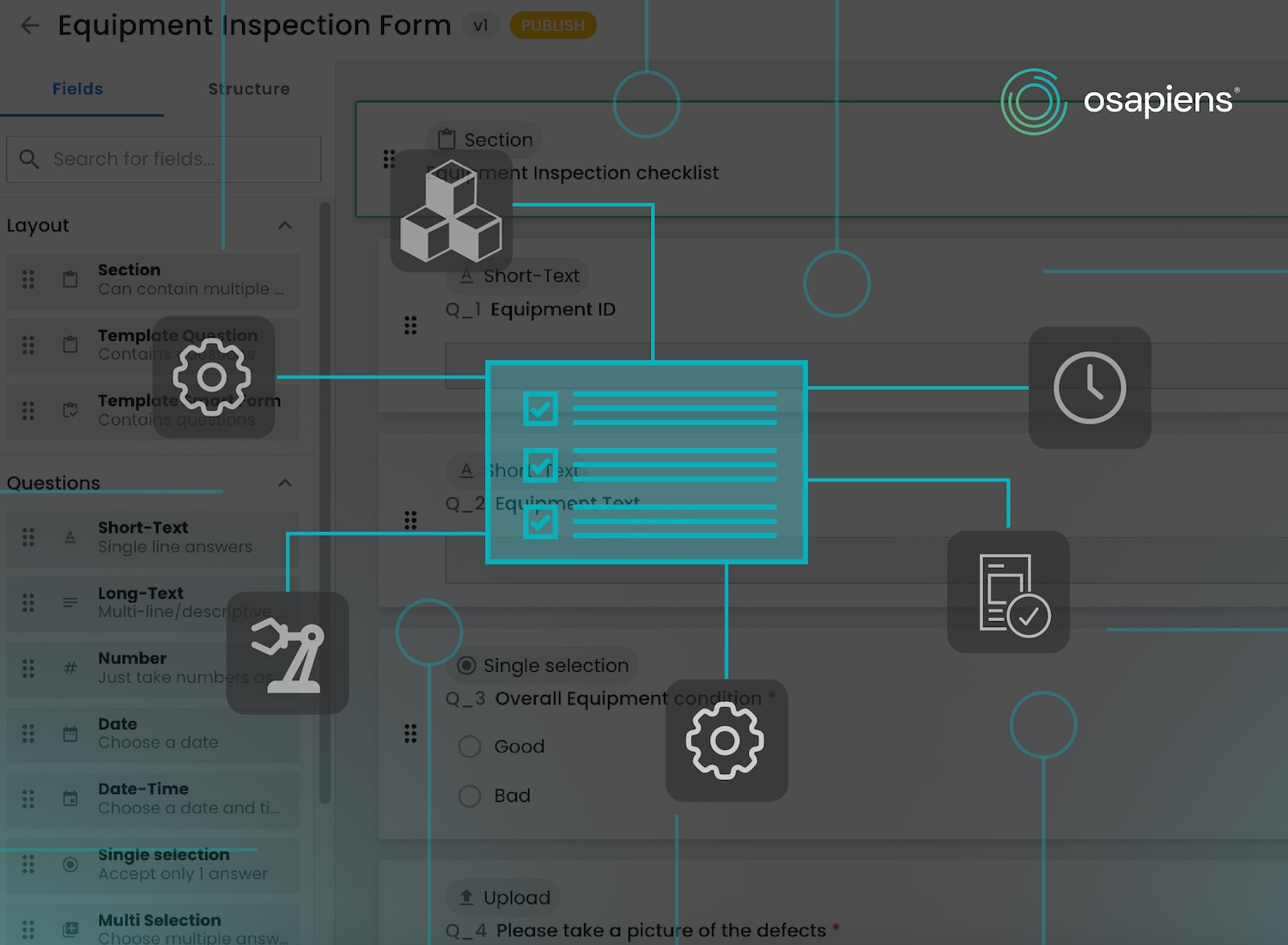
Digital maintenance checklists eliminate these pain points. The osapiens HUB for Maintenance enables technicians to execute checklists on mobile devices, capture photos of equipment conditions, record measurements in real time, and automatically sync data with centralized maintenance records—even when working offline in areas with poor connectivity.
Key benefits of digital checklists include mobile execution (technicians access checklists directly at the machine, eliminating trips to the office), real-time data capture (timestamps, photos, and comments are recorded instantly, ensuring accuracy), automated work order creation (when a checklist reveals an issue, corrective work orders are generated automatically), and SAP PM integration (maintenance data flows seamlessly into SAP Plant Maintenance without manual data entry or media breaks).
| Aspect | Paper or Excel Checklist | Digital Checklist with osapiens HUB |
|---|---|---|
| Accessibility | Requires physical forms or office computer access | Mobile access at the machine, online and offline |
| Data Capture | Handwritten notes, prone to errors and illegibility | Structured forms with photos, timestamps, and dropdown menus |
| Documentation Quality | Incomplete records, missing signatures, lost paperwork | Complete audit trails with automatic technician sign-off |
| Follow-Up Actions | Manual work order creation, delays in response | Automated work order generation when issues are detected |
| Reporting & Analysis | Manual data aggregation, limited trend visibility | Real-time dashboards, KPI tracking, and failure pattern analysis |
| Integration | Manual data entry into SAP PM or other systems | Seamless SAP PM integration with bidirectional data sync |
The osapiens HUB for Maintenance is designed for professional maintenance organizations that require enterprise-grade functionality with mobile-first usability. It bridges the gap between SAP PM’s complexity and the operational needs of technicians in the field, providing a modern interface for preventive maintenance execution, work order management, and spare parts tracking.
Stop Losing Uptime to Missed Turret Punch Press Inspections
Digitize your maintenance checklists, automate work order creation, and give every technician a mobile tool that works—even offline. SAP PM integration included.Try osapiens HUB for Free
FAQ
What should be included in a turret punch press maintenance checklist?
A comprehensive checklist should cover tooling inspection (punches, dies, springs), turret and tool holder cleaning, hydraulic system checks (fluid level, pressure, leaks), pneumatic system verification (air pressure, filters, leaks), back gauge alignment, CNC control functionality, safety system testing (emergency stops, guards, interlocks), and worktable cleaning. Organize tasks by component or system rather than by frequency, and adapt the checklist to your specific equipment model and operating conditions.
How often should I complete my turret punch press maintenance checklist?
Maintenance frequency depends on usage intensity, material type, and operating environment. Common practice includes daily cleaning and lubrication, weekly tooling and alignment inspections, monthly hydraulic and pneumatic system checks, and quarterly or semi-annual full system inspections. High-volume operations or those processing abrasive materials may require more frequent maintenance. Use condition-based triggers (such as operating hours or hit counts) rather than fixed time intervals where appropriate.
Can I customize this turret punch press maintenance checklist template?
Yes, customization is essential. Every turret punch press operates in a unique environment with different usage patterns, material types, and operational priorities. Start with a baseline checklist that covers all critical systems, then adapt it based on manufacturer recommendations, historical failure data, and your team’s experience. Digital CMMS platforms like osapiens HUB for Maintenance make it easy to customize checklists, add equipment-specific tasks, and adjust intervals based on actual performance data.
How does a digital CMMS improve maintenance checklist management?
A digital CMMS eliminates paper-based friction by providing mobile access to checklists, enabling real-time data capture with photos and timestamps, automatically generating corrective work orders when issues are detected, and creating complete audit trails for compliance. Modern platforms like osapiens HUB also integrate with SAP PM, sync maintenance data across multiple sites, and provide dashboards that track completion rates, identify recurring issues, and support continuous improvement.
Start using osapiens for free
Improve your uptime, extend the life of your equipment, and simplify work order management.
Book a demo
ENTERPRISE CAPABILITIES
- SAP ECC & S/4HANA Certified
- Infor & MS Dynamics
- Microsoft Entra ID / Okta
- ISO 27001 & 9001
- EU Cloud · Data Sovereignty
- Development, Test, and Production Environments
- Multi-Entity & Multi-Site
- Power BI Integration
- Audit Trail & Compliance
Related content
January 1, 2026
Fire Apparatus Maintenance Checklist – Tasks, Tips & Best Practices

September 19, 2025
Meet the osapiens maintenance experts at Pharma Maintenance Reloaded 2025
January 1, 2026
Turret Punch Press Maintenance Checklist – Tasks, Tips & Template
January 1, 2026
Crane Maintenance Checklist – Essential Tasks, Safety Checks & Digital Template

July 9, 2026
Boehringer Ingelheim standardizes plant maintenance globally with osapiens

March 17, 2026
GxP Compliance Software: What Pharma and Life Sciences Industries Need to Know
January 1, 2026
Roll Forming Machine Maintenance Checklist – Tasks, Safety & Digital Execution
January 1, 2026
Battery Bank Maintenance Checklist: Essential Tasks & Digital Execution
January 1, 2026
Machine Maintenance Checklist: What to Inspect, How to Execute, and Why Digital Checklists Reduce Downtime
January 1, 2026
Chromatography System Maintenance Checklist – Tasks, Best Practices & Digital Execution
January 1, 2026
UPS Maintenance Checklist – Tasks, Tips & Template

December 19, 2025