

Maintenance Checklist

Florian Bartholomäus, osapiens Expert | 1. January 2026 | Lesezeit 10 min.
Many robotic assembly failures stem from overlooked lubrication schedules and sensor contamination. A structured checklist prevents motor burnout, gear slippage, and encoder drift—catching issues during routine inspections before they escalate into production-stopping failures.
Create your checklist for free













TRUSTED BY LEADING COMPANIES




ENTERPRISE-READY
 SAP Certification
 ISO 27001
 EU Hosting
 Entra ID & Okta
 Multi-Entity
Table of Contents
- Robotic Assembly System Maintenance: Key Facts
- Why You Need a Robotic Assembly System Maintenance Checklist
- What to Include in Your Robotic Assembly System Maintenance Checklist
- Common Robotic Assembly System Problems Your Maintenance Checklist Prevents
- From Paper Checklist to Digital: How the osapiens HUB Automates Your Robotic Assembly System Maintenance Checklist
- FAQ
Industrial robotic assembly systems represent substantial capital investments that directly impact manufacturing productivity, product quality, and workplace safety. Without structured maintenance, unplanned downtime for robotic assembly systems becomes harder to predict—and according to industry estimates, robot downtime costs range from $1,000 to $10,000 per minute, with cascading effects across entire assembly lines. A comprehensive robotic assembly system maintenance checklist provides the foundation for proactive maintenance, ensuring consistent inspections, reducing failure risk, and maintaining audit-ready documentation across all shifts and sites.
Robotic Assembly System Maintenance: Key Facts
- Mechanical wear patterns: Motor burnout, gear slippage, and bearing deterioration represent the most common failure modes in high-cycle robotic assembly operations, often accelerated by insufficient cooling or exceeding load capacity.
- Electrical and sensor risks: Cable deterioration from constant flexing creates intermittent faults that are difficult to troubleshoot, while sensor drift compromises positional accuracy and triggers safety protocols mid-cycle.
- Preventive maintenance impact: According to manufacturing experts, unplanned production downtimes can cost fifteen times more than planned production downtimes, making structured preventive maintenance economically essential.
- Digital execution advantage: Organizations implementing preventive maintenance through digital CMMS platforms report measurable improvements in equipment reliability and operational efficiency, with automated scheduling ensuring no required inspection gets missed.
Why You Need a Robotic Assembly System Maintenance Checklist
Robotic assembly systems operate through continuous integration of mechanical, electrical, and software subsystems that must function with precision under demanding production schedules. Without a structured maintenance approach, organizations face preventable failures that disrupt production and compromise safety.
- Consistency: Ad-hoc or experience-based maintenance fails to address the repetitive stress patterns unique to robotic systems. A checklist ensures every joint, motor, and sensor receives systematic attention regardless of which technician performs the inspection.
- Risk reduction: Missing critical inspections leads to motor burnout from blocked ventilation, gear slippage from overloading, and cable failures during production runs. Structured checklists catch early signs of wear—abnormal vibrations, unusual noises, sluggish responses—before they result in costly downtime.
- Documentation: Traceability matters for both compliance and continuous improvement. A maintenance checklist creates a permanent record of equipment state, degradation patterns, and corrective actions, supporting audit readiness and liability defense.
- Technician guidance: Less experienced team members benefit from step-by-step instructions specifying exactly what to inspect, normal ranges to expect, and thresholds requiring corrective action—eliminating guesswork and ensuring consistent execution quality.
- Standardization: Repeatability across shifts and sites prevents maintenance gaps. Digital checklists in platforms like osapiens HUB for Maintenance enforce best practices while supporting scalability across multi-site operations.
- Compliance: Safety standards including ISO 10218-1:2025 and ANSI/RIA R15.06 establish baseline requirements for industrial robots. Structured checklists support regulatory compliance and demonstrate systematic maintenance practices during audits.
What to Include in Your Robotic Assembly System Maintenance Checklist
An effective robotic assembly system maintenance checklist organizes tasks by component and subsystem rather than arbitrary time intervals. This structure ensures technicians address all critical areas systematically, adapting inspection frequency based on usage, risk assessment, and operational environment.
The checklist should cover visual inspection of structural components, functional checks of motion and control systems, safety verification of emergency stops and interlocks, cleaning and basic servicing of contamination-prone areas, and documentation steps capturing findings and corrective actions. Tasks are examples, not exhaustive—actual maintenance requirements depend on robot manufacturer specifications, assembly application, and production intensity.
| Component / System | Inspection & Maintenance Tasks | Purpose |
|---|---|---|
| Robotic Arm & Joints | Check for cracks, dents, or impact damage; inspect joint movement through full range of motion; verify smooth operation without hesitation or binding; monitor for abnormal vibration patterns | Structural integrity, motion precision, early detection of mechanical wear |
| Motors & Drives | Check motor case temperature and cooling airflow; inspect for discoloration indicating overheating; verify motor shaft for wobble or unusual resistance; clean cooling fins of dust accumulation | Prevent motor burnout, maintain thermal management, extend motor lifespan |
| Gears & Bearings | Listen for unusual noises indicating wear; check for excessive vibration during operation; verify lubrication levels at all grease points; inspect for gear slippage or positioning errors | Reduce friction, prevent catastrophic bearing failure, maintain positioning accuracy |
| Cables & Wiring | Inspect cables for damage, proper routing, kinking, or fraying; check electrical connections for corrosion or looseness; verify cable stress points at joints subjected to repetitive motion | Prevent intermittent faults, avoid sudden loss of arm control, maintain electrical reliability |
| Sensors & Encoders | Clean optical sensors and proximity switches of dust or metallic particles; verify sensor detection accuracy; check encoder position feedback; test sensor response to target objects | Maintain positional accuracy, prevent mid-cycle stops, ensure quality control consistency |
| Control System & Software | Verify controller area for damage, corrosion, or overheating signs; check indicator lights function correctly; test emergency stop buttons activate properly; review error logs for recurring issues | Ensure control reliability, identify software malfunctions early, maintain safety system integrity |
| End-Effector & Tooling | Inspect end-effector for proper installation and alignment; verify gripping force and tool seating; check collision detection triggers correctly; test tool change mechanisms if applicable | Prevent assembly errors, avoid production stoppages, maintain process quality |
| Safety Systems | Test all emergency stops for proper function; verify safety interlocks respond when breached; inspect safety guards and light curtains; confirm mode selector operates correctly | Operator safety, regulatory compliance, prevent unauthorized operation |
| Lubrication System | Check grease levels at ball joints and shafts; apply manufacturer-specified lubricants at recommended intervals; remove old grease before applying new; inspect for contamination | Reduce component wear, prevent lubrication degradation, extend mechanical lifespan |
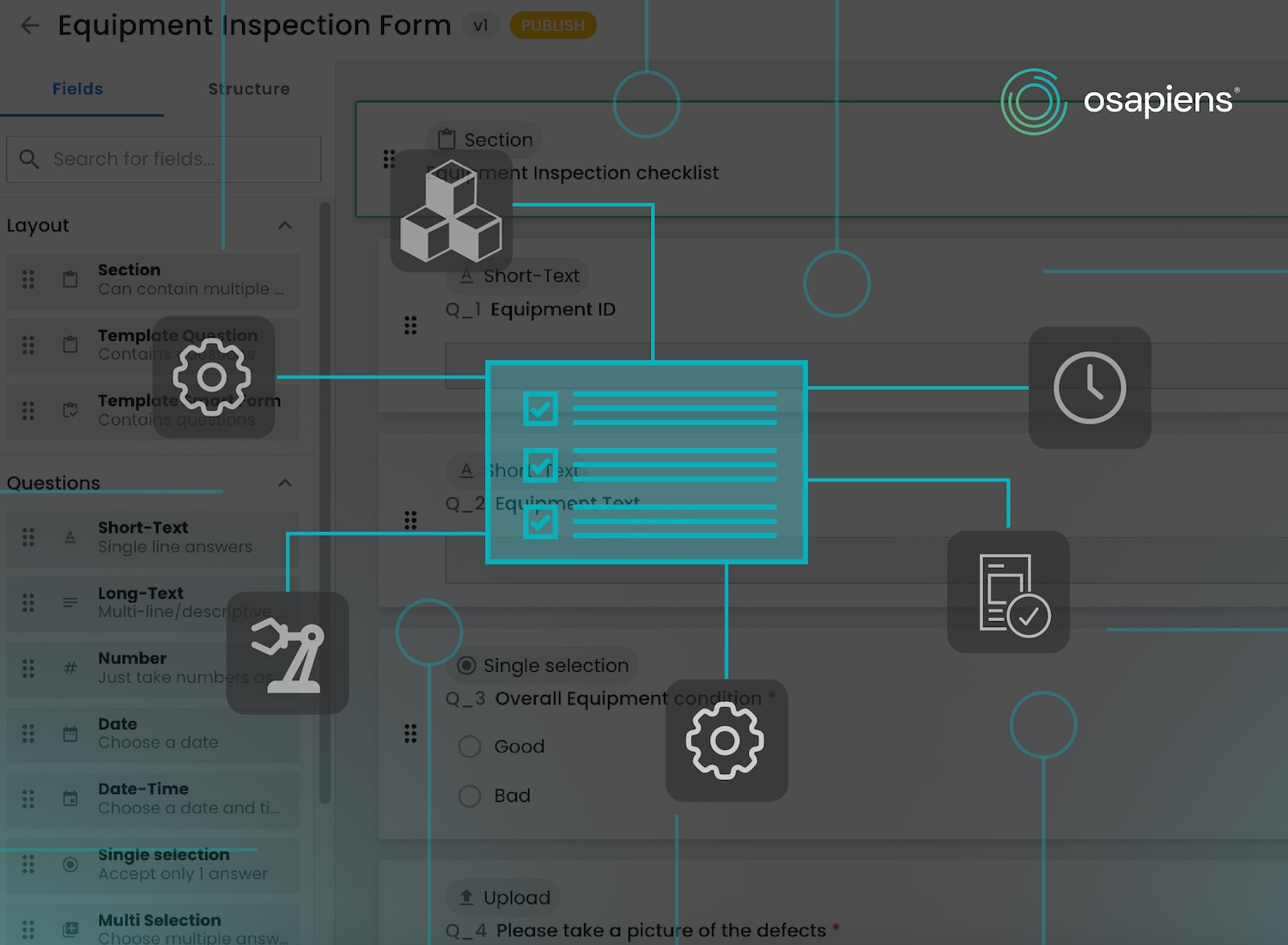
Turn Your Robotic Assembly System Maintenance Checklist into Digital Work Orders
Create structured checklists for every component—from motors and gears to sensors and safety systems. Execute them on mobile, sync with SAP PM, and keep full audit trails automatically.Start with Your Robotic Assembly System Maintenance Checklist
Common Robotic Assembly System Problems Your Maintenance Checklist Prevents
A structured maintenance checklist addresses the specific failure modes that disrupt robotic assembly operations and create safety risks. Understanding these problems helps maintenance teams prioritize inspection activities.
- Motor burnout from thermal stress: Continuous operation without adequate cooling or blocked ventilation accelerates motor degradation. Regular checks of cooling airflow, motor case temperature, and ventilation pathways catch thermal issues before windings degrade and motors fail unexpectedly.
- Gear slippage and positioning errors: Operating robots beyond recommended load capacity creates excessive vibration that damages internal gears and causes precision loss. Systematic inspection of gear condition, unusual noises, and positioning accuracy identifies degradation before assembly defects occur.
- Bearing deterioration and vibration: Continuous rotational motion stresses bearing assemblies that eventually generate abnormal vibration patterns. Checklists that include vibration monitoring and bearing inspection detect wear early, preventing catastrophic failure during production runs.
- Cable failures from flexing stress: Cables subjected to repetitive motion develop structural integrity issues that create intermittent faults. Regular cable inspection at stress points, proper routing verification, and replacement of fraying cables prevent sudden loss of arm control.
- Sensor contamination and drift: Dust and metallic particles accumulate on optical sensors and proximity switches, degrading detection accuracy. Scheduled sensor cleaning and calibration verification maintain positional precision and prevent mid-cycle stops.
- Lubrication degradation: Overlooking lubrication schedules—typically every 5,000 to 10,000 operating hours according to many robot manufacturers—leads to increased friction, accelerated wear, and unexpected breakdowns. Structured checklists ensure lubrication occurs at manufacturer-recommended intervals.
- Safety system failures: Emergency stops, safety interlocks, and guards require regular testing to ensure they function correctly when needed. Checklists that verify safety features prevent incidents and demonstrate compliance with ISO 10218-1 safety requirements.
From Paper Checklist to Digital: How the osapiens HUB Automates Your Robotic Assembly System Maintenance Checklist
Paper-based checklists and Excel spreadsheets create friction in maintenance execution. Technicians must locate printed forms, manually record findings, and transfer data to office systems—introducing media breaks that delay corrective actions and compromise data quality.
Manual documentation makes it difficult to track completion rates, identify recurring problems, or demonstrate compliance during audits. When checklists live in filing cabinets rather than searchable databases, valuable maintenance insights remain hidden.
The osapiens HUB for Maintenance transforms maintenance execution through mobile-first digital checklists that guide technicians step-by-step through inspections. Technicians capture photos of wear patterns, record quantitative readings rather than binary pass-fail assessments, and add timestamped comments—all from smartphones or tablets, even offline.
Digital checklists sync automatically with centralized CMMS systems, creating comprehensive maintenance history that reveals patterns invisible to periodic manual reviews. When inspections reveal issues, the platform generates corrective work orders automatically, minimizing response time between problem identification and resolution.
For organizations using SAP PM, osapiens HUB provides SAP-certified integration that maintains backend synchronization for financial and asset management while delivering technician-friendly mobile workflows that SAP’s native interfaces struggle to provide.
| Aspect | Paper or Excel Checklist | Digital Checklist with osapiens HUB |
|---|---|---|
| Accessibility | Requires physical presence or file sharing; prone to version control issues | Accessible from any mobile device; always current version with real-time updates |
| Data Capture | Manual entry; no photos; illegible handwriting; missing timestamps | Photos, digital signatures, GPS timestamps, and quantitative readings captured at point of work |
| Corrective Actions | Delayed work order creation; manual follow-up required; issues fall through cracks | Automatic work order generation when issues detected; instant assignment to qualified technicians |
| Compliance Documentation | Scattered records; difficult to retrieve during audits; incomplete audit trails | Centralized, searchable records; complete audit trails; instant compliance reporting |
| Analytics & Insights | Manual compilation; limited trend analysis; reactive problem-solving | Automated KPI tracking; failure pattern recognition; data-driven optimization |
| Scalability | Difficult to standardize across sites; inconsistent execution quality | Template management enables consistent practices across all locations with site-specific customization |
Stop Losing Uptime to Missed Robotic Assembly Inspections
Digitize your maintenance checklists, automate work order creation, and give every technician a mobile tool that works—even offline. SAP PM integration included.Try osapiens HUB for Free
FAQ
What should be included in a robotic assembly system maintenance checklist?
A comprehensive checklist should cover robotic arm and joint inspection for structural damage and smooth motion, motor and drive system checks for temperature and cooling, gear and bearing inspection for wear and lubrication, cable and wiring examination for damage and proper routing, sensor and encoder cleaning and calibration verification, control system and software testing including error log review, end-effector and tooling inspection for alignment and function, safety system testing of emergency stops and interlocks, and documentation of all findings with photos and quantitative readings. Actual tasks depend on robot manufacturer specifications, assembly application, and usage intensity.
How often should I complete my robotic assembly system maintenance checklist?
Maintenance frequency depends on usage intensity, operational environment, and risk assessment rather than fixed universal intervals. Many organizations implement daily visual checks for obvious damage and unusual noises, weekly detailed inspections of sensors and cables, monthly lubrication checks and safety system testing, and comprehensive annual maintenance after approximately 10,000 operating hours. High-cycle operations in harsh environments require more frequent attention, while robots in clean, controlled settings may extend intervals. Consult manufacturer recommendations and adjust based on actual equipment performance and failure history.
Can I customize this robotic assembly system maintenance checklist template?
Yes, customization is essential. Generic checklists provide starting points, but effective maintenance addresses your specific robot models, assembly applications, and operational conditions. Adapt tasks based on manufacturer specifications, add equipment-specific inspection points for specialized end-effectors or tooling, adjust frequencies based on usage patterns and historical failure data, and incorporate site-specific safety requirements and compliance obligations. Digital CMMS platforms like osapiens HUB for Maintenance support template customization while maintaining standardization across multiple sites.
How does a digital CMMS improve maintenance checklist management?
A digital CMMS eliminates manual documentation effort and media breaks that delay corrective actions. Platforms like osapiens HUB provide mobile checklist execution with photo capture and offline access, automated work order generation when inspections reveal issues, real-time completion tracking and compliance monitoring, centralized maintenance history supporting trend analysis and continuous improvement, and SAP PM integration for organizations requiring enterprise asset management synchronization. Digital systems transform checklists from administrative burdens into strategic tools that drive equipment reliability and operational excellence.
Start using osapiens for free
Improve your uptime, extend the life of your equipment, and simplify work order management.
Book a demo
ENTERPRISE CAPABILITIES
- SAP ECC & S/4HANA Certified
- Infor & MS Dynamics
- Microsoft Entra ID / Okta
- ISO 27001 & 9001
- EU Cloud · Data Sovereignty
- Development, Test, and Production Environments
- Multi-Entity & Multi-Site
- Power BI Integration
- Audit Trail & Compliance
Related content
January 1, 2026
Building Automation System Maintenance Checklist – Tasks, Tips & Template
January 1, 2026
Scaffolding Maintenance Checklist: What to Inspect, When, and How to Stay Compliant

October 30, 2025
Cloud Based Maintenance Management Software: How Modern CMMS Transforms Maintenance Operations
January 1, 2026
Cooling Tower Maintenance Checklist – Tasks, Safety & Digital Execution

April 7, 2026
Enterprise CMMS Software: Top 5 CMMS Solutions 2026
January 1, 2026
Fire Extinguisher Maintenance Checklist – Tasks, Tips & Best Practices
August 19, 2025
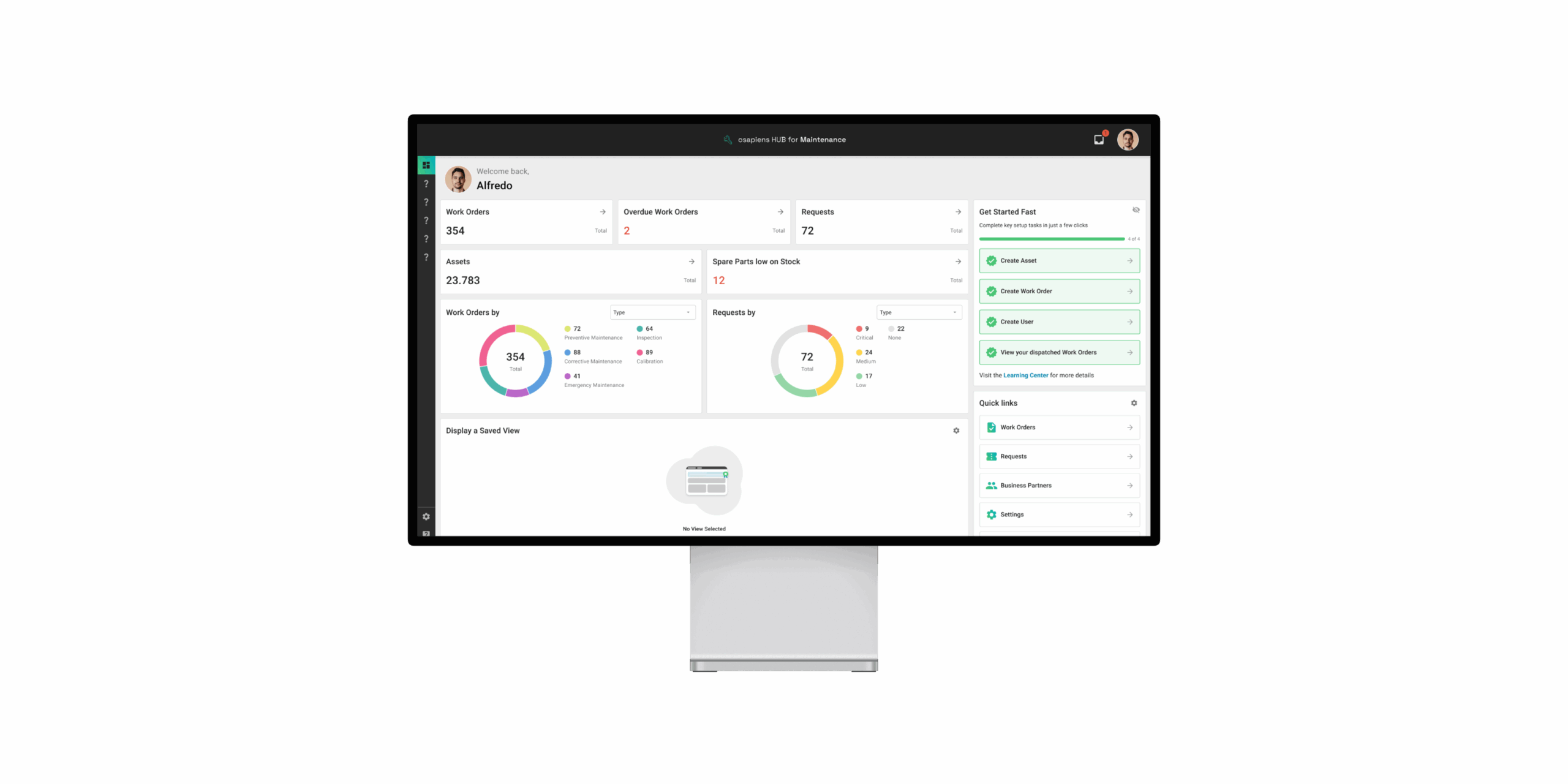
Version 3.17: The Next-Gen Cockpit for Your Maintenance
January 1, 2026
Backhoe Maintenance Checklist – Tasks, Tips & Best Practices
January 1, 2026
Injection Molding Machine Maintenance Checklist – Tasks, Systems & Digital Execution

November 27, 2025
Condition Based Maintenance (CBM): Definition, Types & Implementation Guide
January 1, 2026
Control Panel Maintenance Checklist – Tasks, Tips & Template
January 1, 2026