

Maintenance Checklist

Florian Bartholomäus, osapiens Expert | 1. January 2026 | Lesezeit 8 min.
Many organizations overlook grounding system testing between visual inspections. Ground resistance can change significantly with seasonal soil moisture variations—test during both dry and wet periods to capture the full picture of your lightning arrester's protective capability.
Create your checklist for free













TRUSTED BY LEADING COMPANIES




ENTERPRISE-READY
 SAP Certification
 ISO 27001
 EU Hosting
 Entra ID & Okta
 Multi-Entity
Table of Contents
- Lightning Arrester Maintenance: Key Facts
- Why You Need a Lightning Arrester Maintenance Checklist
- What to Include in Your Lightning Arrester Maintenance Checklist
- Common Lightning Arrester Problems Your Maintenance Checklist Prevents
- From Paper Checklist to Digital: How the osapiens HUB Automates Your Lightning Arrester Maintenance Checklist
- FAQ
Lightning arresters protect critical electrical infrastructure from catastrophic damage caused by lightning strikes and switching surges. Without structured maintenance, these protective devices degrade silently—moisture ingress, thermal stress, and surface contamination compromise their function long before visible failure occurs. A comprehensive lightning arrester maintenance checklist ensures your protection systems remain operational, your facility stays compliant with safety standards, and your maintenance team can detect problems before they trigger costly equipment damage or unplanned downtime.
Lightning Arrester Maintenance: Key Facts
- Consistent protection: Structured checklists prevent the inconsistent inspections that allow arrester degradation to progress undetected until failure occurs.
- Audit-ready documentation: Digital maintenance records demonstrate compliance with industry standards and regulatory requirements, supporting insurance claims and liability defense.
- Mobile execution: Modern CMMS platforms like osapiens HUB enable technicians to execute checklists on-site, capture photos, and document findings in real time—even in remote substation locations without connectivity.
- Predictable maintenance: Trending leakage current and resistance measurements over successive inspection cycles reveals gradual degradation, enabling planned replacement during scheduled outages rather than emergency response.
Why You Need a Lightning Arrester Maintenance Checklist
Lightning arrester maintenance often falls through the cracks in facilities without structured programs. Ad-hoc inspections miss critical degradation signs, and experience-based approaches vary widely between technicians.
A structured checklist addresses these gaps:
- Consistency: Checklists ensure every technician examines the same critical components—housing integrity, grounding connections, surge counter readings, and environmental contamination—regardless of experience level or time pressure.
- Risk reduction: Moisture ingress and thermal runaway represent the most common arrester failure modes. Systematic visual and electrical testing identifies these degradation patterns months before catastrophic failure, preventing the equipment damage and service interruptions that result when protection systems fail during lightning events.
- Documentation: Complete inspection records create the audit trail required for regulatory compliance and insurance coverage. When lightning-related damage occurs, documented maintenance history demonstrates that protection systems received proper care, supporting claim approval and liability defense.
- Technician guidance: Detailed checklists guide less experienced personnel through complex inspection sequences, ensuring critical steps like ground resistance testing and leakage current measurement occur at proper intervals with correct procedures.
- Standardization: Repeatable procedures enable meaningful comparison of test results across inspection cycles, revealing trends that indicate developing problems requiring intervention.
- Compliance: Checklists aligned with standards like IEC 62305 and NFPA 780 ensure inspections address all mandated assessment areas, reducing regulatory risk and supporting certification requirements.
What to Include in Your Lightning Arrester Maintenance Checklist
An effective lightning arrester maintenance checklist organizes tasks by the physical component or system being inspected, not by arbitrary time intervals. This component-based structure ensures technicians address all critical elements during each inspection cycle.
The checklist should cover visual inspection of external components, functional verification of protective elements, safety system checks, and documentation procedures. Actual inspection intervals depend on equipment usage, environmental exposure, and risk assessment—critical systems in high-lightning-activity regions require more frequent assessment than arresters in controlled indoor environments.
| Component / System | Inspection & Maintenance Tasks | Purpose |
|---|---|---|
| Arrester Housing & External Condition | Inspect for cracks, damage, discoloration, carbon tracking, moisture entry points, secure mounting | Detect physical damage, moisture ingress paths, flashover evidence |
| Grounding System & Connections | Measure ground resistance, verify conductor continuity, inspect termination points, check for corrosion | Ensure low-resistance path to ground, verify protective function |
| Surge Counter & Monitoring | Record surge count, verify counter operation, document lightning activity history | Track arrester stress history, support replacement planning |
| Electrical Performance | Measure leakage current, test insulation resistance, verify voltage rating, thermal imaging | Detect internal degradation, identify thermal runaway risk |
| Conductors & Down Leads | Inspect for damage, verify secure fastening, check routing, test continuity | Ensure current path integrity, prevent connection failures |
| Environmental Factors | Assess surface contamination, check for salt spray exposure, verify drainage, inspect seals | Identify conditions accelerating degradation |
| Safety & Compliance | Verify disconnector operation, check safety labeling, confirm clearances, review documentation | Personnel safety, regulatory compliance, audit readiness |
Turn Your Lightning Arrester Maintenance Checklist into Digital Work Orders
Create structured checklists for every component—from housing inspection to ground resistance testing. Execute them on mobile, sync with SAP PM, and keep full audit trails automatically.Start with Your Lightning Arrester Maintenance Checklist
Common Lightning Arrester Problems Your Maintenance Checklist Prevents
Structured maintenance checklists identify the specific degradation patterns that lead to arrester failure:
- Moisture ingress failures: Regular visual inspection detects seal degradation, housing cracks, and moisture entry points before internal flashover occurs. Arresters showing external moisture signs receive immediate attention, preventing the complete failure that results when water accumulates inside the housing.
- Thermal runaway: Periodic leakage current testing and thermal imaging reveal arresters operating at elevated temperatures, indicating internal MOV degradation. Trending these measurements over successive inspections identifies units approaching thermal limits, enabling replacement before catastrophic short-circuit failure.
- Surface contamination flashover: Checklists prompt inspection of external surfaces for pollution buildup, salt spray deposits, and tracking patterns. Cleaning contaminated arresters and improving drainage prevents the surface flashover failures common in coastal and industrial environments.
- Grounding system degradation: Systematic ground resistance measurement detects the gradual resistance increases that occur as soil conditions change or connections corrode. Maintaining resistance below specified limits ensures arresters can safely dissipate lightning current without dangerous voltage rise.
- Documentation gaps: Structured checklists with mandatory fields ensure technicians record all required data—test values, ambient conditions, observations, photos—creating the complete maintenance history needed for trending analysis and compliance demonstration.
- Inconsistent inspection quality: Standardized procedures eliminate the variability that occurs when different technicians follow different approaches, ensuring every arrester receives thorough assessment regardless of who performs the work.
From Paper Checklist to Digital: How the osapiens HUB Automates Your Lightning Arrester Maintenance Checklist
Paper-based and Excel checklists create friction that undermines maintenance effectiveness. Technicians working at remote substation sites carry printed forms that become damaged in weather, manually transfer measurements from test instruments to paper, and later re-enter data into office systems—creating transcription errors and delays between field observation and management visibility.
These manual processes make trending analysis difficult, as historical data remains scattered across filing cabinets and spreadsheets. When arrester condition gradually degrades over years, the pattern becomes visible only when someone manually compiles data from multiple inspection cycles—work that rarely happens until after failure occurs.
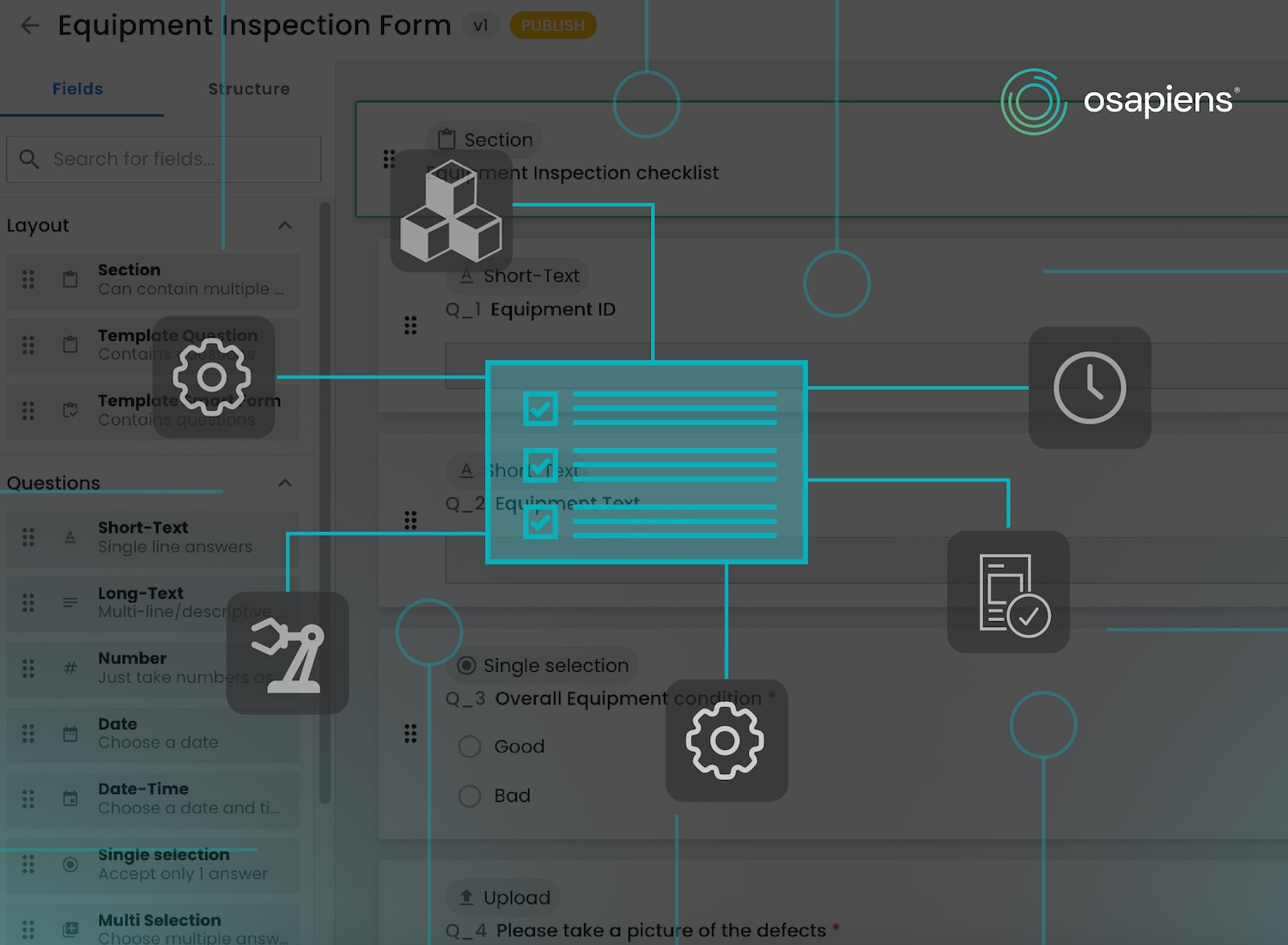
The osapiens HUB for Maintenance transforms lightning arrester maintenance from paper-based reactive workflows to structured, mobile-first processes. Technicians access inspection procedures, historical test data, and measurement standards on smartphones or tablets during field inspections, eliminating reliance on paper documentation.
Mobile checklist execution enables real-time data entry—capturing leakage current values, ground resistance measurements, surge counter readings, and observations directly into the system during field work. Photos documenting arrester condition, environmental factors, or damage automatically attach to maintenance records, creating comprehensive documentation without manual file management.
The platform’s SAP PM integration ensures maintenance data flows seamlessly into enterprise systems, eliminating duplicate data entry and enabling unified reporting across all facility assets. Work orders generated from inspection findings trigger procurement workflows for replacement arresters, schedule follow-up testing, and update asset records automatically.
Automated trending analysis processes historical test data, flagging arresters showing adverse patterns—gradually increasing leakage current, rising ground resistance, or elevated surge activity—for prioritized attention. This condition-based maintenance approach enables replacement planning based on actual equipment condition rather than arbitrary schedules.
| Paper or Excel Checklist | Digital Checklist with osapiens HUB |
|---|---|
| Manual data entry creates transcription errors | Direct digital capture eliminates re-entry |
| Historical data scattered across files | Complete maintenance history instantly accessible |
| Trending requires manual compilation | Automated analysis flags adverse patterns |
| Photos managed separately from records | Images automatically linked to inspections |
| Compliance documentation assembled manually | Audit-ready reports generated automatically |
| Offline work requires paper backup | Full offline capability with automatic sync |
| No integration with procurement or planning | Seamless SAP PM integration and workflow automation |
For organizations managing distributed arrester installations across multiple substations or facilities, osapiens HUB provides centralized visibility into system-wide condition. Maintenance managers monitor inspection completion rates, review flagged issues, and allocate resources based on actual equipment needs rather than guesswork.
Learn more about digital work order management and automated maintenance scheduling that keep your lightning protection systems audit-ready.
Stop Losing Protection to Missed Lightning Arrester Inspections
Digitize your maintenance checklists, automate work order creation, and give every technician a mobile tool that works—even offline. SAP PM integration included.Try osapiens HUB for Free
FAQ
What should be included in a lightning arrester maintenance checklist?
A comprehensive checklist covers visual inspection of housing and mounting, ground resistance measurement, surge counter monitoring, leakage current testing, conductor continuity verification, and documentation of findings. Specific tasks depend on arrester type, voltage rating, and installation environment—station-class arresters require more detailed assessment than distribution units.
How often should I complete my lightning arrester maintenance checklist?
Inspection frequency depends on equipment criticality, environmental exposure, and lightning activity levels. Industry practice commonly includes annual visual inspections for most installations, with comprehensive electrical testing every 1–3 years for critical systems. High-lightning-activity regions, coastal environments, and pollution-prone areas often benefit from more frequent assessment. Learn more about preventive maintenance strategies.
Can I customize this lightning arrester maintenance checklist template?
Customization is essential—effective checklists reflect your specific arrester types, voltage classes, environmental conditions, and regulatory requirements. Digital platforms like osapiens HUB enable flexible checklist templates adapted to different equipment classes while maintaining standardized data collection for trending analysis.
How does a digital CMMS improve maintenance checklist management?
Digital CMMS platforms enable mobile execution with offline capability, automated trending analysis that detects gradual degradation, photo documentation linked directly to inspection records, and seamless integration with enterprise systems. The osapiens HUB provides SAP PM integration, ensuring maintenance data supports procurement, planning, and compliance reporting without manual data transfer. Explore SAP-integrated maintenance solutions.
Start using osapiens for free
Improve your uptime, extend the life of your equipment, and simplify work order management.
Book a demo
ENTERPRISE CAPABILITIES
- SAP ECC & S/4HANA Certified
- Infor & MS Dynamics
- Microsoft Entra ID / Okta
- ISO 27001 & 9001
- EU Cloud · Data Sovereignty
- Development, Test, and Production Environments
- Multi-Entity & Multi-Site
- Power BI Integration
- Audit Trail & Compliance
Related content

July 22, 2025
Simplify Maintenance with SAP and osapiens
January 1, 2026
Screw Compressor Maintenance Checklist – Tasks, Intervals & Digital Execution

September 19, 2025
Meet the osapiens maintenance experts at Pharma Maintenance Reloaded 2025

February 6, 2026
Asset Maintenance Software: Find the Right Solution for Your Facility
January 1, 2026
Access Control Maintenance Checklist – Tasks, Tips & Template

July 22, 2025
osapiens HUB for Maintenance: Blueprint for Spare Parts Management

February 26, 2026
CMMS Migration Made Simple: How to Switch Maintenance Software Without Data Loss

May 23, 2025
Whitepaper: How to Build a Strong Business Case for a CMMS

February 4, 2026
Clean Room Maintenance: Efficient Work in Controlled Environments
January 1, 2026
Extruder Machine Maintenance Checklist – Tasks, Intervals & Digital Execution

July 9, 2026
Boehringer Ingelheim standardizes plant maintenance globally with osapiens
January 1, 2026