

Maintenance Checklist

Florian Bartholomäus, osapiens Expert | 1. January 2026 | Lesezeit 9 min.
Most commercial roof failures originate at flashings and penetrations, yet these areas are often inspected inconsistently. A structured checklist organized by roof component—not just frequency—ensures technicians systematically examine every vulnerable area, from membrane seams to drainage systems, reducing the risk of overlooked defects that lead to costly water damage.
Start using this checklist for free
More than 2200 companies place their trust in osapiens










Table of Contents
- Commercial Roof Maintenance: Key Facts
- Why You Need a Commercial Roof Maintenance Checklist
- What to Include in Your Commercial Roof Maintenance Checklist
- Common Commercial Roof Problems Your Maintenance Checklist Prevents
- From Paper Checklist to Digital: How the osapiens HUB Automates Your Commercial Roof Maintenance Checklist
- FAQ
Commercial roofs protect critical operations, inventory, and building infrastructure—yet they’re among the most neglected assets in facility management. Research indicates that proactive roof maintenance programs can reduce emergency repair costs by 60–70% while extending service life by 40% or more, yet two-thirds of facility managers continue operating in reactive mode, addressing problems only after visible failure. A structured commercial roof maintenance checklist transforms this reactive approach into a systematic, preventive program that catches issues early, ensures compliance, and protects your investment.
Commercial Roof Maintenance: Key Facts
- Prevent costly failures: Over 70% of commercial roof leaks originate at flashings and penetrations—areas that structured checklists systematically address before water infiltration occurs.
- Extend asset lifespan: Properly maintained roofs can reach 25–28 years of service life compared to 15–20 years without disciplined maintenance, deferring significant capital expenditures.
- Ensure documentation: Manufacturer warranties require documented routine maintenance; missing records can void coverage and eliminate protection against defects or premature failures.
- Digital execution advantage: The osapiens HUB for Maintenance enables mobile checklist execution, automatic photo documentation, and SAP PM integration, ensuring audit-ready records and eliminating paper-based gaps.
Why You Need a Commercial Roof Maintenance Checklist
Without a structured checklist, commercial roof maintenance becomes inconsistent, experience-dependent, and vulnerable to oversight. A comprehensive checklist ensures systematic coverage of every critical component and creates the documentation trail required for warranty compliance and insurance claims.
- Consistency across teams: Checklists standardize inspections regardless of technician experience, ensuring that every membrane seam, flashing detail, and drainage point receives appropriate attention during each visit.
- Risk reduction: Silent roof failures—water seeping beneath membranes, flashing separations, or clogged drains—develop for weeks before visible symptoms appear. Structured checklists catch these issues early, before they cascade into structural damage, mold growth, or operational disruption.
- Documentation and traceability: Manufacturer warranties condition coverage on documented maintenance; insurance claims require proof of diligent upkeep. A checklist creates the audit trail that protects your investment and validates compliance during reviews.
- Technician guidance: Less experienced maintenance staff benefit from step-by-step checklists that specify what to inspect, where to look, and what constitutes a defect requiring follow-up action.
- Standardization across sites: Multi-site facility managers need consistent maintenance quality regardless of location. Digital checklists in work order management systems ensure repeatability and enable centralized visibility into completion rates and findings.
- Compliance support: OSHA fall protection standards, manufacturer specifications, and internal safety policies all require documented adherence. Checklists structure compliance verification and create records that demonstrate due diligence.
What to Include in Your Commercial Roof Maintenance Checklist
Effective commercial roof maintenance checklists are organized by component or system, not by frequency. This structure ensures technicians systematically examine each physical area of the roof, reducing the risk of overlooked sections.
The checklist should cover visual inspection of all roof surfaces, functional checks of drainage systems, safety verification, cleaning and debris removal, and documentation steps. Actual maintenance intervals depend on roof age, local climate, foot traffic levels, and manufacturer recommendations—not arbitrary schedules.
| Component / System | Inspection & Maintenance Tasks | Purpose |
|---|---|---|
| Roof Membrane & Surface | Inspect for punctures, tears, blistering, or alligatoring; check seams for separation; identify ponding water in low spots; verify membrane attachment at edges | Detect water infiltration points, UV degradation, and structural stress before leaks develop |
| Flashings & Penetrations | Examine base and cap flashing around vents, HVAC curbs, skylights, chimneys; check for gaps, lifted edges, cracked sealant, or separation | Prevent leaks at the most vulnerable points—over 70% of roof failures originate here |
| Drainage System | Clear debris from gutters, downspouts, scuppers, and internal drains; verify proper slope and water flow; check for blockages or standing water | Eliminate ponding water that accelerates membrane degradation and adds structural load |
| Roof Edges & Terminations | Inspect edge metal, copings, and fascia for secure fastening, corrosion, or separation; verify sealant integrity at termination points | Prevent wind uplift damage and water infiltration at roof perimeters |
| Rooftop Equipment & Curbs | Check HVAC units, vents, and other equipment for secure mounting, proper flashing, and signs of leaks; verify walkway pads are in place | Reduce foot traffic damage and ensure penetrations remain watertight |
| Safety Features & Access | Test guardrails, skylight screens, and roof hatches; verify fall protection systems; confirm access is controlled and documented | Comply with OSHA fall protection standards and prevent accidents |
| Structural & Interior Indicators | Inspect interior ceilings for water stains, sagging, or discoloration; document any signs of moisture intrusion or structural compromise | Identify hidden damage requiring immediate investigation and repair |
| Documentation & Records | Capture timestamped photos of conditions and defects; record findings in digital maintenance records; generate follow-up work orders for identified issues | Create audit-ready compliance records and ensure corrective actions are tracked to completion |
Turn Your Commercial Roof Maintenance Checklist into Mobile Work Orders
Create structured checklists for every roof component—from membrane seams to drainage systems. Execute them on mobile, capture photos automatically, sync with SAP PM, and keep full audit trails without paper forms.Start with Your Commercial Roof Maintenance Checklist
Common Commercial Roof Problems Your Maintenance Checklist Prevents
A structured maintenance checklist addresses the predictable failure patterns that account for the majority of commercial roof problems. By systematically inspecting vulnerable areas, you catch issues before they escalate into costly emergencies.
- Flashing and edge-metal separation: Thermal cycling and weather exposure loosen sealants and lift metal flashings, creating gaps where water infiltrates. Regular inspection and sealant renewal prevent the leading cause of commercial roof leaks.
- Drainage system failure: Clogged gutters, downspouts, and drains cause ponding water that adds structural load, accelerates membrane degradation, and creates pressure on seams. Quarterly debris removal eliminates this preventable failure mode.
- Membrane punctures and degradation: Foot traffic, dropped tools, and UV exposure damage roofing membranes. Checklists that include walkway pad verification and surface condition assessment catch punctures early, before water spreads beneath the membrane.
- Hidden moisture damage: Water seeps through minor breaches and spreads beneath the surface for weeks before visible symptoms appear. Periodic moisture detection using thermal imaging or capacitive methods identifies subsurface issues that visual inspection alone cannot detect.
- Deferred maintenance consequences: Small defects—a cracked sealant bead, a partially lifted flashing—become major repairs when ignored. A $300 planned repair prevents a $5,000 emergency intervention and $10,000 in secondary damage costs.
- Documentation gaps: Missing maintenance records void manufacturer warranties and complicate insurance claims. Digital checklists in the osapiens HUB for Maintenance automatically create timestamped, photo-documented records that protect warranty coverage and demonstrate due diligence.
From Paper Checklist to Digital: How the osapiens HUB Automates Your Commercial Roof Maintenance Checklist
Traditional paper checklists and Excel spreadsheets create friction that undermines even well-designed maintenance programs. Technicians complete inspections on paper, return to the office to transcribe findings, and struggle with illegible handwriting and lost forms. Supervisors lack real-time visibility into completion status, and compliance documentation requires manual assembly from scattered files.
The osapiens HUB for Maintenance eliminates these inefficiencies through mobile-first checklist execution that technicians complete directly on smartphones or tablets. Photos, timestamps, and GPS coordinates are captured automatically. Findings sync instantly to centralized records, and follow-up work orders generate automatically when defects are identified.
| Paper or Excel Checklist | Digital Checklist with osapiens HUB |
|---|---|
| Manual data entry, transcription errors, lost forms | Mobile execution with automatic sync—no transcription, no lost data |
| Delayed visibility—supervisors learn of issues hours or days later | Real-time status updates and instant notifications when defects are found |
| Inconsistent photo documentation, unclear timestamps | Automatic photo capture with GPS and timestamp metadata embedded |
| Manual follow-up tracking—repairs recommended but not completed | Automated work order generation from inspection findings, tracked to completion |
| Difficult compliance assembly—searching through paper files for audits | Audit-ready documentation instantly accessible, searchable, and exportable |
| No integration with asset records or financial systems | SAP PM integration syncs maintenance history, costs, and asset data seamlessly |
The osapiens HUB supports offline mobile access, ensuring technicians can complete checklists on rooftops with poor connectivity. Data syncs automatically when connection returns, eliminating workflow interruptions. For organizations managing multiple buildings or sites, the platform provides centralized visibility into maintenance scheduling, completion rates, and findings across the entire portfolio.
By digitizing your commercial roof maintenance checklist, you shift from reactive documentation to proactive asset management—catching issues early, ensuring compliance, and protecting your investment through systematic, audit-ready processes. Learn more about facility maintenance solutions designed for multi-site operations.
Stop Losing Asset Value to Missed Roof Inspections
Digitize your commercial roof maintenance checklists, automate work order creation for identified defects, and give every technician a mobile tool that works offline. SAP PM integration and audit-ready documentation included.Try osapiens HUB for Free
FAQ
What should be included in a commercial roof maintenance checklist?
A comprehensive commercial roof maintenance checklist should cover roof membrane and surface inspection for punctures or degradation, flashing and penetration examination around vents and HVAC equipment, drainage system assessment including gutters and downspouts, roof edge and termination verification, rooftop equipment inspection, safety feature testing, and documentation with photos and findings. Organize tasks by component or system rather than frequency, and adapt the checklist to your specific roof type, age, and local climate conditions.
How often should I complete my commercial roof maintenance checklist?
Industry best practice commonly recommends biannual professional inspections—typically in spring and fall—to prepare for seasonal weather stress. Additional inspections are often recommended after major weather events such as severe storms, heavy snowfall, or high winds. For roofs experiencing heavy foot traffic or supporting significant rooftop equipment, quarterly inspections may be appropriate. Actual frequency depends on roof age, local climate, usage patterns, and manufacturer warranty requirements. The osapiens HUB for Maintenance automates scheduling based on your specific intervals and triggers.
Can I customize this commercial roof maintenance checklist template?
Yes—customization is essential. Every commercial roof has unique characteristics based on membrane type, age, climate, foot traffic, and equipment load. Start with a comprehensive baseline checklist, then adapt it to reflect your specific roof components, manufacturer recommendations, and operational priorities. Digital CMMS platforms like osapiens HUB allow you to create customized checklists with conditional logic, required photo fields, and automated follow-up actions tailored to your facility’s needs.
How does a digital CMMS improve maintenance checklist management?
A digital CMMS transforms checklist execution from paper-based documentation into real-time, mobile workflows. Technicians complete inspections on smartphones with automatic photo capture and GPS tagging. Findings sync instantly to centralized records, and follow-up work orders generate automatically when defects are identified. Supervisors gain real-time visibility into completion status, and compliance documentation becomes instantly accessible for audits. SAP PM integration ensures maintenance history, costs, and asset data remain synchronized across enterprise systems. Learn more about SAP-integrated maintenance solutions for enterprise facilities.
Start using osapiens for free
Improve your uptime, extend the life of your equipment, and simplify work order management.
Book a demo
Related content
January 1, 2026
Air Compressor Maintenance Checklist – Tasks, Tips & Template
January 1, 2026
Forklift Maintenance Checklist: What to Inspect, When, and How to Go Digital
January 1, 2026
Extruder Machine Maintenance Checklist – Tasks, Intervals & Digital Execution
January 1, 2026
CFR 21 Part 11 Compliance Maintenance Checklist – Tasks, Validation & Audit Readiness
January 1, 2026
Fire Suppression System Maintenance Checklist – Tasks, Compliance & Digital Execution
January 1, 2026
Batching Plant Maintenance Checklist – Tasks, Tips & Template
January 1, 2026
Press Machine Maintenance Checklist – Tasks, Tips & Template
November 26, 2025
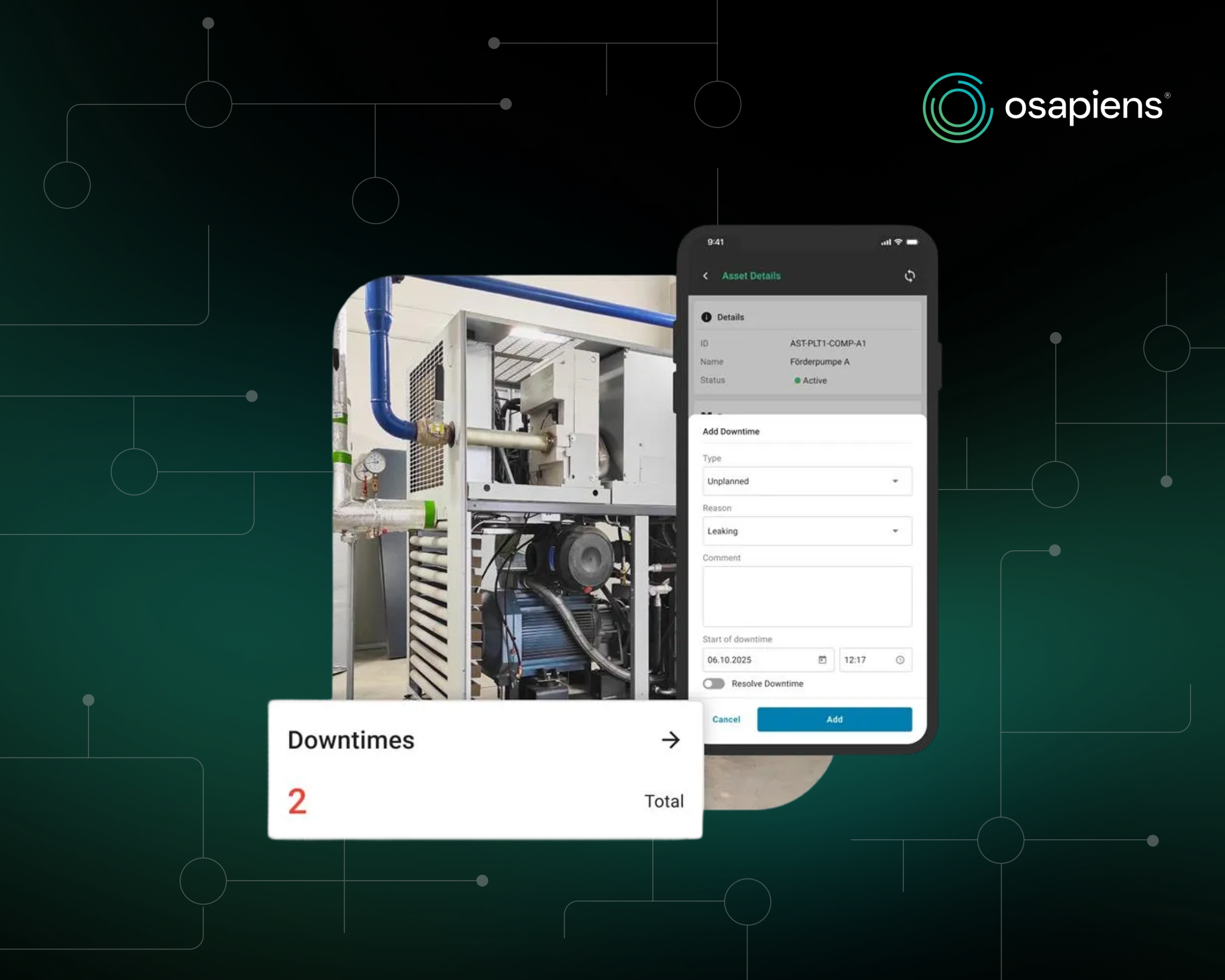
New version 3.18 – Asset upload, new asset owner persona, and downtime tracking
January 1, 2026
Wheel Loader Maintenance Checklist – Tasks, Tips & Template
January 1, 2026
Hydraulic Power Pack Maintenance Checklist – Tasks, Tips & Best Practices
January 1, 2026
Industrial Mixer Maintenance Checklist – Tasks, Tips & Template
January 1, 2026