

Maintenance Checklist

Florian Bartholomäus, osapiens Expert | 1. January 2026 | Lesezeit 7 min.
Most switchgear failures announce themselves through subtle signs—unusual noise, discoloration, or temperature changes—long before catastrophic breakdown occurs. Daily visual inspections catch these early warnings, but only if technicians know what to look for and document findings consistently.
Create your checklist for free













TRUSTED BY LEADING COMPANIES




ENTERPRISE-READY
 SAP Certification
 ISO 27001
 EU Hosting
 Entra ID & Okta
 Multi-Entity
Table of Contents
- Switchgear Maintenance: Key Facts
- Why You Need a Switchgear Maintenance Checklist
- What to Include in Your Switchgear Maintenance Checklist
- Common Switchgear Problems Your Maintenance Checklist Prevents
- From Paper Checklist to Digital: How the osapiens HUB Automates Your Switchgear Maintenance Checklist
- FAQ
Electrical switchgear protects, isolates, and distributes power safely across industrial facilities—but without structured maintenance, unplanned downtime becomes harder to predict. According to IEEE surveys, a single switchgear failure results in an average of 261 hours of downtime, translating to operational disruption that extends far beyond the equipment itself.
Switchgear Maintenance: Key Facts
- Failure prevention: Structured preventive maintenance programs reduce switchgear failure risks by approximately two-thirds compared to reactive approaches, according to industry research.
- Arc flash risk: Neglected switchgear increases arc flash risks by 83% and shortens component lifespan by 34%, based on industry surveys.
- Thermal control: Research indicates that 80% of switchgear failures are caused by overheating—making thermal monitoring a primary focus of preventive maintenance strategies.
- Digital execution: Organizations transitioning from paper-based checklists to mobile-first CMMS solutions report significant improvements in compliance, first-time fix rates, and technician adoption.
Why You Need a Switchgear Maintenance Checklist
Ad-hoc or experience-based maintenance leaves critical gaps that contribute to equipment failures, safety incidents, and regulatory violations. A structured checklist addresses these risks systematically.
- Consistency: Without standardized procedures, maintenance quality varies by technician experience and shift. Checklists ensure every inspection covers critical components regardless of who performs the work.
- Risk reduction: Dust and metallic particles contribute to 34% of insulation failures in switchgear, while humidity and moisture increase contact resistance by up to 70%. Regular inspections catch these conditions before they escalate.
- Documentation: Regulatory standards including NFPA 70E, NFPA 70B, and OSHA 1910.269 require documented maintenance activities. Digital checklists create automatic audit trails with timestamps, photos, and technician signatures.
- Technician guidance: Detailed checklists support less experienced team members by providing step-by-step instructions, required test values, and acceptable ranges—reducing errors and improving work quality.
- Standardization: Repeatability matters across shifts and sites. Checklists ensure that maintenance intervals, procedures, and documentation remain consistent regardless of location or personnel changes.
- Handover quality: Structured documentation improves shift transitions by providing clear records of work performed, findings, and follow-up actions required.
What to Include in Your Switchgear Maintenance Checklist
Effective switchgear maintenance checklists organize tasks by component or system rather than frequency alone. This structure ensures technicians address all critical areas systematically.
Organize your checklist into logical sections: visual inspection, functional checks, safety verification, cleaning and servicing, and documentation steps. Actual intervals depend on usage, risk assessment, and environmental conditions—these tasks are examples, not exhaustive requirements.
| Component / System | Inspection & Maintenance Tasks | Purpose |
|---|---|---|
| Circuit Breakers & Contacts | Inspect contacts for wear, arcing, or welding; measure contact resistance; verify trip timing; lubricate operating mechanisms | Prevent contact welding, ensure reliable fault interruption, reduce overheating risk |
| Busbars & Connections | Check torque on bolted connections; perform infrared thermography; inspect for corrosion or discoloration; verify alignment | Detect loose connections, prevent overheating, ensure current flow integrity |
| Insulation & Barriers | Test insulation resistance; inspect for cracks, tracking, or contamination; perform partial discharge testing (>1kV equipment) | Prevent flashover, detect degradation early, maintain dielectric strength |
| Control Circuits & Relays | Test protective relay operation; verify control voltage levels; check auxiliary contacts; simulate fault conditions | Ensure protection logic executes correctly, prevent failure to trip during faults |
| Enclosure & Environment | Inspect door seals and gaskets; verify ventilation and cooling; check for moisture ingress; clean dust and debris | Prevent environmental contamination, maintain proper operating temperature |
| Safety Systems & Interlocks | Test mechanical interlocks; verify arc flash labels; inspect grounding connections; confirm lockout/tagout provisions | Operator safety, compliance with NFPA 70E, prevent accidental energization |
| Documentation & Records | Record baseline test values; photograph conditions; log component replacements; note trends and anomalies | Support compliance audits, enable trend analysis, inform capital planning decisions |
Turn Your Switchgear Maintenance Checklist into Digital Work Orders
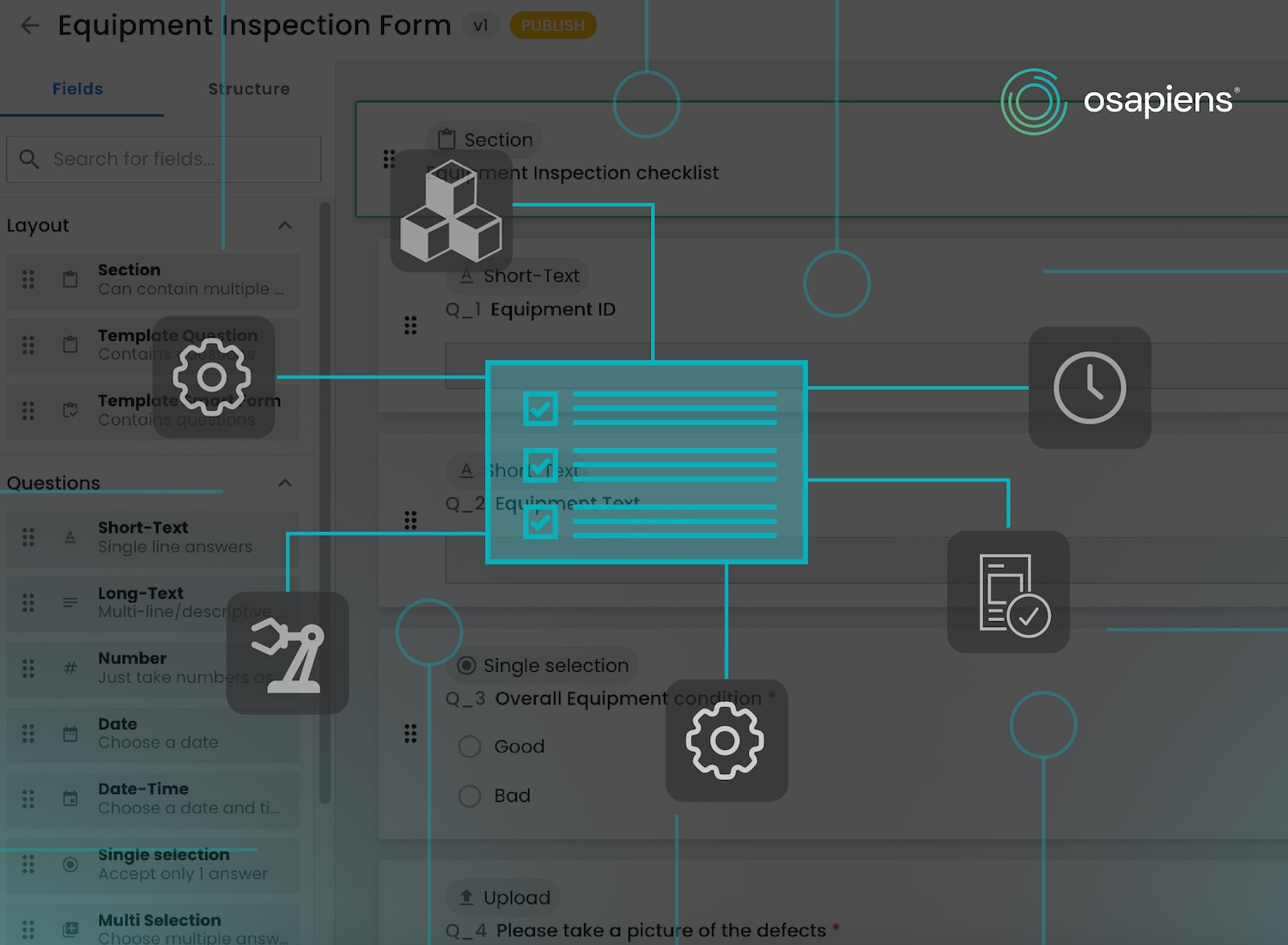
Create structured checklists for every component—from circuit breakers to control circuits. Execute them on mobile, sync with SAP PM, and keep full audit trails automatically.Start with Your Switchgear Maintenance Checklist
Common Switchgear Problems Your Maintenance Checklist Prevents
Structured checklists address the failure modes that cause most switchgear downtime and safety incidents.
- Insulation degradation and partial discharge: Aging materials, moisture ingress, and contamination compromise dielectric properties. Regular insulation resistance testing and partial discharge monitoring detect degradation before flashover occurs.
- Contact wear and overheating: Frequent switching operations and arcing erode contact surfaces, increasing resistance. Infrared thermography and contact resistance testing identify overheated connections requiring tightening or replacement.
- Environmental contamination: Dust accumulation and moisture ingress create conductive pathways across insulation. Routine cleaning and environmental inspections prevent tracking and corrosion.
- Mechanical failures: Poor lubrication, misalignment, and component fatigue prevent breakers from operating correctly. Mechanical cycling and lubrication checks ensure reliable operation under load.
- Documentation gaps: Missing maintenance records create compliance risk and prevent trend analysis. Digital checklists with automatic timestamps and photo capture eliminate documentation gaps.
From Paper Checklist to Digital: How the osapiens HUB Automates Your Switchgear Maintenance Checklist
Paper-based and Excel checklists introduce multiple failure points that undermine maintenance effectiveness. Technicians must record observations by hand, often in poor lighting or awkward positions where accuracy suffers.
After maintenance is completed, paper checklists must be transported back to an office, where someone manually transcribes findings into digital systems—a time-consuming process introducing transcription errors. Studies show that technicians using paper checklists spend 15–30 minutes per work order on manual data entry and administrative overhead.
osapiens HUB for Maintenance transforms switchgear maintenance through mobile checklist execution that enables real-time photo capture, automatic timestamps, and guided workflows preventing missed steps. Technicians access complete equipment history, capture condition data through photos, and log findings directly in the field—eliminating media breaks between field work and digital records.
The platform provides SAP PM integration for enterprise organizations, ensuring maintenance data flows seamlessly between field execution and strategic planning systems. SAP-certified integration maintains data consistency without custom development, while mobile-first design ensures technicians adopt the system consistently.
| Aspect | Paper or Excel Checklist | Digital Checklist with osapiens HUB |
|---|---|---|
| Data Capture | Manual handwriting, prone to errors and illegibility | Guided digital forms with photos, timestamps, signatures |
| Equipment History | Scattered across files, difficult to access in field | Complete history accessible via mobile app, even offline |
| Documentation Time | 15–30 minutes per work order for transcription | Real-time capture eliminates transcription entirely |
| Compliance Records | Manual compilation for audits, risk of missing records | Automatic audit trails, instant report generation |
| Trend Analysis | Requires manual data extraction and spreadsheet work | Automated analytics identify patterns and predict failures |
| Technician Adoption | Resistance due to administrative burden | High adoption through intuitive mobile interface |
Stop Losing Uptime to Missed Switchgear Inspections
Digitize your maintenance checklists, automate work order creation, and give every technician a mobile tool that works—even offline. SAP PM integration included.Try osapiens HUB for Free
FAQ
What should be included in a switchgear maintenance checklist?
A comprehensive switchgear maintenance checklist includes visual inspections of circuit breakers, busbars, and insulation; electrical testing such as insulation resistance, contact resistance, and relay functionality; thermal imaging to detect overheated connections; mechanical operation verification including lubrication and trip timing; safety checks of interlocks, grounding, and arc flash labels; and documentation of findings, test values, and corrective actions. Actual tasks depend on equipment type, voltage level, and environmental conditions. Learn more about preventive maintenance best practices.
How often should I complete my switchgear maintenance checklist?
Maintenance frequency depends on usage intensity, environmental conditions, and risk assessment. Common practice includes daily or shift-based visual inspections, monthly data review and accessible area cleaning, quarterly infrared thermography and connection tightening, and annual comprehensive maintenance with electrical testing and mechanical cycling. NFPA 70B recommends thermography testing at least annually, with more frequent intervals for equipment in harsh environments. Organizations should adjust intervals based on equipment condition and operational history rather than following fixed schedules blindly.
Can I customize this switchgear maintenance checklist template?
Yes—customization is essential because switchgear configurations, voltage levels, manufacturer specifications, and operational environments vary significantly. Adapt the checklist to reflect your specific equipment types (air-insulated vs. gas-insulated, low-voltage vs. medium-voltage), incorporate manufacturer-recommended procedures and test values, adjust intervals based on usage patterns and historical failure data, and add site-specific safety requirements or regulatory obligations. Digital CMMS platforms like osapiens HUB for Maintenance enable easy customization while maintaining standardization across similar equipment.
How does a digital CMMS improve maintenance checklist management?
A digital CMMS eliminates manual transcription errors, reduces administrative time by 15–30 minutes per work order, and enables real-time photo and measurement capture at the point of work. Mobile access provides technicians with equipment history, schematics, and procedures in the field, while automatic work order generation ensures maintenance intervals are never missed. SAP PM compatibility ensures enterprise organizations maintain seamless data flow between field execution and strategic planning systems. Facilities using digitized maintenance logs reduced audit preparation time by 41% and improved regulatory alignment, according to industry reports.
Start using osapiens for free
Improve your uptime, extend the life of your equipment, and simplify work order management.
Book a demo
ENTERPRISE CAPABILITIES
- SAP ECC & S/4HANA Certified
- Infor & MS Dynamics
- Microsoft Entra ID / Okta
- ISO 27001 & 9001
- EU Cloud · Data Sovereignty
- Development, Test, and Production Environments
- Multi-Entity & Multi-Site
- Power BI Integration
- Audit Trail & Compliance
Related content
January 1, 2026
Electric Generator Maintenance Checklist – Tasks, Tips & Best Practices
January 1, 2026
Separator Equipment Maintenance Checklist – Tasks, Tips & Template

February 4, 2026
Clean Room Maintenance: Efficient Work in Controlled Environments
January 1, 2026
Excavator Maintenance Checklist: What to Inspect, When & How
January 1, 2026
Pharmaceutical Mixer Maintenance Checklist – GMP Tasks, Safety & Digital Execution
January 1, 2026
Plastic Injection Mold Maintenance Checklist – Tasks, Tips & Best Practices
January 1, 2026
Compactor Maintenance Checklist – Essential Tasks & Digital Execution

March 9, 2026
Field Service Management: How to optimize your resource planning
January 1, 2026
Cooling System Maintenance Checklist – Tasks, Tips & Template
January 1, 2026
Robotic Assembly System Maintenance Checklist – Tasks, Tips & Digital Execution

April 7, 2026
CMMS Enterprise Rollout: How to Scale Maintenance Operations Across Multiple Sites

November 28, 2025