

Maintenance Checklist

Florian Bartholomäus, osapiens Expert | 1. January 2026 | Lesezeit 11 min.
Most pump failures don't happen suddenly—they announce themselves through subtle changes in vibration, temperature, or noise. A structured maintenance checklist catches these early warning signs before they escalate into costly breakdowns, unplanned downtime, or safety incidents.
Create your checklist for free











TRUSTED BY LEADING COMPANIES




ENTERPRISE-READY
 SAP Certification
 ISO 27001
 EU Hosting
 Entra ID & Okta
 Multi-Entity
Industrial pumps are essential assets in manufacturing, utilities, water systems, and process industries. Yet pump failures remain one of the most significant operational challenges facing maintenance teams today. Without structured maintenance, unplanned downtime becomes harder to predict—and costly to resolve.
A structured pump maintenance checklist transforms reactive firefighting into proactive asset management. This guide provides a practical framework for daily, monthly, quarterly, and annual pump maintenance tasks, organized by component and system. You’ll learn which inspections matter most, how to prevent common failure modes, and how digital tools like osapiens HUB for Maintenance eliminate paper-based friction and ensure audit-ready documentation.
Pump Maintenance: Key Facts
- Preventive maintenance reduces costs: Organizations implementing structured preventive maintenance spend more on direct maintenance but achieve significantly less unplanned downtime, fewer defects, and reduced lost production compared to reactive approaches.
- Failure modes are predictable: Cavitation, seal leaks, bearing failure, and impeller wear account for the majority of pump failures—all preventable through systematic inspection and timely intervention.
- Documentation drives improvement: Maintenance logs capturing leaks, vibration, lubrication activities, and component replacements enable trending analysis that reveals emerging problems before they manifest as failures.
- Mobile execution improves efficiency: Organizations implementing mobile CMMS solutions report 35% faster work order completion and 20% reduction in repeat failures compared to paper-based approaches.
Why You Need a Pump Maintenance Checklist
Pump failures cascade rapidly across facilities. When pumps fail, production lines halt, shipments delay, and safety risks including leaks, overheating, and pressure-related hazards emerge. The true cost extends far beyond replacement parts to include unplanned downtime, emergency repairs, and lost production.
A structured maintenance checklist addresses these risks through systematic prevention:
- Consistency: Ad-hoc maintenance based on intuition or memory creates gaps. Checklists ensure every critical task occurs at the right interval, regardless of technician experience or shift changes.
- Risk reduction: Missing a single lubrication check or vibration inspection can trigger cascading failures affecting bearings, seals, and shafts. Structured checklists prevent these oversights.
- Documentation: Audit-ready records prove compliance with safety regulations and internal standards. Digital capture through platforms like osapiens HUB work order management eliminates transcription errors and provides timestamped evidence of completed work.
- Technician guidance: Detailed checklists support less experienced team members through complex procedures, preserving institutional knowledge when senior technicians retire or transfer.
- Standardization: Repeatability across shifts, sites, and equipment types reduces variability in execution quality and enables meaningful performance comparison.
- Handover quality: Structured documentation improves shift transitions by providing complete context on equipment condition, recent observations, and pending actions.
What to Include in Your Pump Maintenance Checklist
Effective pump maintenance checklists organize tasks by component and system rather than arbitrary time intervals. This approach ensures technicians address the physical elements requiring attention while allowing flexibility to adjust frequencies based on usage, environment, and risk assessment.
The checklist below provides a framework adaptable to centrifugal pumps, positive displacement pumps, and submersible pumps. Actual intervals depend on manufacturer recommendations, operating conditions, and historical performance data. Always consult equipment manuals for model-specific requirements.
| Component / System | Inspection & Maintenance Tasks | Purpose |
|---|---|---|
| Pump Casing & Housing | Visual inspection for leaks, cracks, corrosion; verify mounting bolts tight; check for unusual vibration or misalignment | Structural integrity, leak prevention, alignment verification |
| Impeller & Volute | Inspect for wear, erosion, debris buildup; check balance; verify clearances; examine for cavitation damage | Flow efficiency, pressure generation, cavitation prevention |
| Seals & Gaskets | Check for leaks or weeping; inspect seal faces for wear; verify flush system operation; replace as needed | Fluid containment, bearing protection, environmental compliance |
| Bearings & Lubrication | Monitor temperature and vibration; check lubricant level and condition; replenish or replace lubricant; inspect for contamination | Shaft support, friction reduction, heat management |
| Shaft & Coupling | Verify alignment between pump and motor; inspect coupling for wear or damage; check for shaft deflection or runout | Power transmission, vibration control, bearing life |
| Suction & Discharge Piping | Inspect for leaks, blockages, air leaks; verify strainer/filter cleanliness; check valve operation; monitor pressure readings | NPSH maintenance, cavitation prevention, system efficiency |
| Motor & Drive | Monitor temperature, amperage draw, and voltage; inspect electrical connections; verify thermal protection; check motor insulation resistance | Power delivery, overload prevention, electrical safety |
| Control & Instrumentation | Verify pressure gauges, flow meters, and temperature sensors; test alarms and shutdown systems; calibrate instruments | Performance monitoring, early fault detection, safety compliance |
This component-based structure enables technicians to focus on the physical systems requiring attention rather than following rigid daily/weekly/monthly schedules that may not align with actual equipment needs. Organizations often combine this framework with time-based triggers (daily visual checks, monthly detailed inspections, quarterly diagnostics, annual overhauls) and condition-based triggers (sudden vibration changes, temperature spikes, pressure drops) to create comprehensive maintenance programs.
Learn more about condition-based maintenance strategies that complement scheduled inspections.
Turn Your Pump Maintenance Checklist into Digital Work Orders
Create structured checklists for every component—from impeller to bearing lubrication. Execute them on mobile, sync with SAP PM, and keep full audit trails automatically.Start with Your Pump Maintenance Checklist
Common Pump Problems Your Maintenance Checklist Prevents
Structured maintenance checklists directly address the failure modes that cause the majority of pump breakdowns:
- Cavitation: Low pressure at the pump inlet causes liquid to vaporize, forming bubbles that collapse violently and damage internal components. Regular checks of suction piping, strainer cleanliness, and NPSH conditions prevent this destructive phenomenon. Cavitation creates distinctive noise and vibration—early detection through systematic inspection enables intervention before significant damage occurs.
- Seal and gasket leaks: Mechanical seals and gaskets prevent fluid from escaping the pump housing but fail due to wear, chemical incompatibility, improper installation, or operating conditions exceeding design limits. Routine seal inspection identifies early signs of weeping or degradation, enabling planned replacement during scheduled maintenance rather than emergency response to catastrophic leaks.
- Bearing failure: Bearings support the rotating shaft and enable smooth operation. Inadequate lubrication, shaft misalignment, contamination from leaked fluids, and excessive vibration cause bearing degradation. Systematic lubrication checks, vibration monitoring, and temperature tracking provide early warning signs enabling proactive bearing replacement before seizure or shaft damage occurs.
- Impeller damage or wear: Abrasive particles, corrosion, cavitation, and debris cause impeller erosion and imbalance, reducing flow and efficiency. Regular inspection during scheduled maintenance detects erosion patterns before performance suffers significantly, while proper filtration and material selection extend impeller life.
- Motor overheating: Overloading from improper pump sizing, voltage fluctuations, poor electrical connections, and inadequate ventilation cause motor insulation breakdown and potential failure. Temperature monitoring, amperage checks, and electrical connection inspection prevent thermal damage and extend motor life.
- Misalignment: Improper alignment between pump and motor places unnecessary stress on bearings, seals, and shafts, causing vibration and accelerated wear. Precision alignment during installation and after maintenance work, verified through systematic inspection, eliminates this common failure mode.
Organizations implementing comprehensive asset maintenance software capture failure patterns across their pump population, enabling data-driven optimization of inspection intervals and maintenance procedures.
From Paper Checklist to Digital: How osapiens HUB Automates Your Pump Maintenance Checklist
Paper checklists, Excel spreadsheets, and PDF forms create friction that undermines even well-designed maintenance programs. Data transcription errors occur when handwritten notes are later entered into management systems. Information fragments across multiple documents and storage locations, making it difficult to locate critical maintenance history when needed. Completion status remains invisible across work teams, and timestamped evidence proving when tasks were actually completed is absent.
The osapiens HUB for Maintenance eliminates these friction points through purpose-built digital workflows:
Mobile checklist execution enables technicians to access pump maintenance checklists on smartphones or tablets, complete tasks in sequence with progress tracking visible to supervisors, and capture photos documenting work completed and issues found—all without returning to an office to transcribe handwritten notes.
Automated scheduling generates work orders based on time intervals, meter readings (operating hours, production cycles), or condition thresholds, ensuring critical equipment receives timely servicing while giving teams flexibility to manage changing priorities. The system tracks all maintenance data automatically, building comprehensive history that reveals KPIs like completion rates, response times, and cost trends.
SAP PM integration provides bidirectional synchronization ensuring every work order, parts transaction, and labor entry flows seamlessly between systems, eliminating manual data transfer while maintaining data accuracy across enterprise systems. Organizations keep SAP as the “System of Record” for finance and inventory while using osapiens HUB as the “System of Action” for plant floor operations.
Audit-ready documentation captures who performed each task, when it was completed, what was found, and what actions were taken—creating irrefutable evidence for regulatory compliance and warranty claims. Digital records eliminate the physical storage burden of paper while providing searchable, sortable maintenance histories that satisfy audit requests far more effectively than manual filing systems.
Explore how SAP-integrated maintenance software bridges the gap between enterprise systems and field execution.
| Aspect | Paper or Excel Checklist | Digital Checklist with osapiens HUB |
|---|---|---|
| Data capture | Handwritten notes, delayed transcription, transcription errors | Real-time mobile entry, photo capture, automatic timestamps |
| Completion tracking | Manual status updates, visibility gaps across shifts | Live progress tracking, supervisor visibility, automated notifications |
| Historical access | Filing cabinets, scattered spreadsheets, difficult retrieval | Searchable digital archive, instant access to complete equipment history |
| Trending analysis | Manual data aggregation, limited pattern recognition | Automated KPI dashboards, failure pattern identification, predictive insights |
| Compliance evidence | Physical document storage, manual retrieval for audits | Instant report generation, complete audit trails, regulatory-ready documentation |
| Technician guidance | Static procedures, no context or history | Step-by-step instructions, linked to asset history and specifications |
Organizations implementing mobile CMMS solutions report measurable improvements: 35% faster work order completion, 20% reduction in repeat failures, and 25% less time spent on paperwork compared to paper-based approaches. These efficiency gains result from elimination of friction points that plague manual systems.
Discover how preventive maintenance software transforms maintenance execution for organizations of all sizes.
Stop Losing Uptime to Missed Pump Inspections
Digitize your maintenance checklists, automate work order creation, and give every technician a mobile tool that works—even offline. SAP PM integration included.Try osapiens HUB for Free
FAQ
What should be included in a pump maintenance checklist?
A comprehensive pump maintenance checklist should cover all critical components and systems: pump casing and housing inspection for leaks and structural integrity, impeller and volute examination for wear and cavitation damage, seal and gasket checks for leaks and degradation, bearing and lubrication monitoring for temperature and vibration, shaft and coupling alignment verification, suction and discharge piping inspection for blockages and air leaks, motor and drive electrical checks, and control and instrumentation calibration. The specific tasks and intervals depend on pump type (centrifugal, positive displacement, submersible), operating conditions, and manufacturer recommendations. Checklists should be customized to your equipment and environment rather than following generic templates.
How often should I complete my pump maintenance checklist?
Maintenance frequency depends on usage intensity, operating environment, fluid characteristics, and equipment criticality. Common practice includes daily visual inspections for leaks, unusual sounds, and temperature; monthly detailed inspections of seals, bearings, and alignment; quarterly diagnostic analysis including vibration testing and electrical checks; and annual comprehensive overhauls with internal inspection and component replacement. However, these intervals represent starting points—organizations should adjust frequencies based on actual equipment performance, failure history, and risk assessment. Pumps operating continuously under demanding conditions require more frequent attention than those running intermittently at partial load. Predictive maintenance approaches using condition monitoring can optimize intervals by triggering maintenance based on actual equipment condition rather than fixed schedules.
Can I customize this pump maintenance checklist template?
Customization is essential for effective maintenance. Generic checklists provide a starting point, but optimal results require tailoring tasks to your specific pump types, operating conditions, and historical failure patterns. Consider your fluid characteristics (viscosity, temperature, abrasiveness), operating parameters (continuous vs. intermittent, full load vs. partial load), environmental factors (temperature extremes, humidity, contamination), and equipment criticality (production impact, safety consequences, regulatory requirements). Digital CMMS platforms like osapiens HUB enable easy customization of checklist templates while maintaining standardization across similar equipment. Organizations typically start with manufacturer recommendations and refine based on operational experience and failure data.
How does a digital CMMS improve maintenance checklist management?
A digital CMMS transforms checklist management from administrative burden to strategic advantage. Mobile execution enables technicians to complete checklists in the field with real-time data capture, photo documentation, and automatic timestamps—eliminating transcription errors and delays. Automated scheduling generates work orders based on time, usage, or condition triggers, ensuring no task is forgotten. Complete maintenance history provides instant access to past inspections, repairs, and component replacements, enabling trending analysis that reveals emerging problems. Audit-ready documentation satisfies regulatory requirements and internal compliance standards without manual record-keeping. Integration with enterprise systems like SAP PM ensures maintenance data flows seamlessly across the organization. Organizations using modern CMMS solutions report faster work order completion, reduced repeat failures, and improved first-time fix rates compared to paper-based approaches.
Start using osapiens for free
Improve your uptime, extend the life of your equipment, and simplify work order management.
Book a demo
ENTERPRISE CAPABILITIES
- SAP ECC & S/4HANA Certified
- Infor & MS Dynamics
- Microsoft Entra ID / Okta
- ISO 27001 & 9001
- EU Cloud · Data Sovereignty
- Development, Test, and Production Environments
- Multi-Entity & Multi-Site
- Power BI Integration
- Audit Trail & Compliance
Related content
July 22, 2025
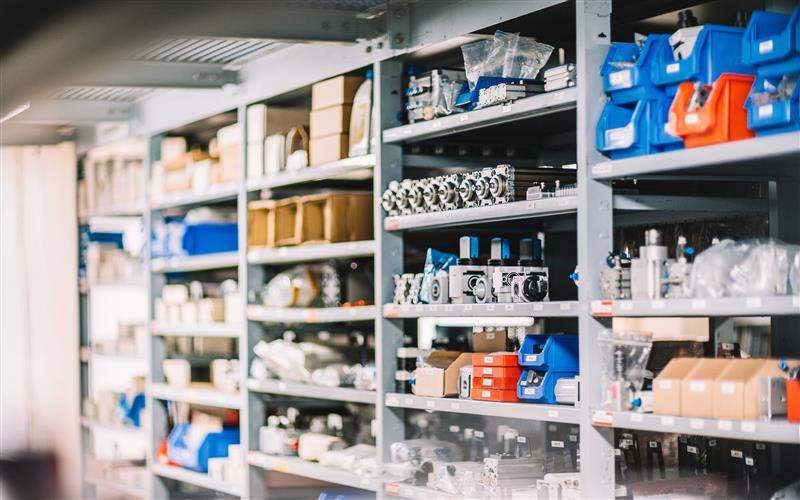
osapiens HUB for Maintenance: Blueprint for Spare Parts Management
January 1, 2026
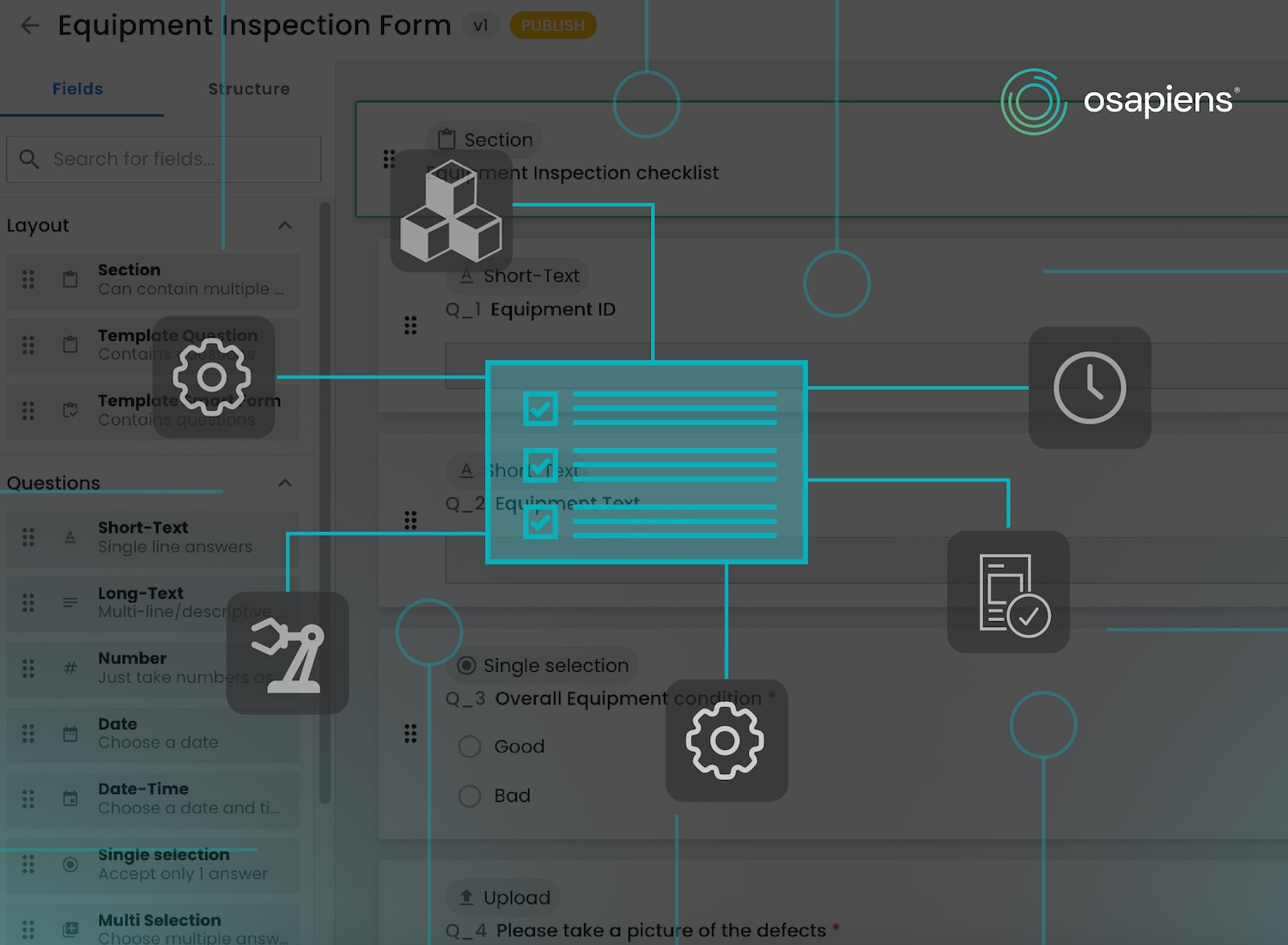
Air Compressor Maintenance Checklist – Tasks, Tips & Template
April 17, 2025
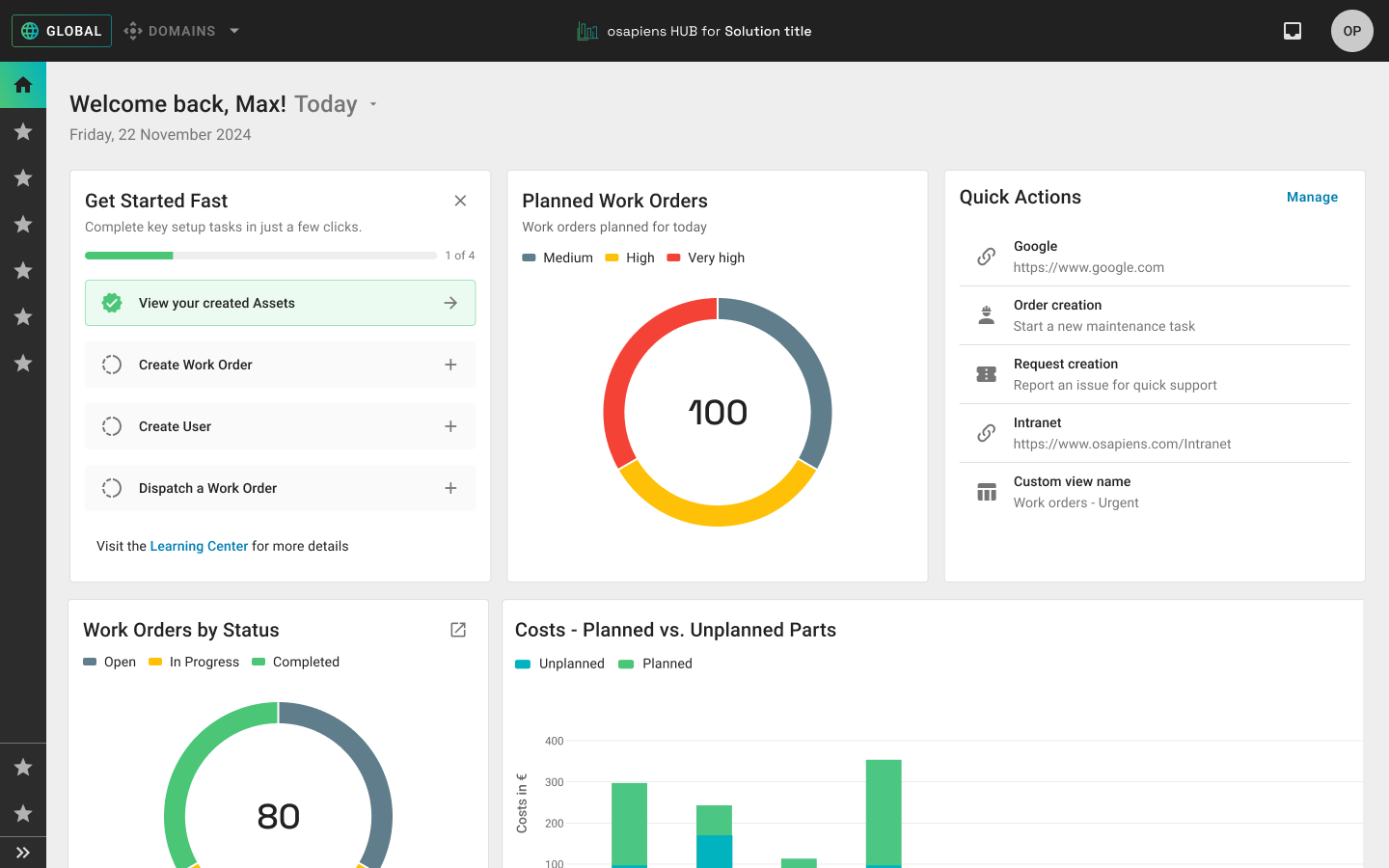
Version 3.15 – New Dashboards, Spare Part Management and Cost Tracking, Simplified Planning
January 1, 2026
Lorry Maintenance Checklist – Tasks, Tips & Template
January 1, 2026
Milling Machine Maintenance Checklist – Tasks, Best Practices & Digital Execution
January 1, 2026
Metal Stamping Press Maintenance Checklist – Tasks, Tips & Template

October 23, 2025
Industrial Maintenance in Transition: From Manual to Predictive in the Age of AI
January 1, 2026
Automatic Sliding Door Preventive Maintenance Checklist – Tasks, Tips & Best Practices
January 1, 2026
Bench Grinder Maintenance Checklist – Tasks, Safety & Digital Execution

July 14, 2025
Unlocking Operational Excellence Through Preventive Maintenance
January 1, 2026
Diesel Generator Set Maintenance Checklist – Tasks, Best Practices & Digital Execution
January 1, 2026