

Blog

Florian Bartholomäus, osapiens Expert | 27. July 2026 | Lesezeit 14 min.
Salesforce Field Service works well for customer-facing service teams, but its deep embedding in the Salesforce ecosystem, no native SAP PM integration, and steep per-user licensing costs push many field service teams to look elsewhere. See how osapiens HUB and six other alternatives compare on field service fit, SAP integration, and relevant features.
Book a demo










TRUSTED BY LEADING COMPANIES




ENTERPRISE-READY
 SAP Certification
 ISO 27001
 EU Hosting
 Entra ID & Okta
 Multi-Entity
Salesforce Field Service works well if your business runs on Salesforce CRM and your field operations are built around that ecosystem. For field service teams in manufacturing or energy utilities whose operations are built around SAP PM, it tells a different story. The platform is deeply embedded in the Salesforce CRM ecosystem. For organisations running their operations around SAP, this means additional integration effort, duplicated data models, and more complex mobile processes. If the integration overhead, missing SAP PM connectivity, or licensing cost is hard to justify, this comparison is for you.
Key Facts
-
Salesforce Field Service is deeply embedded in the Salesforce ecosystem: Its data model revolves around accounts, contacts, and service appointments. For teams running field operations around SAP PM, this creates integration overhead, duplicated data structures, and mobile processes that have to bridge two separate systems.
-
No native SAP PM integration means middleware costs: Companies with SAP PM as their system of record face manual data synchronisation or expensive connector projects. Several alternatives in this list solve this out of the box.
-
Licensing costs add up fast: Dispatcher and technician licenses are each €175/user/month on Enterprise Edition (billed annually), on top of an existing Salesforce CRM or Service Cloud investment. Field Service also requires at least one Service Cloud user license and one Dispatcher license per team. For field service teams whose operations are built around SAP rather than the Salesforce ecosystem, the total cost of ownership is difficult to justify.
-
osapiens HUB for Maintenance is designed for field service teams whose work centers on assets, with a certified SAP PM integration, mobile-first technician UX. Used by Coca Cola North America across 35 plants and 1,500 users
Reasons Teams Switch Away from Salesforce Field Service
Here are the main reasons teams search for a Salesforce Field Service alternative.
Deep Salesforce ecosystem dependency creates friction for SAP-centric teams
Salesforce Field Service is built on the Salesforce data model: accounts, contacts, cases, and service appointments. That structure works well for companies coordinating customer-facing technician visits. For organisations that run their asset and maintenance data in SAP PM, however, this creates a structural gap: work orders, maintenance plans, and asset hierarchies live in one system, while field service scheduling and mobile execution live in another. Bridging that gap requires either a custom integration project or ongoing manual synchronisation – adding cost and risk without adding value to the field service process.
No native SAP PM integration
For organisations with SAP Plant Maintenance as their system of record, Salesforce Field Service introduces a structural gap. There is no certified, bidirectional SAP PM connector out of the box. Data must be synchronised manually or through third-party middleware, an integration project with ongoing maintenance costs that adds risk without adding value to the maintenance process.
Licensing costs scale fast
Dispatcher and technician licenses are each €175/user/month on the Enterprise Edition, billed annually. Field Service also requires at least one Service Cloud user license and one Dispatcher license per team, adding further cost on top of the per-technician price. For organisations already paying for Salesforce CRM or Service Cloud, this comes on top of an existing platform investment. For mid-sized industrial maintenance teams with 20 to 100 technicians, the monthly bill becomes hard to defend when much of the platform’s feature set (sales automation, CRM pipeline, marketing tooling) is irrelevant to the work.
Implementation complexity
Salesforce projects require specialised consultants, extended rollout timelines, and sustained configuration effort. For field service teams that need to go live in weeks rather than quarters, this model is difficult to justify, particularly when purpose-built field service management software offers faster time-to-value with less dependency on external implementation partners.
Ready to replace the integration overhead with one connected system?
With certified SAP integration, a mobile-first app for technicians on-site, and a freemium start without a procurement process, osapiens HUB is built for asset-intensive field service.
Modernize Your Field Service
Quick Comparison Overview
Use this table to compare all seven alternatives at a glance before reading the full entries below.
| Solution | Best for | SAP integration | Pricing from | Rollout speed |
|---|---|---|---|---|
| osapiens HUB for Maintenance | Mid-market, asset-intensive field service in SAP environments | SAP-certified (NetWeaver, ECC & S/4HANA) | Free (freemium), then from €29/user/month* | Fast (weeks) |
| Microsoft Dynamics 365 Field Service | Organisations standardised on the Microsoft stack | Via Dynamics 365 connector | $50/user/month (Contractor); $105/user/month (full license)** | Medium (weeks to months) |
| IFS Field Service Management | Large enterprise in aerospace, defense, energy | Via middleware | From ~$150/user/month** | Slow (6–24 months) |
| SAP Field Service Management | Enterprises standardised on SAP S/4HANA | Native SAP | Custom / upon request | Medium–slow |
| ServiceMax (PTC) | Large enterprises with complex contract & warranty management | SAP + ERP integration | Custom (enterprise only) | Slow (6–12 months) |
| Oracle Field Service Cloud | High-volume, multi-region dispatch at scale | Oracle-centric | Custom / upon request** | Medium (weeks to months) |
| Praxedo | EU SMBs in technical services | Limited | Subscription per user/month, pricing on request | Fast (days to weeks) |
*€29/user/month pricing pending final confirmation. **Prices shown in USD, not converted to EUR.
The 7 Best Salesforce Field Service Alternatives in 2026
The following alternatives were selected based on five criteria: fit for asset-centric field service workflows, depth of SAP integration, implementation speed, pricing transparency, and relevance for EU-based organisations. Each entry includes an honest limitation alongside the strengths.
1. osapiens HUB for Maintenance: The Purpose-Built Alternative for Asset-Intensive Field Service
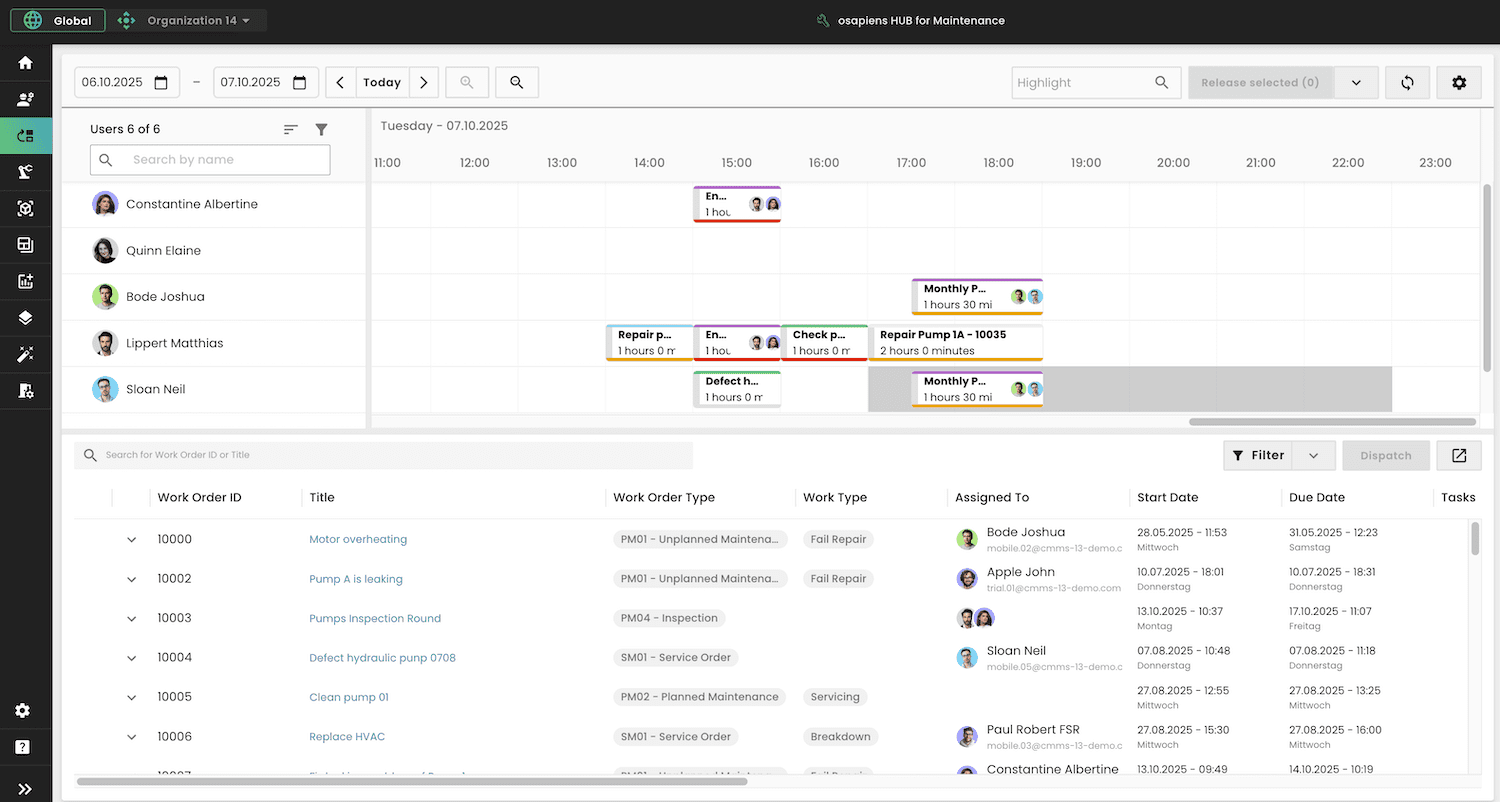
osapiens HUB for Maintenance is built for teams whose field work centers on physical assets. Where Salesforce Field Service is built on the Salesforce ecosystem, osapiens HUB is built natively around assets, maintenance plans, and work orders, without requiring a separate CRM platform underneath. For field teams in manufacturing, energy utilities, and asset-intensive operations with SAP in the background, that eliminates an entire integration layer. Core use cases include preventive and corrective maintenance planning, work order management, mobile technician execution, and asset lifecycle tracking.
-
One system for assets, parts, and dispatch: Asset management, spare parts and inventory, planning, and field service run on a single data base, so technicians and dispatchers aren’t switching between disconnected tools.
-
SAP-certified integration (ECC + S/4HANA): Bidirectional sync with SAP PM, no third-party connector, no data silos. Work orders created in SAP appear in osapiens HUB; completions and measurements flow back automatically.
-
Mobile-first technician UX with offline capability: Technicians receive work orders, checklists, asset history, and safety instructions on their smartphone or tablet. Data captured on-site (time, materials, photos, signatures) syncs automatically when connectivity is restored.
-
Freemium entry, fast rollout: Teams can start without a procurement process. The freemium tier has attracted 350+ customers since November 2023. Enterprise rollouts are structured in phases, with no 18-month implementation required.
-
Certified and compliant: ISO 27001 certified, EU Cloud hosting, single sign-on support available.
-
Established enterprise references: Coca Cola North America (35 plants, 1,500 users), Nordex.
Limitation to note: Dispatch in osapiens HUB is manual or assisted via the planning board. Technicians and dispatchers assign work orders themselves, supported by scheduling views. There is no fully automated dispatch engine. For teams with high-volume, algorithm-driven route optimisation as their primary requirement, this is a relevant trade-off.
Pricing: Freemium entry (no cost); usage-based packages from €29/user/month; individual enterprise packages on request. See the full osapiens pricing overview.
2. Microsoft Dynamics 365 Field Service: FSM within the Microsoft Ecosystem
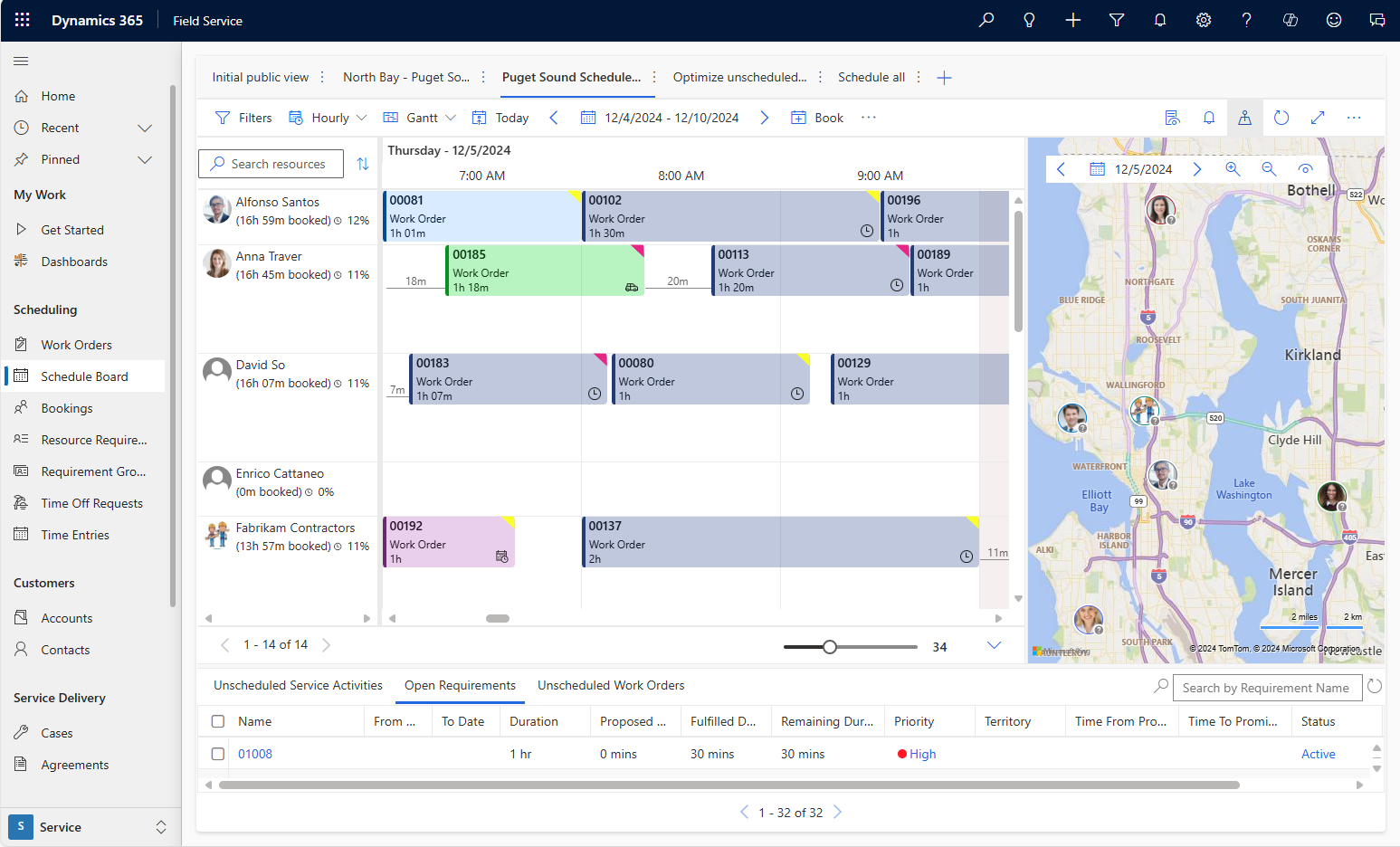
Microsoft Dynamics 365 Field Service is a cloud-based FSM solution that manages onsite service operations through work order scheduling, technician dispatching, inventory tracking, and proactive maintenance using IoT signals and AI. It connects directly with the broader Dynamics 365 suite (CRM, Finance, Supply Chain Management, Customer Service), making it a natural fit for organisations that have already standardised on the Microsoft stack.
-
Familiar UX and deep integration for existing Dynamics 365 or Microsoft 365 users
-
AI-assisted scheduling and route optimisation built in
Limitation to note: Initial setup and configuration can be complex, and the platform’s customisation options have limits for niche operational requirements. Teams with heavy SAP PM dependency will still need an integration layer.
Pricing: From $50/user/month (Contractor); $105/user/month (full license)
3. IFS Field Service Management: Good for Complex Asset Operations
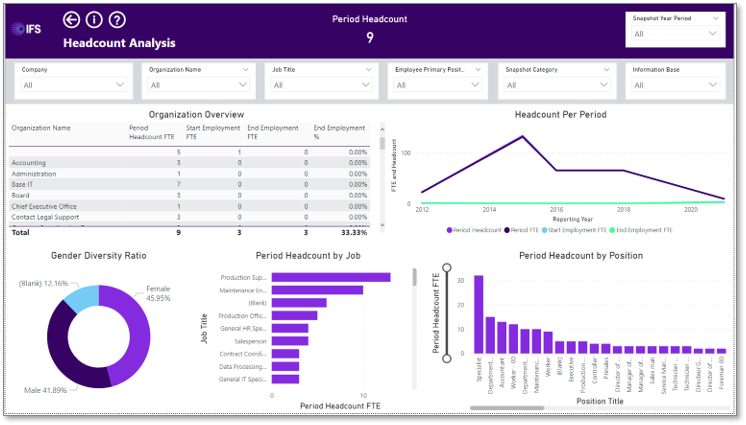
IFS Field Service Management is a specialist FSM platform for technically complex field service in asset-intensive industries, strongest in aerospace MRO, defense asset maintenance, and large-scale energy infrastructure. It offers deep asset lifecycle management, strong compliance features, and audit trail capabilities suited to regulated environments.
-
Comprehensive asset lifecycle management for technically demanding operations
-
Strong compliance and audit trail features for regulated industries
-
Proven in aerospace, defense, and energy infrastructure at large scale
Limitation to note: IFS is an enterprise-tier investment. Simple deployments take 6 to 9 months; full IFS Cloud ERP rollouts run 18 to 24 months. Pricing starts at around $150/user/month (custom per deployment). It is not suited for mid-market teams or organisations that need fast time-to-value.
Pricing: From ~$150/user/month; total project costs vary significantly by deployment scope
4. SAP Field Service Management: Cloud FSM for SAP-Native Environments
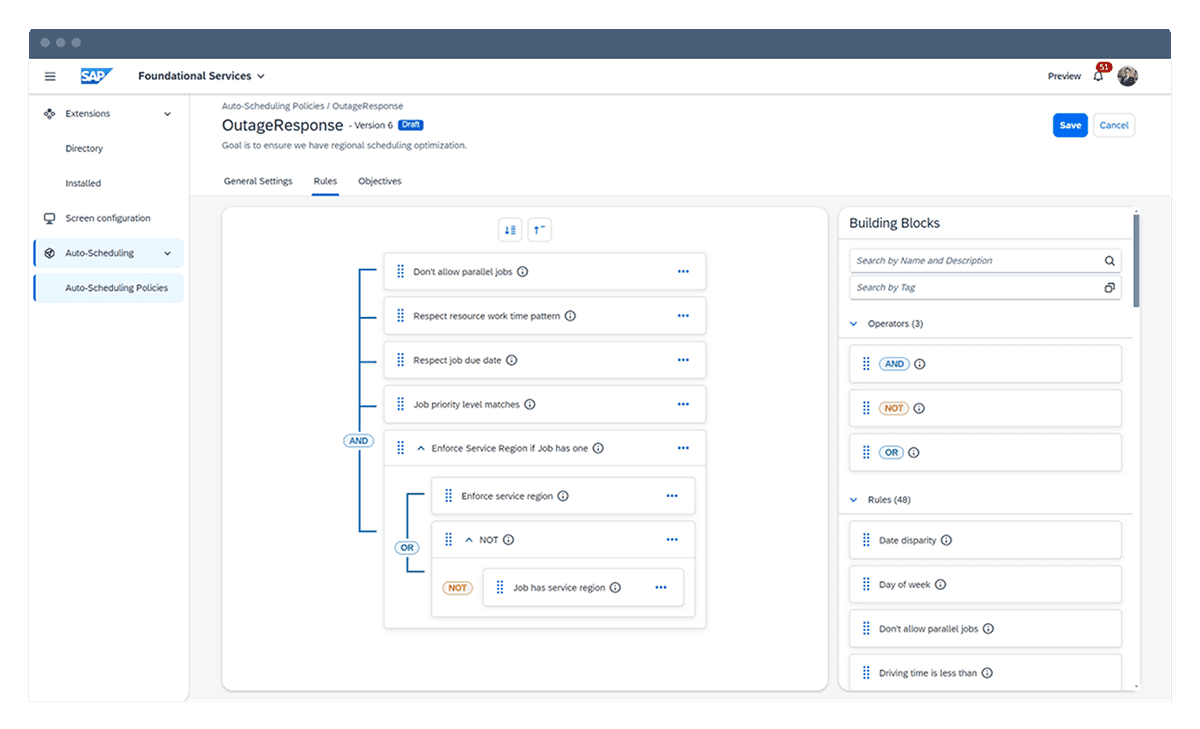
SAP Field Service Management is SAP’s cloud-native, mobile-first FSM solution, designed to close the loop from initial customer request to final invoicing. It uses AI-powered scheduling to improve first-time fix rates and connects directly with SAP ERP, eliminating the need for a third-party connector for organisations already running SAP S/4HANA. Teams evaluating SAP FSM may also find it useful to review a broader SAP Field Service Management alternative comparison.
-
Native SAP backend synchronisation, no third-party connector required for SAP-native organisations
-
AI-powered intelligent scheduling and first-time fix rate optimisation
-
Strong fit for organisations standardising on the full SAP S/4HANA suite
Limitation to note: Implementation requires time, skilled SAP personnel, and significant configuration. There is no published standard pricing tier; costs are custom and enterprise-only. For teams that need standalone FSM capability or fast deployment without deep SAP expertise in-house, SAP FSM introduces complexity that may outweigh the integration benefit.
Pricing: Custom / upon request
5. ServiceMax (by PTC): Work Order and Contract Management for Large Enterprises
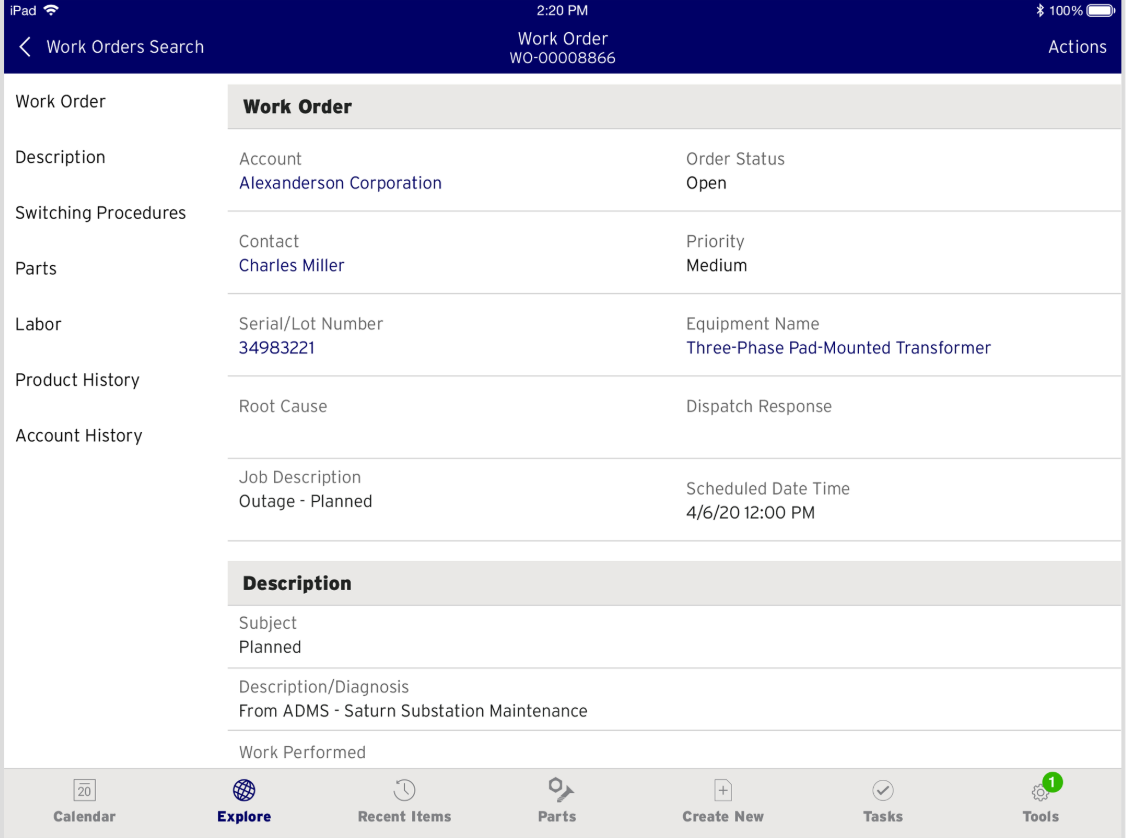
ServiceMax is an enterprise FSM platform built for complex service delivery: work order management, preventive maintenance scheduling, contract and warranty management, mobile technician tools, and customer self-service. Now a standalone platform under PTC, it integrates with SAP, ERP platforms, CRM systems, and IoT data sources to create a unified service operations layer for large organisations.
-
Strong contract and warranty management capabilities
-
Integration options with SAP and other enterprise systems
-
Established in manufacturing, medical devices, and energy sectors
Limitation to note: ServiceMax operates on customised enterprise pricing only, with no published tiers. Enterprise agreements are negotiated individually. Implementation typically takes 6 to 12 months. For leaner maintenance teams or organisations without large-scale field service contract volumes, the platform is likely oversized in both scope and cost.
Pricing: Custom enterprise pricing only
6. Oracle Field Service Cloud: Route Optimisation for High-Volume Dispatch
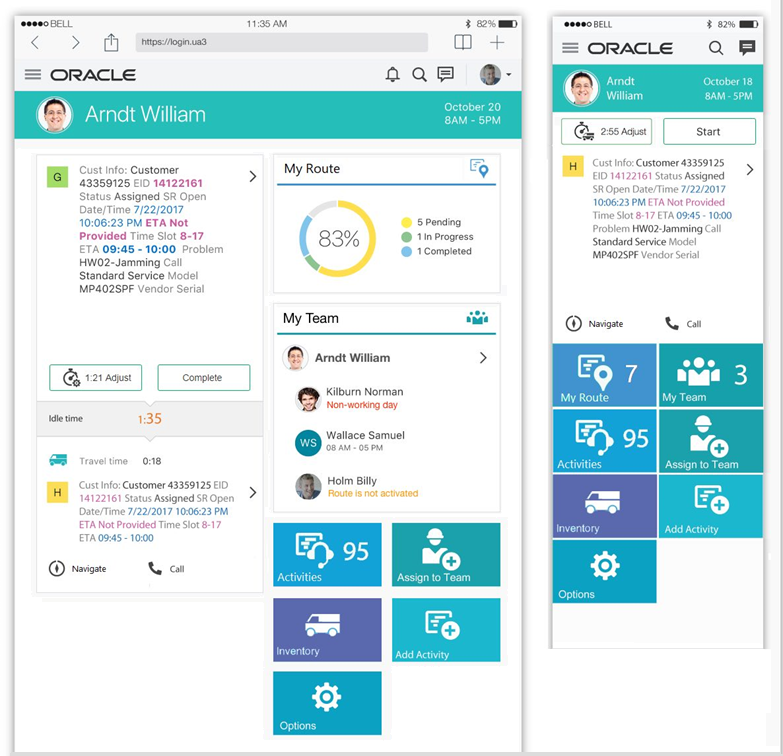
Oracle Field Service is built around AI-driven routing, continuously assigning and reassigning jobs to minimise travel time and idle time, based on real-time technician location, skills, and job constraints. It is designed for organisations that run high volumes of daily dispatches across multiple regions and need to maximise technician utilisation through automated scheduling logic.
-
Route and dispatch optimisation for high-volume field operations
-
Fits well in Oracle ERP environments with established data flows
Limitation to note: Oracle Field Service does not offer native SAP PM integration. For organisations outside the Oracle ecosystem, the platform requires significant alignment effort to justify the licensing investment.
Pricing: Custom / upon request
7. Praxedo: Cloud FSM with SMB Traction in Europe
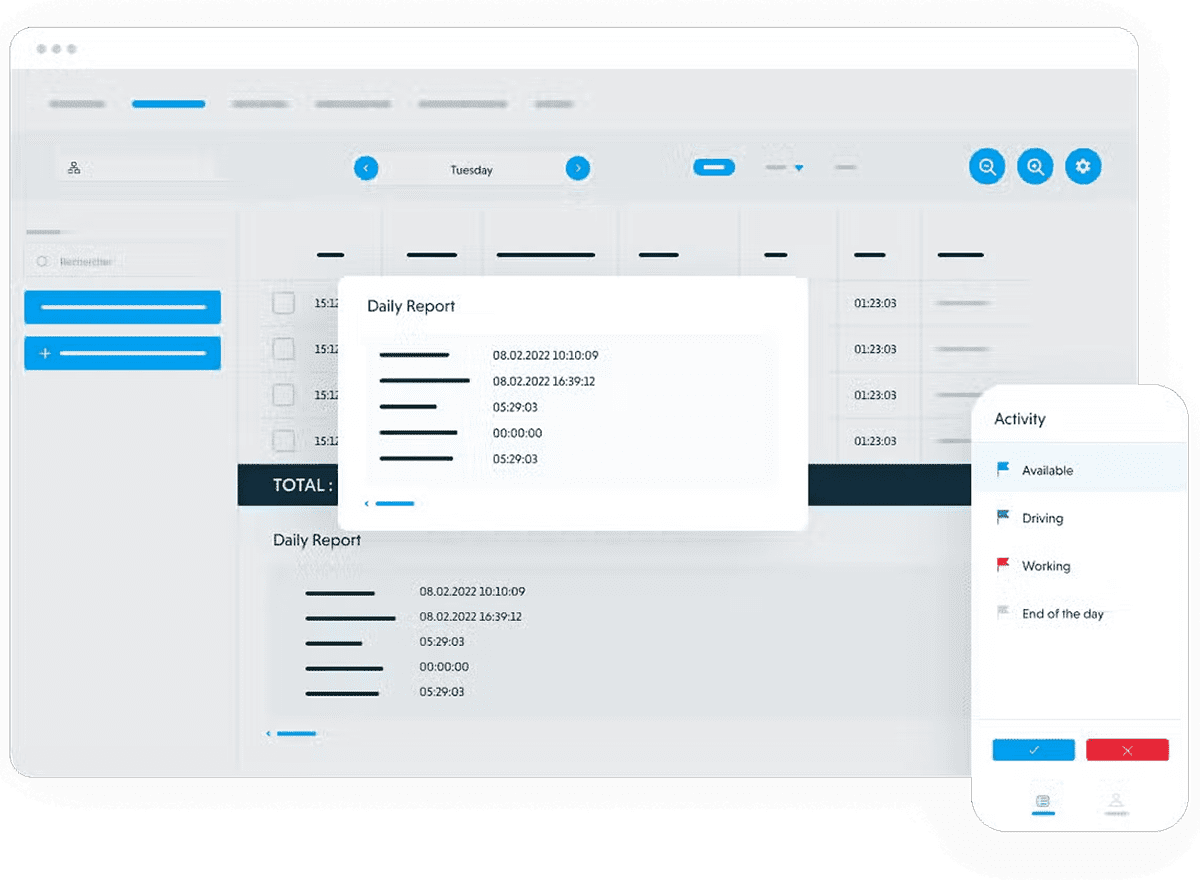
Praxedo is a cloud FSM platform recognised by Gartner for six consecutive years, with more than 1,500 field service organisations and 65,000 daily users worldwide. It focuses on mobile reporting, efficient technician scheduling, and route management. Its rollout time is typically under five days, making it accessible for SMBs in technical services across the EU.
-
Mobile app (offline-capable): Record work orders, schedules, and activities directly on-site, use the map, and sync automatically later.
-
Customer Communication & Self-Service: Portal for clients and appointments; customers receive confirmation, ETA, and real-time status updates.
-
Real-time Dispatch Management: Real-time locations on the map, a dashboard for monitoring, and automatic alerts in case of delays.
Limitation to note: Praxedo is a general-purpose FSM platform. It is not specialised for asset-centric field service or SAP PM integration. For asset-intensive manufacturing or utilities teams, it lacks the asset depth that purpose-built industrial FSM solutions provide.
Pricing: Subscription per user/month; pricing on request
How to Choose: 4 Questions Before You Switch
Before shortlisting, these four questions will narrow the field quickly.
1. Does your organisation run field service operations primarily within the Salesforce ecosystem, or around SAP PM as the system of record?
The distinction matters. Ecosystem-native FSM platforms like Salesforce Field Service are optimised for organisations already running on that platform stack. If your core work is asset lifecycle management, preventive maintenance planning, and work order execution against SAP PM objects, a purpose-built industrial FSM solution such as osapiens HUB, IFS, SAP Field Service Management, or ServiceMax is the more natural fit.
2. Is SAP PM your system of record?
If yes, prioritise solutions with a certified SAP integration, not just an API connector that requires ongoing maintenance. osapiens HUB offers native, certified SAP synchronisation out of the box. IFS and ServiceMax connect to SAP via middleware, which adds implementation time and ongoing engineering cost.
3. How fast do you need to go live?
Enterprise FSM platforms like IFS and ServiceMax are measured in quarters, not weeks. If your team needs to be operational within a month or two, a platform with a freemium tier and phased rollout, like osapiens HUB for Maintenance or Praxedo, changes the economics significantly.
4. What is your team size and budget?
For EU SMBs in technical services: Praxedo or the osapiens HUB freemium tier. For mid-market field service teams with SAP in the background: osapiens HUB for Maintenance. For large enterprises with existing Oracle, Microsoft, or SAP lock-in: match to your existing ecosystem and factor in total implementation cost, not just per-user licensing.
Conclusion: The Best Salesforce Field Service Alternative
Salesforce Field Service is a well-built platform for what it was designed to do: coordinating field service operations within the Salesforce ecosystem. For organisations whose asset and maintenance data lives in SAP PM, it introduces structural friction – integration overhead, duplicated data models, and mobile processes that have to bridge two separate systems – that configuration alone cannot remove.
For asset-intensive field service teams, osapiens HUB for Maintenance closes exactly that gap:
-
Built around assets, not a CRM platform: Asset management, spare parts, planning, and field service run on one data base instead of a patchwork of tools.
-
Certified SAP integration: Bidirectional sync with SAP PM, no middleware, no manual data reconciliation.
-
Mobile-first for technicians: Offline-capable app with guided checklists, supporting up to 89% First Time Fix Rate and 21% fewer form errors.
-
Low barrier to entry: Freemium tier with no procurement process, scaling into enterprise packages as needed.
-
Enterprise-proven: Coca Cola North America (35 plants, 1,500 users) and Nordex rely on the platform, backed by ISO 27001 certification and EU Cloud hosting.
Ready for digital field service?
Manage your field operations with osapiens, one data base for assets, work orders, spare parts, and service reports. AI-assisted planning, a mobile app with offline capability, and PDF service reports with digital signature.
Book a free demo
FAQ
What is the best alternative to Salesforce Field Service?
For industrial maintenance teams in manufacturing, energy utilities, or asset-intensive operations, osapiens HUB for Maintenance is the most purpose-built option. It is built natively around assets, maintenance intervals, and work orders, and integrates directly with SAP ECC and S/4HANA through a certified connector – without the ecosystem overhead of a CRM platform in between. The freemium entry tier makes it accessible without a procurement process.
Does Salesforce Field Service integrate with SAP PM?
Not natively. Salesforce Field Service does not include a certified, bidirectional SAP PM connector. Organisations with SAP PM as their system of record need to build or buy a middleware integration, adding implementation cost, ongoing maintenance, and synchronisation risk. Alternatives such as osapiens HUB for Maintenance and SAP Field Service Management address this directly with certified SAP integration.
What is the cheapest Salesforce Field Service alternative?
For SMBs in technical services, Praxedo offers a subscription model with pricing on request. osapiens HUB for Maintenance offers a freemium entry tier at no cost (up to 5 users), suitable for teams that want to evaluate a purpose-built FSM solution without upfront licensing commitment.
How long does it take to implement a Salesforce Field Service alternative?
Implementation timelines vary significantly across these alternatives, from under a week for the fastest, lightweight rollouts to as long as 24 months for a full enterprise deployment. osapiens HUB for Maintenance supports a phased rollout: standalone implementations typically take 1 to 3 weeks, while enterprise rollouts with SAP integration run 4 to 12 weeks. Freemium access is available from day one, with no full implementation project required to get started.
Maintenance Schedule Template
Use our template with asset overview, task catalog, and annual plan. Ready to use for your maintenance planning.
Download for free
ENTERPRISE CAPABILITIES
- SAP ECC & S/4HANA Certified
- Infor & MS Dynamics
- Microsoft Entra ID / Okta
- ISO 27001 & 9001
- EU Cloud · Data Sovereignty
- Development, Test, and Production Environments
- Multi-Entity & Multi-Site
- Power BI Integration
- Audit Trail & Compliance
Related content
July 7, 2026
IFS Field Service Management Alternatives: 5 Options Worth Considering in 2026
January 1, 2026
Control Panel Maintenance Checklist – Tasks, Tips & Template

September 21, 2026
CMMS vs. ERP Maintenance Module: Which One Actually Works for Your Team?
January 1, 2026
Industrial Mixer Maintenance Checklist – Tasks, Tips & Template
January 1, 2026
Boiler Maintenance Checklist – Tasks, Tips & Template
January 1, 2026
Dust Collector Maintenance Checklist – Tasks, Safety & Digital Execution
January 1, 2026
Filling Machine Maintenance Checklist – Tasks, Tips & Best Practices
January 1, 2026
Manufacturing Plant Maintenance Checklist – Tasks, Tips & Template
January 1, 2026
Automatic Screw Machine Maintenance Checklist – Tasks, Components & Digital Execution
January 1, 2026
Industrial Preventive Maintenance Checklist – Tasks, Tips & Digital Tools

July 22, 2025
osapiens HUB for Maintenance: Blueprint for Spare Parts Management
January 1, 2026