

Maintenance Checklist

Florian Bartholomäus, osapiens Expert | 1. January 2026 | Lesezeit 7 min.
Many autoclave failures stem from overlooked gasket wear and mineral buildup. Inspect door seals weekly and use distilled water to prevent scale accumulation that reduces heating efficiency and extends cycle times.
Create your checklist for free









TRUSTED BY LEADING COMPANIES




ENTERPRISE-READY
 SAP Certification
 ISO 27001
 EU Hosting
 Entra ID & Okta
 Multi-Entity
Table of Contents
Autoclaves are critical sterilization equipment in healthcare, pharmaceutical, and laboratory environments where sterility assurance directly impacts patient safety and product quality. Without structured maintenance, unplanned downtime becomes harder to predict — and equipment failures can compromise sterilization cycles, delay procedures, and create regulatory compliance risks.
Preventive maintenance for autoclaves follows a structured approach: daily visual checks, weekly cleaning and gasket inspections, monthly functional testing, and annual professional validation. This checklist-based discipline reduces failures, extends equipment lifespan, and ensures audit-ready documentation for regulatory inspections.
Autoclave Maintenance: Key Facts
- Consistency matters: Structured checklists eliminate guesswork and ensure every technician performs the same critical inspections regardless of experience level.
- Prevent costly failures: Organizations implementing preventive maintenance programs report fewer equipment failures and longer asset lifespans compared to reactive-only approaches.
- Documentation is essential: Complete maintenance records support regulatory compliance and provide traceability during audits or investigations.
- Digital execution improves reliability: Modern CMMS platforms like osapiens HUB for Maintenance automate scheduling, capture photos and timestamps, and eliminate paper-based gaps.
Why You Need an Autoclave Maintenance Checklist
Ad-hoc or experience-based maintenance creates organizational vulnerability. Without systematic inspection protocols, gradual degradation goes undetected until a combination of minor problems converges into a major failure.
- Consistency: Checklists standardize maintenance across all shifts and technicians, ensuring critical inspection points are never missed regardless of who performs the work.
- Risk reduction: Early detection of gasket wear, heating element scale, or pressure gauge drift prevents catastrophic failures that compromise sterilization effectiveness and patient safety.
- Documentation: Structured checklists create audit trails that demonstrate compliance with regulatory requirements and support investigations if sterilization-related adverse events occur.
- Technician guidance: Step-by-step checklists support less experienced team members, reducing dependency on senior technicians’ tacit knowledge and preventing knowledge loss during staff turnover.
- Standardization: Repeatable procedures ensure maintenance quality remains consistent across multiple autoclaves, facilities, and geographic locations.
- Compliance: Documented maintenance records support regulatory requirements from FDA, CDC, and ISO standards governing sterilization validation and ongoing performance verification.
What to Include in Your Autoclave Maintenance Checklist
Effective autoclave maintenance checklists organize tasks by component or system rather than by frequency alone. This structure helps technicians understand why each task matters and what they’re inspecting.
Maintenance intervals depend on usage patterns, environmental conditions, and manufacturer recommendations. Tasks are examples — actual requirements vary by autoclave model and operational context. Always consult your equipment manual and conduct risk assessments to determine appropriate intervals for your facility.
| Component / System | Inspection & Maintenance Tasks | Purpose |
|---|---|---|
| Chamber & Pressure Vessel | Wipe interior walls, remove spilled media, inspect for corrosion or discoloration, check for cracks or warping | Prevent corrosion, maintain structural integrity, ensure safe pressure containment |
| Door Gasket & Seals | Inspect for wear, cracks, or stiffness; clean with mild detergent; apply high-temperature silicone grease; replace if damaged | Maintain pressure seal, prevent steam leakage, ensure operator safety |
| Heating Elements & Sensors | Remove scale deposits, wipe down accessible elements, inspect temperature probes for damage, verify sensor readings | Maintain thermal efficiency, prevent cycle time extension, ensure accurate temperature control |
| Drain System & Safety Valve | Check drain tubing for blockage or damage, verify secure connections, inspect safety valve outlet for obstructions | Prevent water accumulation, ensure proper drainage, maintain pressure relief capability |
| Water Reservoir & Steam Generator | Remove standing water, refill with distilled water, perform vinegar descaling cycle (biannually), inspect for mineral buildup | Prevent scale accumulation, maintain steam quality, extend equipment lifespan |
| Control System & Gauges | Test cycle operation, verify temperature and pressure readings against steam tables, check for error codes or warnings | Ensure accurate sterilization parameters, detect calibration drift, verify control system function |
| Safety Systems & Interlocks | Test door interlocks, verify safety valve function, check emergency stop mechanisms, inspect alarm systems | Prevent operator injury, ensure safe operation, maintain regulatory compliance |
Turn Your Autoclave Maintenance Checklist into Digital Work Orders
Create structured checklists for every component — from chamber cleaning to gasket inspection. Execute them on mobile, sync with SAP PM, and keep full audit trails automatically.Start with Your Autoclave Maintenance Checklist
Common Autoclave Problems Your Maintenance Checklist Prevents
Structured maintenance checklists help identify and prevent typical failure patterns before they escalate into operational crises or safety incidents.
- Gasket failure and steam leakage: Weekly gasket inspections detect wear, cracks, or stiffness early. Regular cleaning and lubrication extend gasket life, while timely replacement prevents steam leakage that compromises sterilization and creates burn hazards.
- Heating element scale and efficiency loss: Mineral deposits from hard water accumulate on heating elements, reducing thermal transfer efficiency and extending cycle times. Monthly cleaning and biannual descaling procedures prevent scale buildup that would otherwise cause premature element failure.
- Pressure gauge and temperature sensor drift: Sensors exposed to repeated thermal cycling gradually lose calibration accuracy. Biannual verification against steam tables detects drift early, preventing situations where displayed parameters diverge from actual chamber conditions.
- Drain blockage and water accumulation: Weekly drain checks prevent blockages that cause standing water, which fosters mold growth and creates corrosion risks. Regular inspection ensures proper drainage function.
- Documentation gaps and compliance violations: Systematic checklists create complete maintenance records that demonstrate regulatory compliance, support audit responses, and provide traceability if sterilization effectiveness is questioned.
- Safety system failures: Regular testing of door interlocks, safety valves, and pressure relief systems ensures these critical safety features function correctly, preventing operator injuries and catastrophic pressure vessel failures.
From Paper Checklist to Digital: How the osapiens HUB Automates Your Autoclave Maintenance Checklist
Paper checklists and Excel spreadsheets create friction that undermines maintenance discipline. Technicians carry damp, torn paper forms through steam-filled environments, handwrite observations that become illegible, and file completed forms where data is lost or never transferred into digital systems.
Excel offers basic scheduling but lacks mobile accessibility for field technicians, provides no automated reminders when maintenance is due, and creates data silos isolated from work order management and spare parts inventory systems.
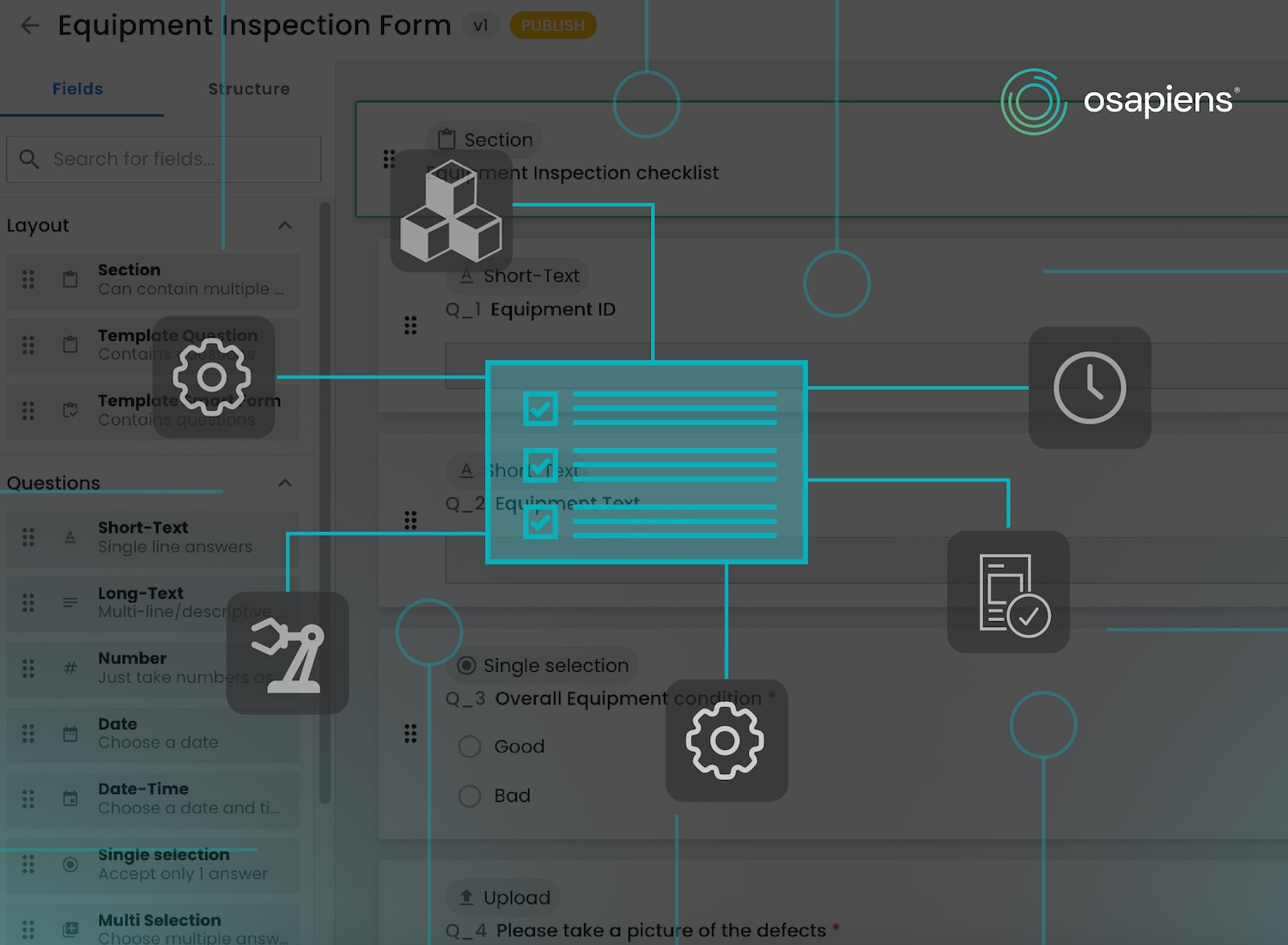
The osapiens HUB for Maintenance transforms static checklists into interactive digital workflows that guide technicians step-by-step, require photographic evidence for critical steps, enforce required data entry fields, and automatically generate audit trails documenting who performed maintenance and when.
| Aspect | Paper or Excel Checklist | Digital Checklist with osapiens HUB |
|---|---|---|
| Accessibility | Requires office access or printed copies | Mobile app access from anywhere, online or offline |
| Data Capture | Handwritten notes, manual transcription | Photos, timestamps, digital signatures captured automatically |
| Scheduling | Manual tracking, easy to miss intervals | Automated work order generation based on time or usage |
| Audit Trail | Paper files, difficult to search or verify | Complete digital history with timestamps and user authentication |
| Integration | Isolated from other systems | Connected to SAP PM, inventory, and asset management |
| Compliance | Manual compilation for audits | Instant audit-ready reports and documentation |
The osapiens HUB supports all autoclave maintenance intervals — daily chamber wipe-downs with photo requirements, weekly gasket inspections with condition documentation, monthly functional testing with cycle parameter recording, and annual professional validation with comprehensive reporting.
Mobile accessibility enables technicians to access maintenance instructions, reference historical records, and record completion status without returning to an office computer. Offline functionality allows technicians to download task information before accessing equipment locations where network connectivity may be limited, with automatic synchronization when connectivity is restored.
Stop Losing Sterility Assurance to Missed Autoclave Inspections
Digitize your maintenance checklists, automate work order creation, and give every technician a mobile tool that works — even offline. SAP PM integration included.Try osapiens HUB for Free
FAQ
What should be included in an autoclave maintenance checklist?
An autoclave maintenance checklist should include chamber cleaning and inspection, door gasket condition assessment, heating element and sensor checks, drain system verification, water reservoir management, control system testing, and safety interlock verification. Tasks should be organized by component or system and adapted to your specific autoclave model, usage patterns, and manufacturer recommendations.
How often should I complete my autoclave maintenance checklist?
Maintenance frequency depends on usage intensity, environmental conditions, and risk assessment. Common practice includes daily visual checks and chamber wipe-downs, weekly gasket inspections and drain checks, monthly functional testing and comprehensive cleaning, and annual professional validation and calibration. High-throughput facilities may require more frequent maintenance intervals.
Can I customize this autoclave maintenance checklist template?
Yes, customization is essential. Every facility operates different autoclave models under unique conditions. Adapt the checklist to reflect your equipment specifications, manufacturer recommendations, operational environment, and regulatory requirements. Digital platforms like osapiens HUB for Maintenance enable flexible checklist customization while maintaining standardized documentation.
How does a digital CMMS improve maintenance checklist management?
A digital CMMS automates maintenance scheduling, generates work orders when tasks are due, provides mobile access for field technicians, captures photos and timestamps automatically, enforces required data entry, and creates complete audit trails. The osapiens HUB for Maintenance integrates with SAP PM, enabling seamless data flow between maintenance execution and enterprise systems while maintaining user-friendly mobile interfaces that drive technician adoption.
Start using osapiens for free
Improve your uptime, extend the life of your equipment, and simplify work order management.
Book a demo
ENTERPRISE CAPABILITIES
- SAP ECC & S/4HANA Certified
- Infor & MS Dynamics
- Microsoft Entra ID / Okta
- ISO 27001 & 9001
- EU Cloud · Data Sovereignty
- Development, Test, and Production Environments
- Multi-Entity & Multi-Site
- Power BI Integration
- Audit Trail & Compliance
Related content
January 1, 2026
Industrial Oven Maintenance Checklist – Tasks, Tips & Template
January 1, 2026
Industrial Preventive Maintenance Checklist – Tasks, Tips & Digital Tools
January 1, 2026
Lyophilizer Maintenance Checklist – Tasks, Tips & Template
January 1, 2026
Switchgear Maintenance Checklist – Tasks, Tips & Template
January 1, 2026
GMP Equipment Maintenance Checklist – Tasks, Compliance & Digital Execution
January 1, 2026
Pump Maintenance Checklist: What to Inspect & When

April 10, 2026
CMMS ERP Integration for Enterprise: Why SAP Certified Beats API Only
January 1, 2026
Diesel Generator Set Maintenance Checklist – Tasks, Best Practices & Digital Execution
January 1, 2026
Preventive Maintenance Checklist – Tasks, Structure & Digital Execution
January 1, 2026
Drilling Machine Maintenance Checklist – Tasks, Tips & Digital Execution
January 1, 2026
Booster Pump Maintenance Checklist – Tasks, Tips & Template
January 1, 2026